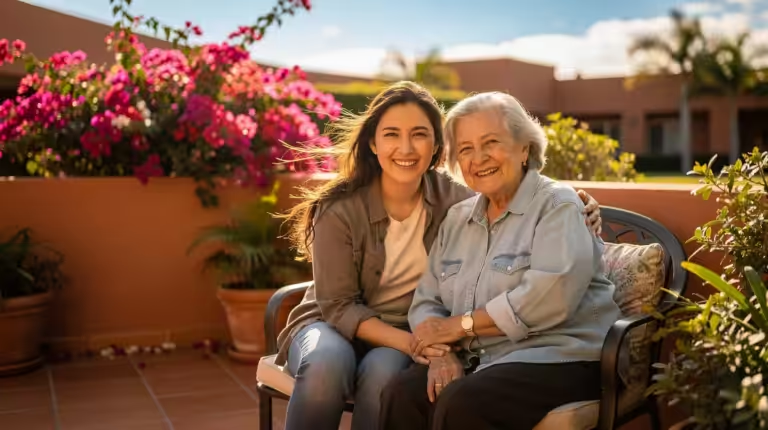
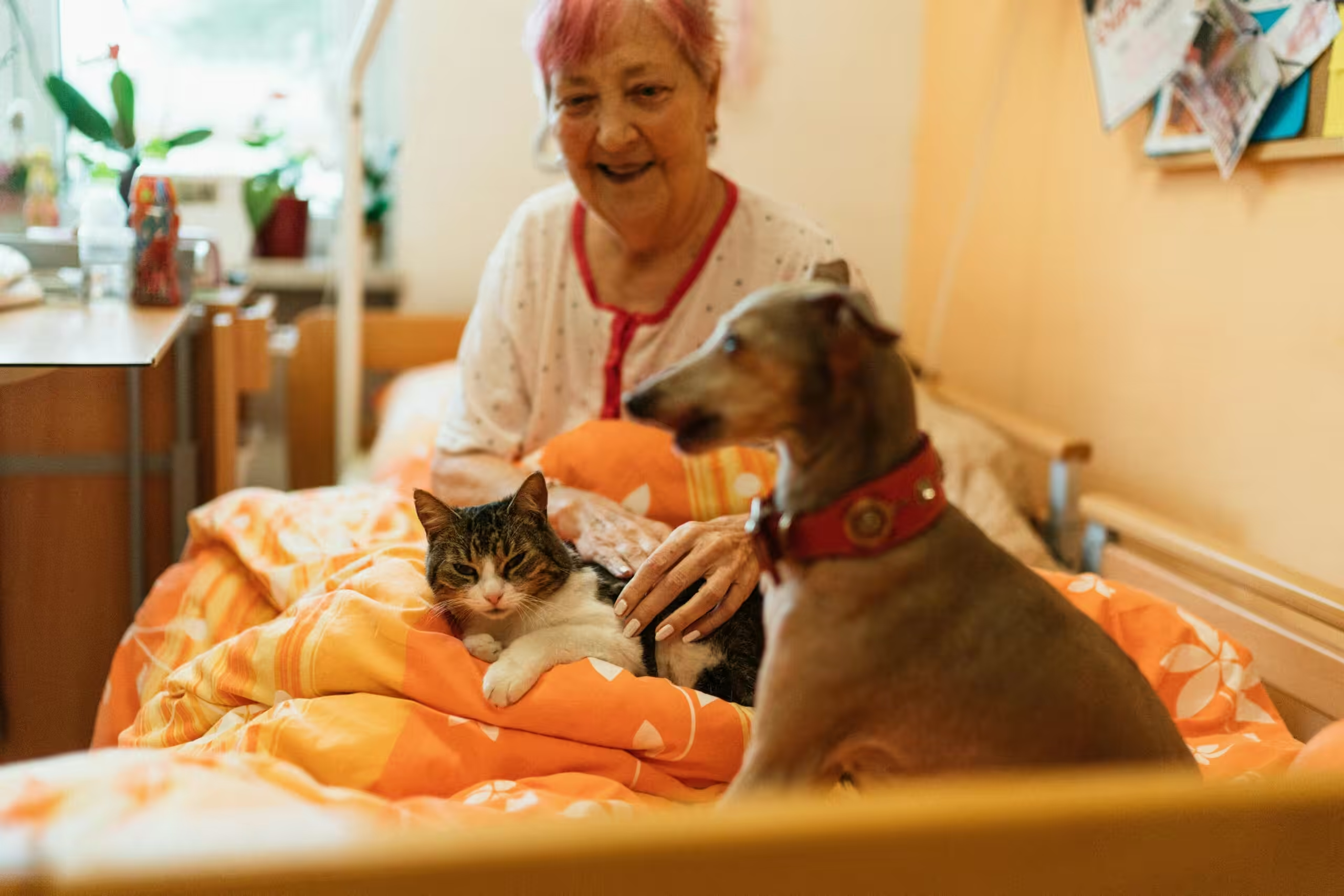
For most of us, the dog asleep at our feet or the cat curled on the windowsill is not a detail of life. They are family. When you start picturing the next chapter in Mexico, whether you are doing the planning yourself or helping a parent through the decision, the question almost always comes up sooner than people expect. Can my pet come too, and if so, where can we actually live together?
The good news is that bringing pets to Mexico is easier than most North Americans assume, and the country’s senior care landscape is more pet-friendly than the US assisted living model people are usually comparing it to. The harder part is the matchmaking. Finding the right senior community for both you and your animal, at the right price point, in the right region, with policies that actually work long term.
This guide covers both sides. The senior living side first, with real pet-friendly assisted living communities we have visited and verified across Lake Chapala, San Miguel de Allende, and Puerto Vallarta, and the practical logistics of bringing a dog or cat across the border at the end.
What Pet-Friendly Assisted Living Looks Like in Mexico
Most senior care facilities in Mexico are small. Capacities of six to twenty residents are common, not the hundred-plus campuses you see in many US chains. This scale changes everything. Smaller communities are often residential homes, set in restored colonial houses or purpose-built villas, with big outdoor spaces. However, most facilities restrict pets to small or medium breeds, usually capping weight limits between 20 and 50 pounds.
Where US facilities often charge pet deposits and ongoing pet fees and impose strict weight limits, Mexican homes are typically more flexible. Many do not charge extra at all. Most ask only that the pet be house-trained, spayed or neutered, current on vaccinations, and that the resident or family handle feeding, vet visits, and whatever daily care the resident cannot manage on their own.
What can be harder is finding a facility that can absorb pet care responsibility as a resident’s cognitive or physical abilities change. This is the practical question that matters most over time. Some communities will quietly take over daily walks and feeding when a resident no longer can. Others will not, or cannot. We have a checklist below for what to ask before you commit.
Pet-friendly options are expanding fastest in the established expat hubs (Lake Chapala, San Miguel de Allende, and Puerto Vallarta) and starting to appear along the Baja Peninsula too.
Pet-Friendly Senior Living Communities in Mexico Worth Considering
Something you notice touring senior homes in Mexico: many of them already have animals, and not as a marketing feature. Owners’ dogs greet you at the door, bunnies run loose in gardens, ducks wander the patios. Pets are part of how these homes feel like homes. These are the pet-friendly homes in our directory, with what we saw on our visits. Policies change with availability, so always confirm the current situation, or message us and we’ll confirm it for you.
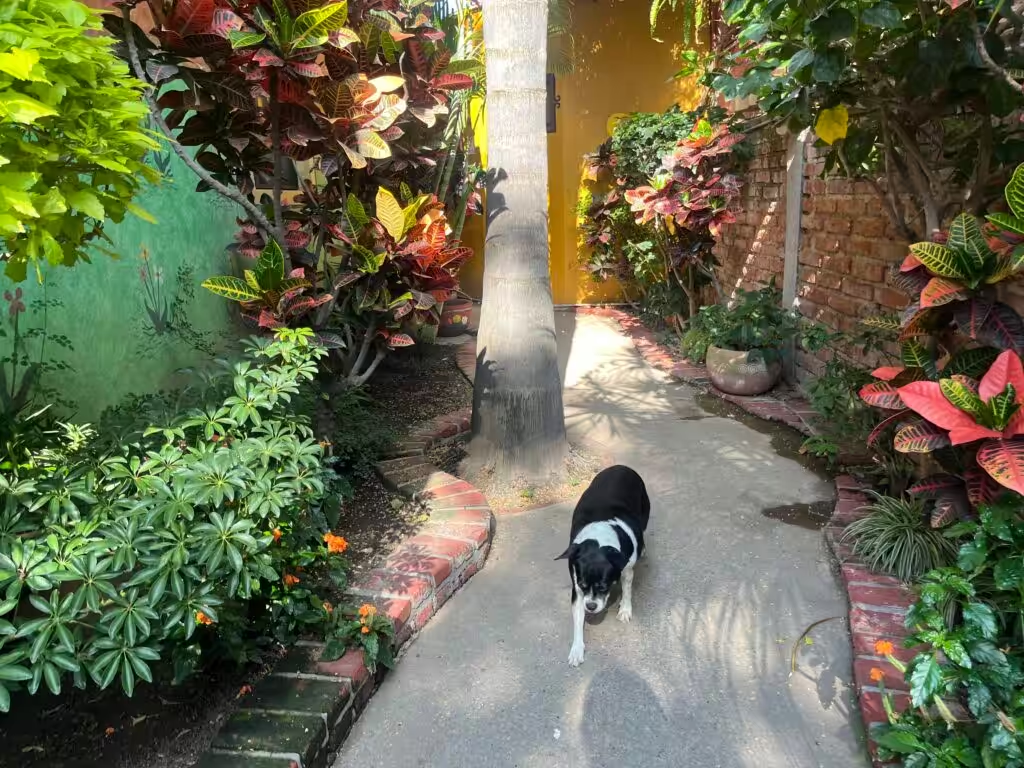
Lake Chapala
Casa Zebra (assisted, nursing). One resident lives here with her two small dogs, and they’ve become everyone’s dogs: they roam the house and curl up with other residents during the day.
Buhayra Living (assisted living, nursing care). Buhayra caps pets at three small dogs to stay within its sanitary permit limits, and doesn’t accept cats because a current resident is allergic. One dog lives there now, so there’s room for two more.
Shila’s House (assisted living, nursing care). The family that runs the home has a dog of their own, so residents get the pet experience even without bringing one.
Casa Zoe Community (independent living, assisted living). Home to a much-loved resident husky, plus a resident who lives with her cat.
Nursing Home Lake Chapala (assisted living, nursing care). Pet friendly when one of its pet-adapted rooms is available, and only for hypoallergenic dog and cat breeds, so ask early if this is a priority.
Mi Casita (assisted living, nursing care). The owner’s dog lives at the home full time; the residents grew so attached that he simply stayed.
Living in Community (independent living). Residents here have dogs and cats, and new pets are approved case by case by the community itself: the newcomer has to get along with the resident pets who’ve lived there for years.
Rudy & Magda’s Care Home (assisted living, nursing care). A resident lives here with her chihuahua, and ducks wander the property.
Puerto Vallarta
Pacific Home (assisted living, nursing care). One of the most complete pet setups we’ve seen: caregivers help take dogs out, housekeepers clean up after them, and bunnies run free in the large garden. Pacific Home charges an extra maintenance fee for pet owners, mainly because air conditioning filters need cleaning more often with pet hair, which tells you they’ve actually thought this through.
How Pet Care Actually Works Day to Day
This is where Mexico’s small-home model shines. In Mexican resident homes, your pet isn’t a policy exception, it’s a housemate. In the pet-friendly homes we’ve toured, caregivers help residents take dogs out when mobility is limited, and housekeepers handle the cleanup that comes with animals.
Several homes go further, some included in the rate, some for an extra fee: scheduling and taking pets to grooming appointments, keeping their vaccine calendar up to date, calling or visiting the vet when a pet seems off, and helping residents buy or order pet food.
What staff will handle for your pet varies from home to home, so ask exactly what’s included in the monthly fee and what’s an add-on. Some charge nothing extra, others add a monthly maintenance fee, and some offer pet services as optional add-ons. Ask what’s included and get it in writing.
Questions to Ask Pet-friendly Retirement Home

Most communities are not pet-friendly, but for those that do accept pets, these are the essential questions you need to ask during your tour:
- What is the formal pet policy in writing? Species accepted, size or weight limits, deposit, monthly fee if any, vaccination records.
- Who handles feeding and walks if my mobility or memory changes? Some facilities will quietly absorb this. Others will charge you an extra fee, ask you to hire a separate caregiver, or ask you to rehome the pet.
- Is there an on-site vet relationship or a recommended local vet who does home visits? Most Mexican towns with senior communities have at least one. Confirm before you arrive.
- How many current residents have pets, and what kinds? A community that says yes but has no pet residents is usually less prepared than one with several.
- What happens to my pet if I am hospitalized or move to a higher level of care? Have this conversation up front, in writing if possible.
- Are pets allowed in common areas or only in residents’ rooms? Both arrangements exist. Neither is wrong, but you want to know which it is.
Veterinary Care for Your Pet in Mexico
At several homes in our directory, staff will coordinate routine vet care for you, from vaccine schedules to calling the vet when something seems off (usually for an extra fee).
Bilingual vets are common in expat-friendly cities like Lake Chapala and San Miguel, where routine care is well covered: vaccinations, parasite prevention, general exams, soft-tissue surgeries like spays and neuters, dentistry, and minor wound care. Mobile vet clinics and house calls are also common.
For 24/7 hospitals, mid-sized cities like Puerto Vallarta, Mérida, or Mazatlán offer excellent emergency and critical care with well-equipped clinics.
Deep specialty care (advanced oncology, MRI or CT diagnostics, orthopedic surgery, cardiology, neurology) is concentrated in the largest cities, primarily Guadalajara and Mexico City. Ask your local vet which referral clinics they recommend and whether they can call ahead. The bilingual care you have at home does not always travel with the referral.
Planning for the Long Term
The harder part is when your or your pet’s needs change. On your end, designate a family member, friend, or local pet contact who would take responsibility if your health declines and you can no longer care for your pet. Some senior care communities will help facilitate rehoming within their network when the time comes, and a few partner with local animal welfare groups. Ask. The peace of mind is worth the awkward conversation, and the staff will not be surprised by the question.
On your pet’s end, the same kind of planning matters. Pets age and get sick too, and complex veterinary care (chronic conditions, serious illness, advanced diagnostics, surgery) is not always available in the smaller expat-friendly cities. Knowing where the nearest specialty clinic is and how to get there from your community is part of the plan.
How Do I Take My Pet to Mexico?
The process is genuinely simple if you prepare a few weeks in advance. Mexico does not require quarantine for cats or dogs entering from the United States, Canada, or most of Europe. There is no microchip mandate, no extensive paperwork, and no breed restriction at the federal level. SENASICA, the Mexican equivalent of the USDA, handles import requirements and inspection, and most North American pets clear in under fifteen minutes.
For both cats and dogs, the paperwork is short. You will need:
- A recent veterinary health certificate (issued within ten days of travel, signed by a licensed veterinarian, stating the animal is healthy and free of infectious and contagious diseases)
- Proof of current rabies vaccination (administered at least fifteen days before entry)
- A clean carrier with no soil-contaminated bedding (no straw, hay, newspaper, or wood shavings)
Most vets in the US and Canada are familiar with this and can issue the certificate as a standard letter. A USDA endorsement is no longer required for personal pet travel into Mexico, though some airlines still require it.
Most North American airlines (Aeromexico, American, United, and Delta) allow small pets in the cabin, which is the simplest scenario. Cats and small dogs under about twenty pounds usually fit under the seat in an airline-approved carrier. The cabin route is straightforward and the lowest-stress option for the animal.
Larger dogs typically have to fly in the cargo hold, which is a different conversation. Some routes suspend cargo travel during the summer heat. Snub-nosed breeds (bulldogs, pugs, French bulldogs, Boston terriers, Persian and Himalayan cats) are restricted or outright banned by many airlines because they are at higher risk in pressurized cargo. If your pet falls into any of these categories, check with the airline at least 2 months in advance and have a backup plan.
Driving across the border
If your pet cannot fly (due to size, breed, or seasonal cargo restrictions) and you are not already in Mexico, driving is the alternative. It is a longer commitment than flying. The drive from many parts of the US or Canada to a retirement destination in central Mexico can take several days, which is not always a good fit for seniors, so a family member, friend, or hired driver often shares or handles the driving.
At the border, declare the pet at the SENASICA office while you stop for your FMM tourist permit or temporary resident card. The inspection takes a few minutes. Once in Mexico, plan drive days of five to seven hours rather than ten, and stick to the cuota (toll) highways over the free libre roads.

Frequently Asked Questions
No. Mexico does not require quarantine for cats or dogs entering from the United States, Canada, or most of Europe. If your animal is healthy and has the right paperwork, you walk out of the inspection area together within minutes.
Most do not, or the fee is symbolic. This is one of the noticeable differences from the US assisted living market. Confirm in writing for the specific community, since policies vary, but pet deposits in the four-figure range that are common in US assisted living are not the norm here.
Yes, and it is the most common and pet-comfortable route. Cross at a major land border with a recent veterinary health certificate (within ten days of travel) and proof of current rabies vaccination, declare the pet at SENASICA, and the inspection takes a few minutes. Stick to the cuota toll roads, plan short driving days, and bring a clean carrier with no soil-contaminated bedding.
Yes, and it is the most common and pet-comfortable route. Cross at a major land border with a recent veterinary health certificate (within ten days of travel) and proof of current rabies vaccination, declare the pet at SENASICA, and the inspection takes a few minutes. Stick to the cuota toll roads, plan short driving days, and bring a clean carrier with no soil-contaminated bedding.
Plan ahead. Designate a family member, friend, or trusted local contact, and discuss the scenario with your senior community at intake. Many communities in Lake Chapala and Puerto Vallarta have informal networks for rehoming when residents transition into higher care or pass away, and some work with local animal rescue groups.
How to Get Started
Every pet-friendly home in this article is in our directory, with photos, prices, and care levels. And if you’d rather not guess which home fits you and your animal, book a free call and we’ll confirm current pet policies and availability directly with the homes.