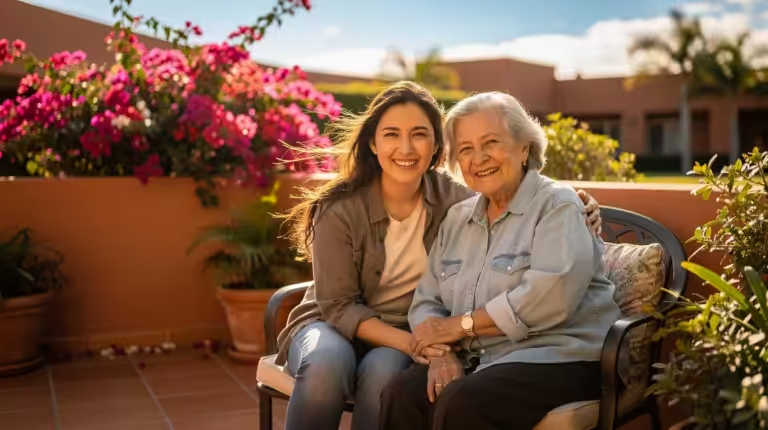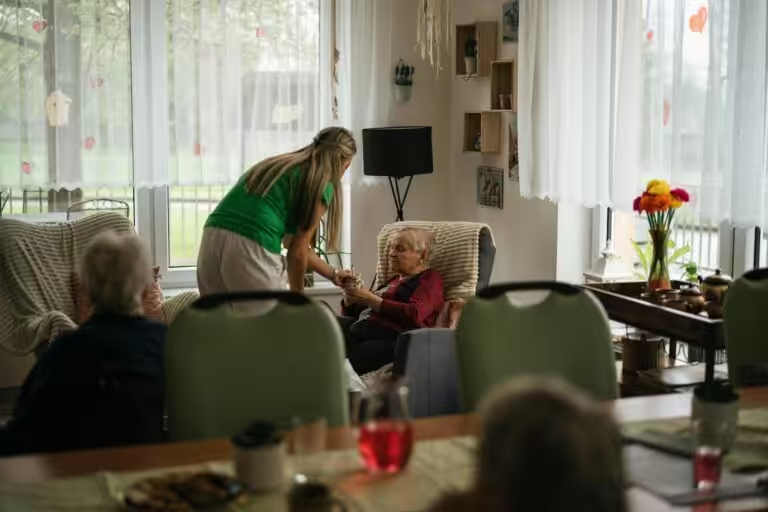

If you are reading this, you are probably holding two things at once: a diagnosis you did not choose, and a quiet hope that life can still be gentler somewhere else. Many couples reach that point and start looking south. Mexico has become a serious option for North American families navigating dementia, not because it is an escape, but because good memory care here often costs a fraction of what it does back home, the climate is kind to aging bodies, and you are still only a short flight from children and grandchildren.
This guide is written for the spouse doing the planning. It walks through when to make the move, how to fly with someone who has dementia, what memory care in Mexico actually costs, where families tend to settle, and, just as importantly, how to keep yourself standing through all of it. You know your partner better than anyone. Our job is to hand you the practical pieces so the decision feels less overwhelming.
Why families are looking at memory care in Mexico
The first reason is almost always cost. In the United States, the median cost of memory care runs about $6,690 a month, according to A Place for Mom, and well beyond that in the most expensive states. In Mexico, dementia-capable care commonly runs between $1,500 and $2,500 a month, with budget options lower and premium clinical care higher. For a couple living on a fixed income or watching savings stretch thin, that gap can be the difference between scraping by and actually affording quality care.
But cost is rarely the whole story. The retirement towns where memory care has developed in Mexico tend to have warm, stable weather, walkable plazas, and large English-speaking communities, which matters enormously when your spouse is losing their second language first or struggling to follow rapid conversation. Care here also leans warm and relational. Staffing tends to be more generous than families expect, and many facilities fold in physical therapy, cognitive activities, music or art sessions, and personalized meals as part of the monthly rate rather than as expensive add-ons.
Timing the move while your spouse can still travel
If a move is on the table, the hardest truth is also the most useful one: earlier is easier. Dementia is progressive, and the abilities that make relocation manageable, things like tolerating a flight, adjusting to a new room, and recognizing that this new place is home, tend to fade as the disease advances. Couples who move while symptoms are still mild or moderate almost always have a smoother transition than those who wait until a crisis forces the decision.
That does not mean rushing. It means being honest about the window. Talk with your spouse’s neurologist or physician about whether travel is still advisable and ask them to put their guidance in writing, which helps later with airlines, residency, and admission to a facility. If your partner can still take part in the choice, even in a limited way, include them. A move made with someone, rather than to them, is gentler for everyone, and it can ease the guilt that so many caregiving spouses carry.
Flying with a dementia patient: planning the journey
The flight is the part that worries most people, and with reason. Travel disrupts routine, and disrupted routine is exactly what tends to unsettle someone with dementia. A little planning removes most of the stress.
Book a direct flight whenever you possibly can. Connections, terminal changes, and long layovers multiply confusion and exhaustion. If you must connect, build in generous time and request wheelchair or escort assistance even if your spouse can walk, because it gets you through security and to the gate with far less standing and waiting. Try to fly at the time of day when your partner is at their best. Many people with dementia grow more agitated and disoriented in the late afternoon and evening, the pattern often called sundowning, so a morning flight that lands well before dark is usually kinder than an overnight or evening trip. The trip is shorter than many expect, as little as two hours by direct flight from border cities and roughly five from farther north, depending where you start, and the last leg is easy, about fifteen minutes from Puerto Vallarta’s airport or thirty to forty from Guadalajara’s to Lake Chapala, with San Miguel reached through Queretaro or Leon, so a prearranged car beats arranging ground transport on arrival.
Pack a carry-on as a comfort kit: all medications in their original labeled containers, a few days’ extra supply in case of delays, a favorite sweater or blanket, snacks, water, photos, and any small familiar object that soothes. Keep a printed card with your spouse’s diagnosis, medication list, allergies, and your contact details, and consider a discreet medical ID bracelet in case you are separated in a crowded airport. Tell the airline in advance that you are traveling with a passenger who has cognitive impairment; carriers handle these requests routinely and can flag it for the crew.
One more piece worth checking carefully: medication. Routine dementia drugs are generally fine to bring, but some sedatives and anti-anxiety medications are controlled in Mexico and have stricter rules. Carry a copy of the prescriptions and a letter from the prescribing doctor, and confirm the current rules with a Mexican consulate before you fly, since regulations change and getting this wrong at the border is the last thing you need on moving day. Once you arrive, most medications are available and Mexican versions often cost less, and a pharmacy doctor at a local consultorio can refill everyday prescriptions cheaply, though controlled ones need a local prescription. It is worth asking the facility to line up an English-speaking doctor and transfer prescriptions before move-in. For finding doctors, pharmacies, and insurance, see our guide to how healthcare in Mexico works.
Understanding the levels of senior care in Mexico
Before you compare places or prices, it helps to know how senior living in Mexico is usually sorted. At Retire Mexico we group it into three categories: independent living, assisted living, and nursing homes.
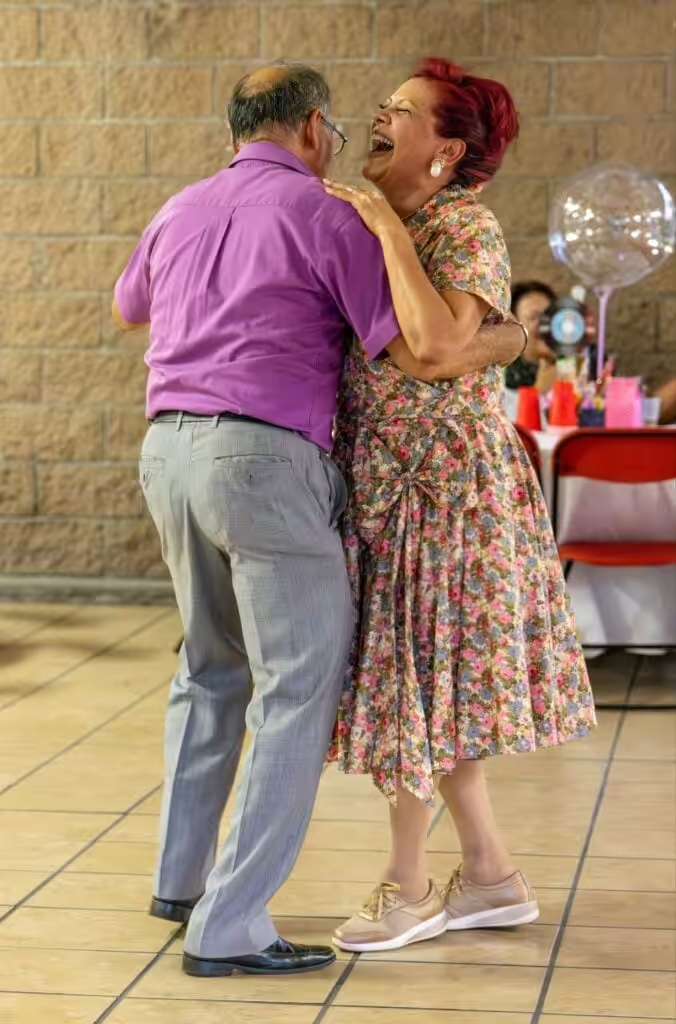
Independent living is for people who manage daily life on their own and simply want community, meals, and less upkeep. Assisted living adds help with the activities of daily living like bathing, dressing, and medication management, while still encouraging as much independence as possible. A nursing home, often called a casa de reposo, provides round-the-clock skilled nursing and higher-level medical supervision with licensed nurses and doctors, for serious conditions or advanced needs.
Memory care is a little different. Rather than a separate category, it is a health service that some facilities provide, which is why it shows up as a filter when you browse our directory rather than as its own building type. That distinction matters in practice, because many Mexican residences are small and integrated, so a resident with dementia may live alongside the general senior population rather than in a separate secured wing. For a spouse with dementia, what counts is finding a place, whether assisted living or a nursing home depending on how much help they need, that genuinely offers dementia-specific memory care, with closer supervision, secure surroundings, and staff trained in dementia behaviors. The practical question is not which label a facility uses, but whether it provides real memory care now and can step up the level of care later if you need it.
What memory care in Mexico costs
Pricing varies widely by town, by how medical the care is, and by whether your spouse needs a private room. The figures below are drawn from facilities in our directory that explicitly offer dementia or Alzheimer’s care, converted to US dollars at roughly 18 pesos to the dollar. Treat them as planning ranges and always confirm current rates directly, because facilities adjust pricing and the exchange rate moves.
| Destination | Typical monthly memory care (USD) | What you get at that price |
| Lake Chapala / Ajijic | $1,000 to $2,200 | The deepest market, from small family-run care homes at the low end to fuller nursing and dementia care with bilingual staff |
| Puerto Vallarta | $2,200 to $3,000 | A smaller cluster of facilities with 24/7 nursing and Alzheimer’s care, some with on-site specialist doctors |
| San Miguel de Allende | $2,950 to $3,900+ | The premium, more clinically specialized end, often geriatrician-led, sometimes with a one-time registration fee |
Where families settle: Lake Chapala, San Miguel, and Puerto Vallarta

Three places come up again and again for senior care, and each suits a different kind of couple.
Lake Chapala and Ajijic
If you only look at one area, make it Lake Chapala, the string of lakeside villages just south of Guadalajara that includes Ajijic, Chapala, Riberas del Pilar, and San Antonio Tlayacapan. It has the largest concentration of dementia-capable care in the country, the most bilingual staff, and a long-established expat community that knows the territory. The area even has a dedicated memory and dementia support group, which is rare and genuinely valuable when you need people who understand what you are living through. Hospitals are close, often within a few minutes, and many facilities include transport to medical appointments. It is also the most affordable of the three, which is why so many caregiving spouses start their search here.
San Miguel de Allende
San Miguel is the premium, more medical option. The memory care here tends to be geriatrician-led and equipped to handle Alzheimer’s alongside Parkinson’s, vascular dementia, and other complex conditions, with structured cognitive rehabilitation programs. It is a beautiful colonial city with a deep cultural life, and that polish comes at a higher price. If your spouse needs serious clinical oversight and the budget allows, it is worth a close look.
Puerto Vallarta
Puerto Vallarta suits couples who want the coast. The memory care market is smaller than Lake Chapala’s, but there are well-run facilities with round-the-clock nursing and Alzheimer’s care, including at least one with permanent on-site specialist doctors. Prices sit in the middle of the three. The sea air and resort-town amenities are the draw, along with an international airport that makes family visits easy.
In-home dementia care versus a memory care facility
Not every couple wants a facility, and Mexico makes the alternative genuinely affordable. In-home dementia care, including live-in caregivers, is far more attainable here than in the US, which is one reason couples who want to stay together under one roof often choose it. A live-in caregiver or a rotating team can manage daily needs while you remain the spouse rather than the full-time nurse, and you keep your home and routine intact.
The tradeoff is that in-home care puts more of the coordination on you. You become the manager of schedules, medications, and emergencies, and you take on the responsibility of vetting and supervising caregivers. A facility carries that load for you and adds 24-hour staffing, secured surroundings, and immediate help when something goes wrong at 3 a.m. Many couples start with in-home support and move to a facility as needs grow, and there is no single right answer. The honest question to ask is how much you can sustainably carry, because the plan has to protect both of you, not just your spouse.
One question comes up early: can the two of you stay together? Often yes. Some communities keep rooms set up for couples, and several run the full range of care under one roof, so the spouse who is well is not pushed out as the other’s needs grow. Nursing Home Lake Chapala in Riberas del Pilar has shared rooms made for couples, and Pacific Home in Puerto Vallarta offers independent living, assisted living, and a dedicated memory care wing on one property. Where a single place cannot house you both, the gentler route is to stay close: the well spouse takes a non-dementia part of the home, or a nearby independent living community, and visits every day while the other settles into a memory-focused residence like Casa Cieneguita in San Miguel de Allende. A dementia diagnosis does not have to mean living apart, so ask each place directly how they handle couples.
What to sort out before you go
Moving a spouse with dementia across a border involves paperwork that is easy to underestimate, and some of it has to be done while your spouse can still sign for themselves. That is one more reason not to wait too long.
Long stays require legal residency, usually a temporary or permanent resident visa that you start at a Mexican consulate before you move. The financial requirements change from year to year, so confirm the current thresholds rather than relying on older figures. Legal residents can also enroll in IMSS, the public healthcare system, which is worth looking into as a low-cost backstop alongside private insurance.
On the money side, plan to pay for care privately or through an expat insurance plan. Medicare does not cover care received in Mexico, so a retiree from the United States cannot rely on it here. Many families budget for a private Mexican policy or an international plan, and some keep emergency medical evacuation coverage in case they ever want treatment back home.
The paperwork that matters most with dementia is legal authority. Your power of attorney and advance directive from home are generally not recognized in Mexico, so to make medical and financial decisions for your spouse here you will likely need Mexican documents, a voluntad anticipada (the advance directive) and a poder notarial (power of attorney), signed before a Mexican notary. Doing this early, while your spouse can still take part and give consent, is far simpler than establishing guardianship after they no longer can. A Mexican notary or an immigration attorney can walk you through what your state requires.
This overlaps with the harder end-of-life questions most families put off, like which hospital you would be taken to and what happens when someone passes away. Done calmly and in advance, sorting it out lets the move be about settling in rather than scrambling. For the medical, legal, and funeral details, read our pre-admission checklist for senior living in Mexico.
Protecting yourself: caregiver burnout and respite care
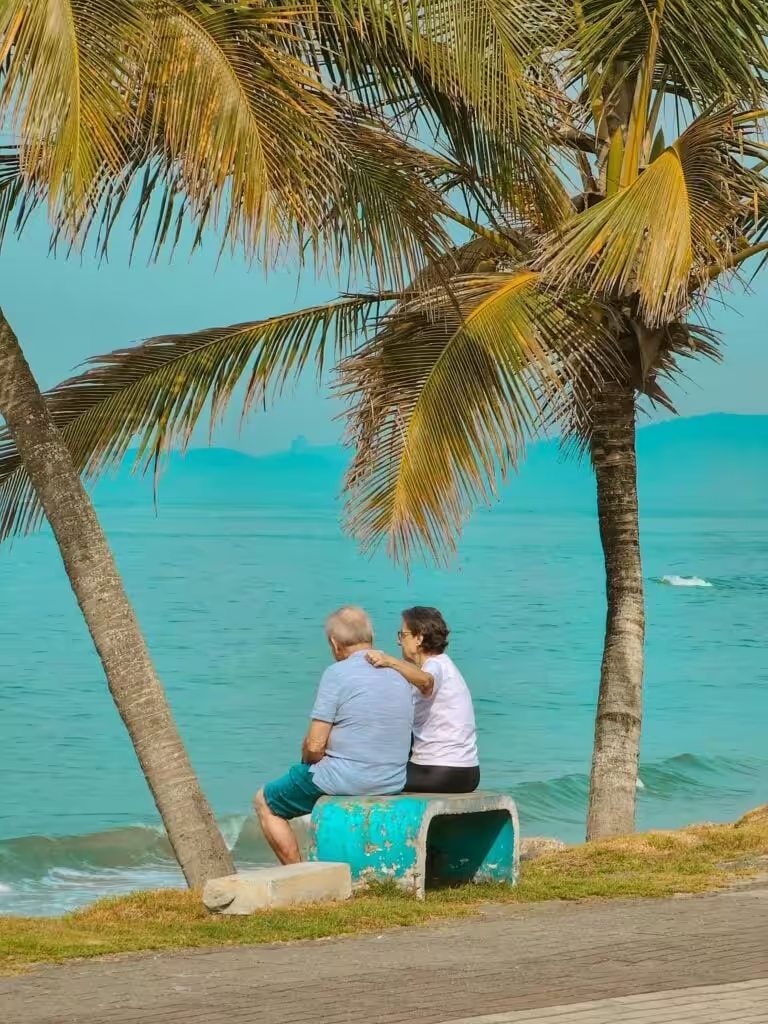
Here is the part that briefings about logistics tend to skip, and it may be the most important in this whole guide. Spouse caregivers carry an enormous, often invisible load, and caregiver burnout is real, common, and dangerous. It shows up as exhaustion that sleep does not fix, irritability, withdrawal from friends, trouble concentrating, and a creeping sense that you have disappeared into the role. Moving abroad does not erase that risk. Done wrong, the isolation of a new country can deepen it.
So build your own care into the plan from day one. The good news is that Mexico makes support affordable in ways that surprise people. Respite care, where a facility or in-home service takes over for a few days or weeks so you can rest, travel, or simply breathe, is within reach for many families here rather than being a luxury. Use it before you hit the wall, not after. Lean on the expat caregiving communities, especially the dementia support group around Lake Chapala, where you can talk to people who have walked the same road. Keep your own doctor, your own friendships, and your own small routines that have nothing to do with caregiving.
A caregiver who burns out cannot care for anyone. Protecting your health is not selfish. It is the thing that lets you keep your promise to your spouse.
What to verify before you choose a facility
Brochures and websites only tell you so much. Before you commit, visit in person if you can, or send a trusted local to look on your behalf, and ask direct questions. Does the residence have a secured area to prevent a resident from wandering, and what is its protocol when sundowning sets in during the evening? These specifics are not standardized across facilities, so do not assume them. Ask how close the nearest hospital is and whether the facility provides medical transport. Ask about staff-to-resident ratios, especially overnight, and whether there is a doctor or nurse on-site or on call. Confirm that staff speak enough English to communicate with your spouse as their language skills decline. Ask what is included in the monthly fee and what costs extra, and whether there is a registration or deposit fee. And ask to speak with another family already using the facility. The good ones will happily connect you.
Frequently asked questions
Can I bring my spouse’s dementia medications into Mexico?
Generally yes for routine dementia medications, carried in their original labeled containers with a copy of the prescription. Some sedatives and anti-anxiety drugs are controlled in Mexico and have stricter limits, so bring a letter from the prescribing doctor and confirm the current rules with a Mexican consulate before you travel. I would not rely on this paragraph alone, since regulations change.
Does Medicare cover memory care in Mexico?
No. Medicare does not generally cover care received outside the United States, and that includes memory care in Mexico. Most families pay out of pocket, which is part of why the lower cost matters so much. Check your specific plan and any supplemental or international coverage, and verify directly with Medicare, because individual situations vary.
Is it safe to fly with someone who has dementia?
For many people in the early and middle stages, yes, with planning. Choose a direct, daytime flight, request airport assistance, keep medications and comfort items in your carry-on, and ask your doctor whether travel is still advisable for your spouse’s stage. As dementia advances, flying becomes harder, which is one more reason not to wait too long if a move is the goal.
What is the best place in Mexico for memory care?
For most caregiving couples, Lake Chapala (Ajijic and the surrounding lakeside villages) is the practical starting point. It has the most dementia-capable facilities, the most bilingual staff, close hospital access, a dedicated dementia support group, and the most affordable pricing. San Miguel de Allende is the premium, more medical alternative, and Puerto Vallarta suits those who want the coast.
Can couples stay together if one spouse has dementia?
Often yes. Some facilities accommodate couples, and in-home care lets you stay in the same home while a caregiver handles your spouse’s daily needs. Staying together usually costs more than a single placement, so budget for it, and ask each facility directly how they handle couples where one partner needs memory care and the other does not.
Sources
- Retire Mexico internal senior care directory (prices converted to USD at approximately 18 MXN to 1 USD).
- Traveling: Safety Tips for People Living with Dementia | Alzheimer’s Association
- Travel Outside the U.S. | Medicare
- How Much Does Memory Care Cost? | A Place for Mom
Last updated: June 2026