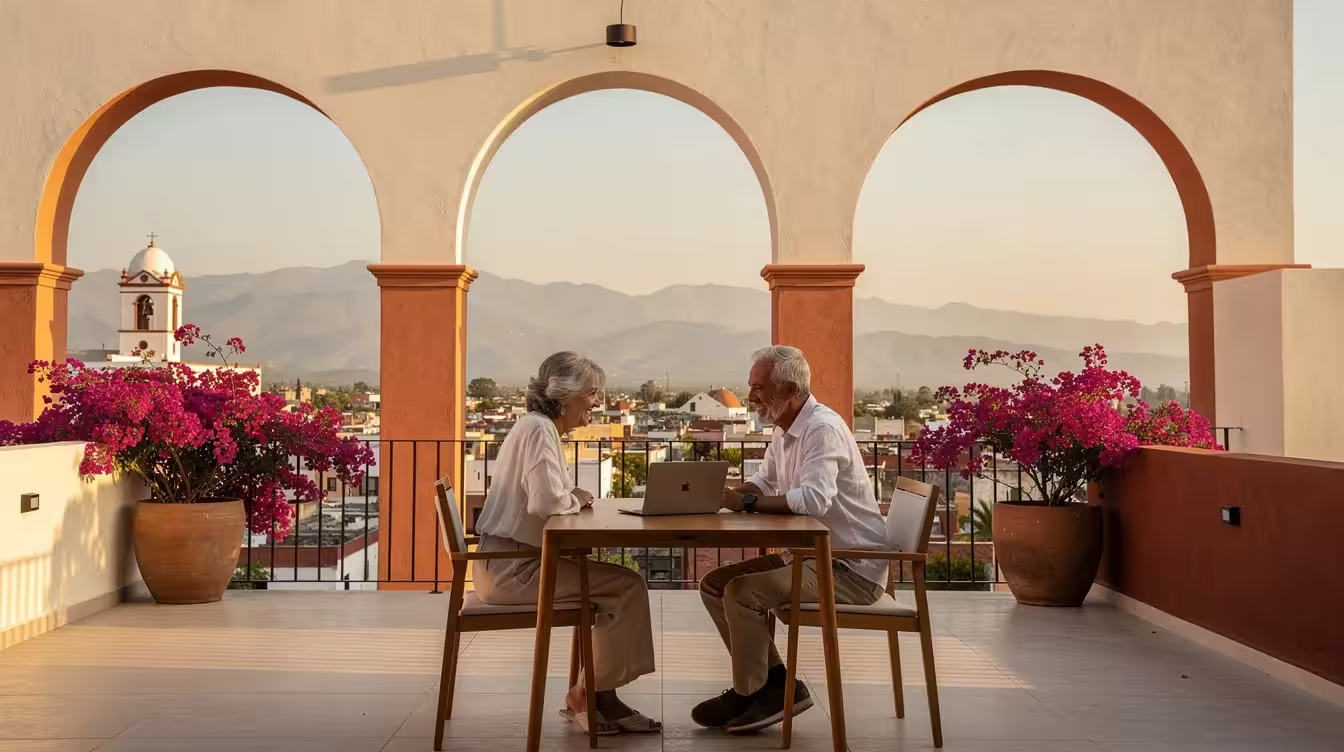
Most families researching senior living in Mexico arrive with the same three questions. What does it actually cost? Is the care as good as back home? And how do you tell a great home from a risky one when you’re choosing from another country?
This guide answers all three. You’ll find a clear explanation of how Mexico’s senior care system works, the real monthly costs from the homes in our directory, the licenses and staff credentials worth verifying, and how to tour a home properly before committing to anything.
How Senior Care Works in Mexico
If you’ve spent any time researching senior care in the US or Canada, you’re used to a system with clear labels. Assisted living means one thing. Memory care means another. Nursing homes have their own category entirely.
Mexico, however, works differently, and its healthcare system is one of the first things to understand before you start comparing facilities. There’s no national standard that defines what “assisted living” must include, no licensing body that separates memory care from nursing home care, and no government checklist that facilities must meet to use a particular label.
In practice, most Mexican retirement homes group services together under one roof. A single residence might accept independent residents, assist others with daily tasks, and provide nursing care for a third group, all in the same building. That’s actually more common than not.
That said, the care itself isn’t unregulated. Facilities operate under local and state health permits, and reputable residences maintain licensed clinical staff. The difference is that Mexico’s system is organized around what a facility actually does rather than what category it fits into.
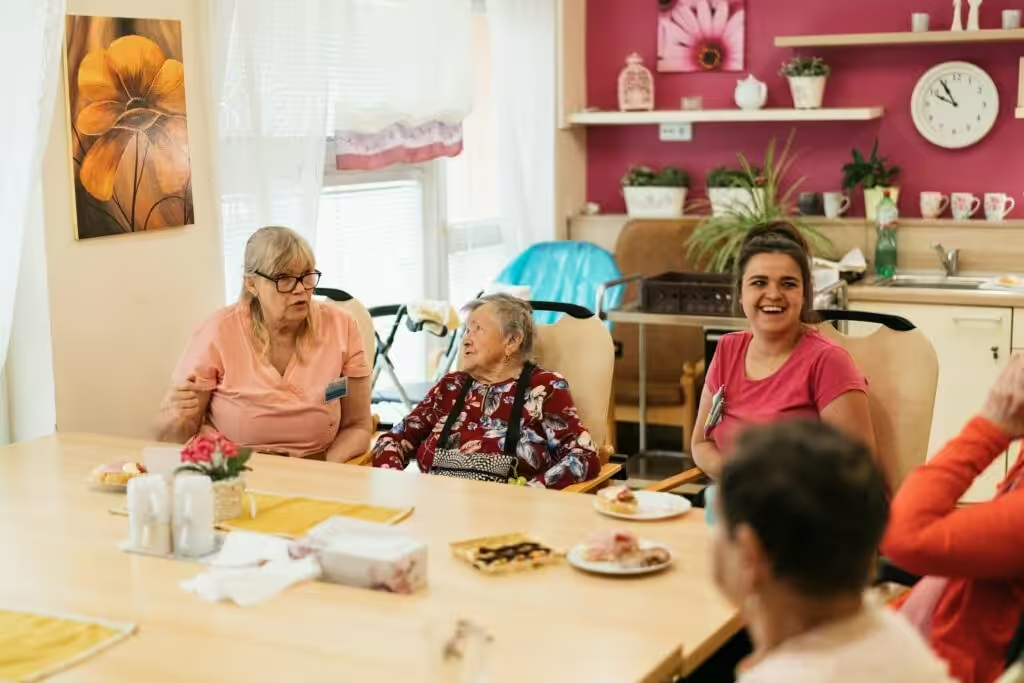
Senior Care Licenses in Mexico
Aviso de Funcionamiento: COFEPRIS is Mexico’s federal health regulator, roughly a combination of the FDA and CMS in the US. Homes that provide nursing care, assisted living, or medical oversight file an Aviso de Funcionamiento with COFEPRIS, the federal health registration confirming the home operates under minimum safety and sanitation standards. It’s a notice the home files rather than a permit COFEPRIS approves, and it’s free to submit.
Licencia de Funcionamiento (business license): Separately, every home needs a Licencia de Funcionamiento from the local ayuntamiento, the annual municipal business license that lets it operate in that town. Homes that keep both documents current usually hang them framed near reception.
NOM-031-SSA3-2012: The Mexican Official Standard that governs infrastructure requirements, safety protocols, staffing qualifications, and care standards for homes serving older adults, and it applies to every private home regardless of what it calls itself. In practice, compliance shows up as handrails and non-slip floors, an individual clinical file for every resident, qualified staff profiles, and planned nutrition rather than improvised meals.
Protección Civil: This is the safety side of compliance, roughly the equivalent of a US fire marshal or local emergency management inspection, and it matters most for residents who can’t evacuate on their own in a fire or earthquake. Homes that house residents are required to have an internal civil protection program, which means trained staff emergency brigades (first aid, evacuation, and fire prevention), periodic evacuation drills, and plans that specifically account for residents with limited mobility. On top of that, the local Protección Civil office inspects the property itself, checking extinguishers, evacuation routes, gas installations, and general safety hazards, and issues its sign-off, the Visto Bueno.
Cédula Profesional: The Cédula Profesional is Mexico’s government-issued professional license for nurses and doctors. Most day-to-day staff train through certificate programs rather than university degrees, and that’s normal, but if a home advertises doctors or registered nurses for its clinical care, those licenses should be real and current. You can verify any doctor or nurse by name yourself, for free, at the SEP’s public registry: www.cedulaprofesional.sep.gob.mx
Independent Living in Mexico
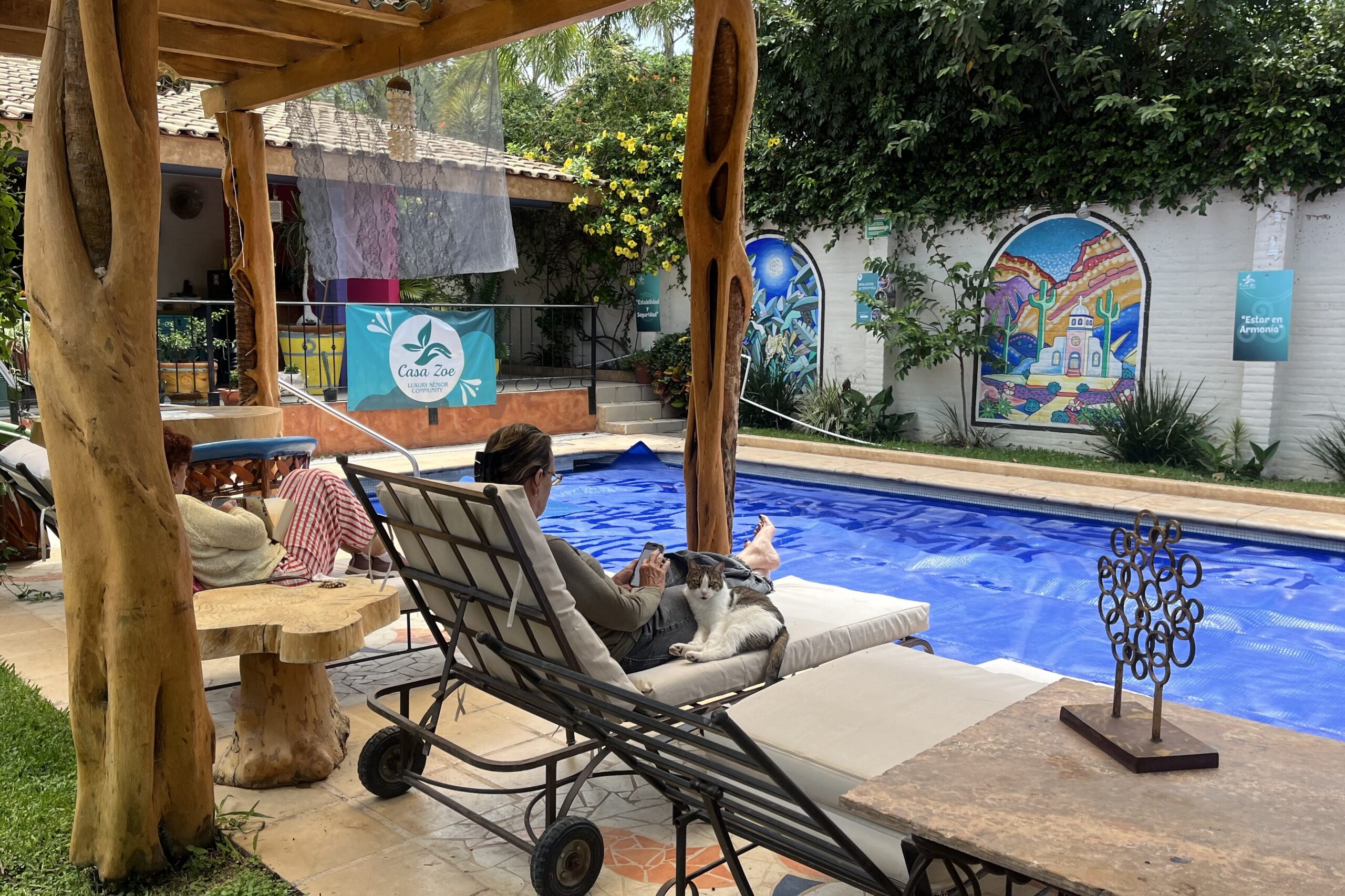
Independent living communities are built for active, self-sufficient adults 65 and up who want a built-in community, a full social calendar, and none of the household upkeep. What’s included varies by community: some handle the cooking, while others only offer basic housekeeping and the community itself, and that difference is a big part of what moves the price. Nobody is monitoring medications or helping with personal care.
Based on the homes in our directory, independent living in Mexico costs between $800 and $2,000 USD per month. At the lower end, expect a private studio, basic housekeeping, and shared community areas; at the higher end, communities add full meals, laundry, and wellness amenities. Compare that to living on your own in Mexico, where rent, food, utilities, and a weekly housekeeper typically add up to $1,500 to $3,000 a month. A community often costs about the same as running a household alone, with less of it on your plate.
In Ajijic, Quinto Elemento currently has availability, with garden-view suites inside a gated wellness resort. In San Miguel de Allende, Mesa Verde is the budget-friendly option and one of the few pet-friendly independent homes in the city.
Assisted Living in Mexico
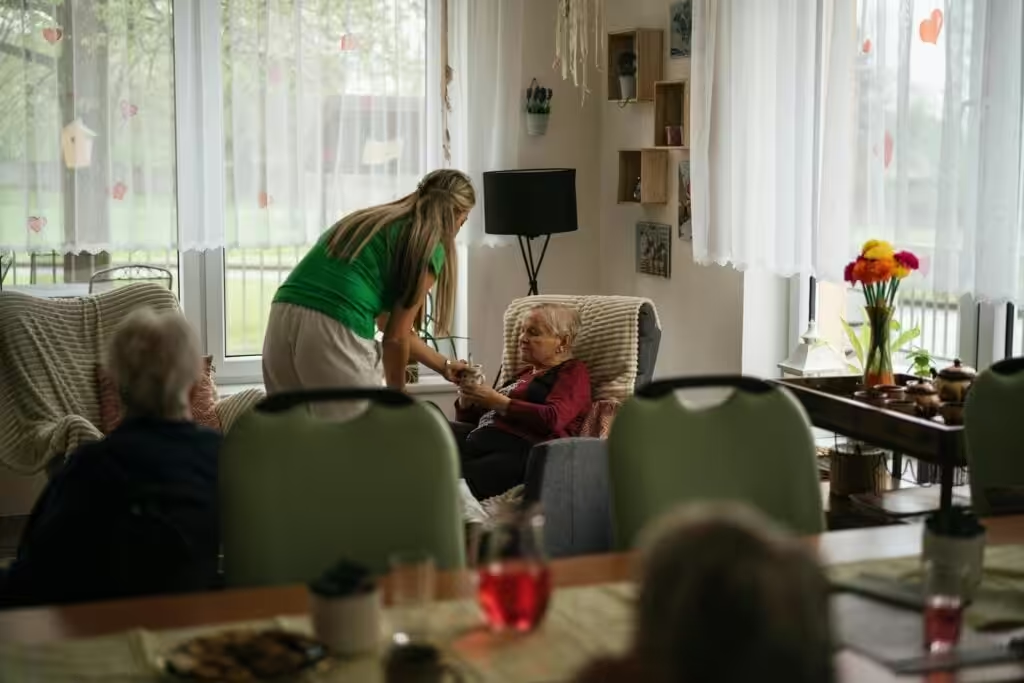
Assisted living is for retirees who are mostly independent but need routine help with daily living: cooking, cleaning, laundry, bathing, dressing, grooming, and staying on top of medications. It typically means trained caregivers, sometimes with technical nurses, but not necessarily a registered nurse on duty around the clock, as it doesn’t include ongoing medical care.
In Mexico, some homes offer assisted living only, but many combine assisted living, nursing care, and memory care under one roof. That’s one of the real advantages of Mexico’s retirement model: if a resident’s needs grow over time, they can move to a higher level of care without leaving the home, the staff, or the community they already know.
At Lake Chapala, Casa Sonya is the boutique option, just five residents in a home with a heated pool, while Casa Ana Maria offers a larger community feel a block from the lake.
What Assisted Living in Mexico Costs
Based on the homes in our directory, assisted living in Mexico runs $1,200 to $2,500 USD per month. That’s usually one flat monthly fee covering three meals a day, housekeeping, laundry, hands-on help with bathing, dressing, and grooming, medication reminders, and daily activities. For comparison, the US national median for assisted living is $6,200 per month, according to the 2025 Cost of Care Survey
Nursing Homes in Mexico
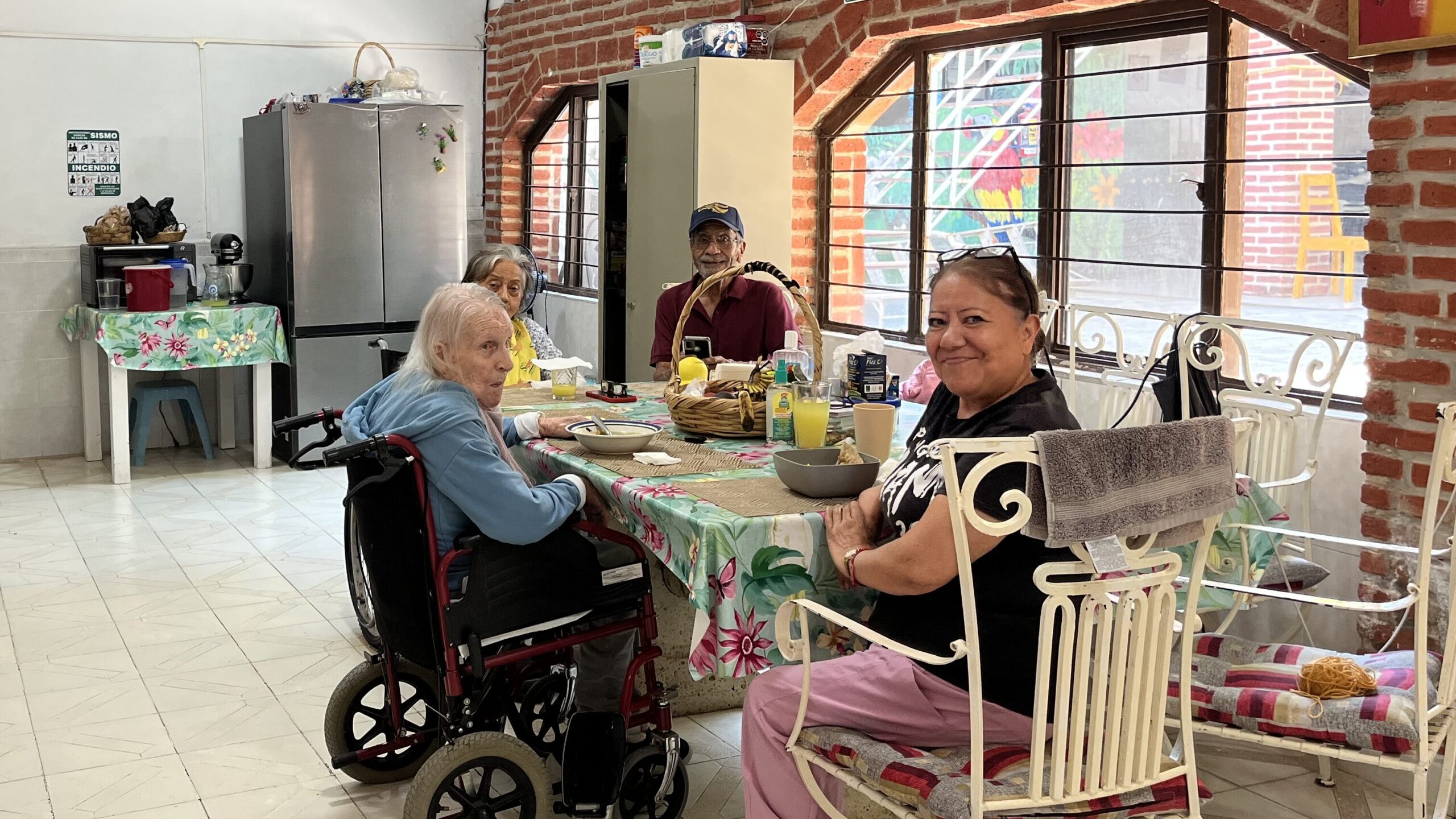
A nursing home is for residents who need continuous medical care: licensed nurses on site around the clock, access to a doctor, and the capacity to manage serious or chronic conditions. Post-hospitalization recovery, advanced dementia, Parkinson’s, and other high-dependency situations all typically require this level of care.
Quality varies more between individual homes in Mexico than it does in the US. The better homes maintain a registered nurse (Licenciada en Enfermería) for clinical oversight, with trained assistants handling daily routines, and a doctor on site or on call. Always ask specifically who is on duty overnight and on weekends before assuming a home can handle complex medical needs.
At Lake Chapala, Buhayra Living offers 24/7 bilingual nursing in a modern community setting, while Casa Zebra is the boutique alternative, five residents in a calm, spotless single-story home, and both handle memory care.
In Puerto Vallarta, we consistently recommend Pacific Home and Vida Serena: both are COFEPRIS-licensed and answer difficult questions with clarity. Vida Serena has the better location but smaller rooms, some of them shared; Pacific Home sits farther out toward the mountains, but the rooms are far more spacious.
What Nursing Homes in Mexico Cost
Based on the homes in our directory, nursing care in Mexico runs $1,500 to $3,000 USD per month, with budget options starting around $1,000 and premium homes reaching $3,750. The fee is usually flat and covers the room, meals, and around-the-clock nursing, though medical extras like equipment rental or private nursing shifts are often billed separately. For comparison, the US national median for a semi-private nursing home room is about $9,600 per month, according to the same 2025 Cost of Care Survey.
Memory Care in Mexico
Memory care is specialized care for people living with Alzheimer’s, other dementias, or the cognitive decline that can come with Parkinson’s. In practice it means structured daily routines, activities designed to slow cognitive loss, staff trained to handle confusion and difficult behaviors, and secured spaces that prevent wandering. And as dementia advances, the needs stop being only cognitive: swallowing and mobility problems, complex medication schedules, and other medical conditions stack on top, which is why late-stage memory care requires round-the-clock licensed nursing rather than companionship alone.
Nursing homes in Mexico are almost always equipped to care for residents with Alzheimer’s, Parkinson’s, and other forms of dementia. What varies from home to home is the depth: secured areas, dementia-specific staff training, and structured cognitive programs differ widely.
In San Miguel de Allende, Casa Cieneguita’s program centers on residents with Alzheimer’s, Parkinson’s, and other degenerative conditions, with a wide range of therapies, from art to physical therapy. At Lake Chapala, Colibri Blue provides memory care alongside assisted living and 24/7 nursing care.
Short-Term & Convalescent Care in Mexico
This is the option most families don’t know exists, and it’s worth knowing about. Many homes across Mexico accept residents for short-term stays after surgery, hospitalization, or injury. The arrangement is common among foreign patients who need a supervised recovery environment before flying home but don’t need or want a full hospital stay.
In practice, a short-term stay can run anywhere from two weeks to a few months, and costs are typically quoted on a daily or weekly basis rather than a monthly fee. Some homes specialize in it: Alicia’s Convalescent at Lake Chapala is built around exactly this, and Mi Casita also takes recovery residents. Availability varies and not every home advertises it, so it’s always worth asking directly.
Palliative and Hospice Care in Mexico
Palliative and hospice care are related but not the same thing, and the difference matters when you’re asking homes what they offer. Palliative care is comfort care for anyone with a serious illness, at any stage: it focuses on relieving pain and symptoms and can run alongside active treatment for years. Hospice is end-of-life care, for when treatment has stopped and the focus shifts entirely to comfort and dignity in the final months.
Mexico passed its Palliative Care Law in 2009, and both types of care are available in the main expat hubs, typically through hospitals, home-based providers, and retirement homes. Some senior homes do accept residents needing end-of-life care, but it isn’t standard, so ask directly.
One legal note that surprises most families: a US or Canadian advance healthcare directive is not legally valid in Mexico. To have your end-of-life wishes honored, you need a voluntad anticipada (living will) under Mexican law, which a local attorney or patient advocate in any of the major expat cities can help you put in place.
For step-by-step guidance on creating a voluntad anticipada, see Wellness Shepherd’s detailed guide on the legal requirements and process.
What Senior Living Costs in Mexico
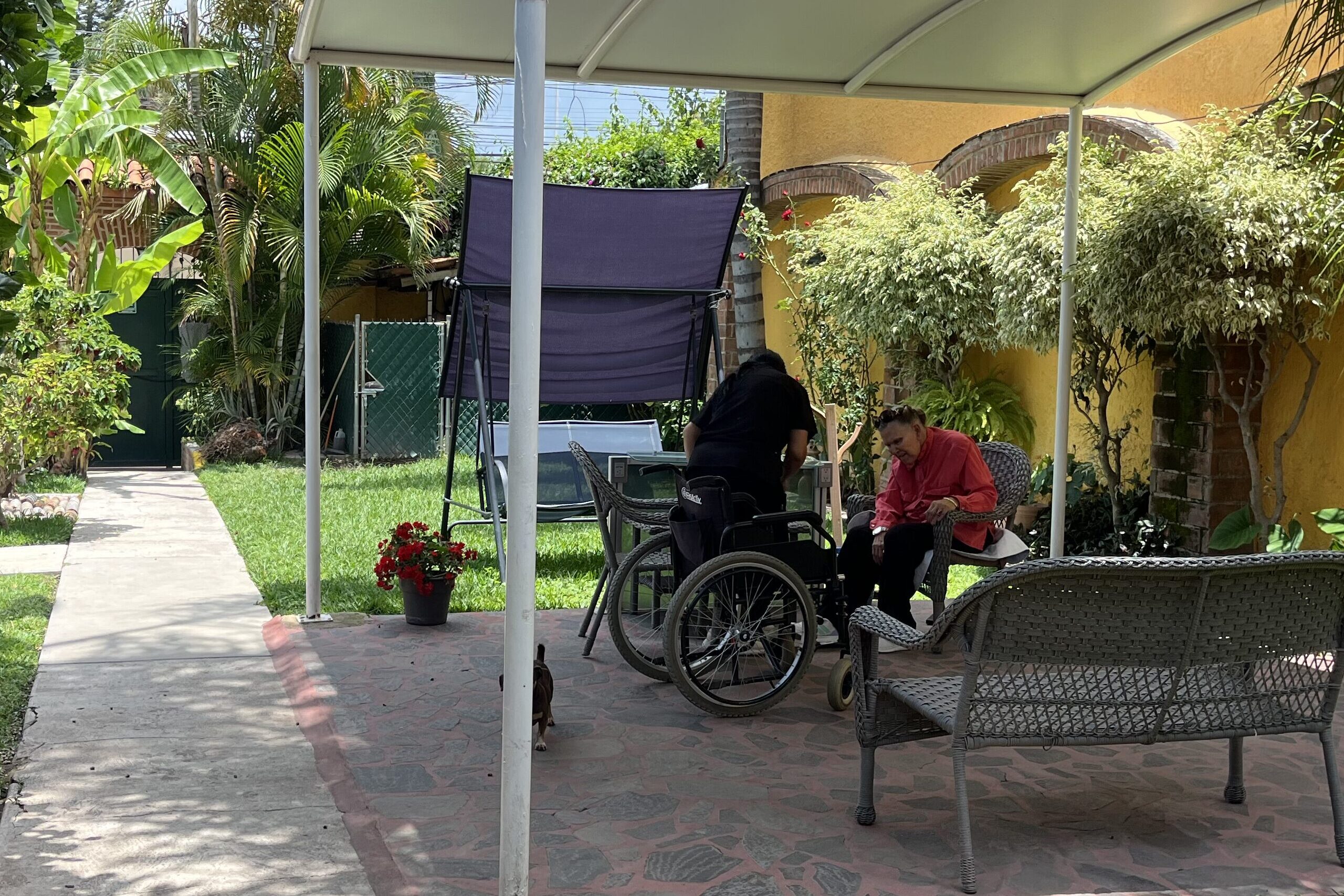
Here’s the full picture from the homes in our directory:
| Care type | Monthly cost (USD) |
|---|---|
| Independent living | $800 to $2,000 |
| Assisted living | $1,200 to $2,500 |
| Nursing care (including memory care) | $1,500 to $3,000, up to $3,750 at premium homes |
How Senior Homes Bill in Mexico
Most Mexican senior living homes charge one flat monthly fee that covers the room, three meals a day, housekeeping, laundry, personal care, and daily activities, and unlike the US model, that fee usually stays consistent even as care needs change. A small number of homes do adjust pricing by care level, so confirm the structure in your first conversation.
Short-term and convalescent stays are the exception: those are quoted by the day or week rather than by the month.
Two more things worth knowing upfront. Room type moves the price more than almost anything else: shared rooms generally run $900 to $1,400 per month, while private rooms with private bathrooms range from $1,200 to $3,750 at the high end. And some services are billed separately from the monthly fee, such as medical equipment rental, transportation to doctor appointments, and pre-admission assessments.
What Gets Billed Separately?
Beyond the monthly fee, these are the extra costs families most often see:
- Medical extras. Renting equipment such as hospital beds or oxygen tanks, medication management, private nursing shifts, and physical therapy, typically charged per visit, per hour, or as a monthly surcharge. These are usually paid out of pocket, through private Mexican insurance, or through IMSS. For more on how that works, see our healthcare guide.
- Personal supplies. Diapers and personal hygiene items are usually on you.
- Pets. Homes that allow them usually add a cleaning fee, and food, vet care, and possibly a dog walker are your own costs.
- Transportation. Some homes charge for trips to the doctor or shopping; others include one outing a month.
- Activity add-ons. Some homes offer extras like sports programs for an additional fee.
- Your room, your furniture. Many homes let you decorate your room or studio however you like, but the furniture is yours to buy.
- Getting in. Some homes run pre-admission medical assessments they charge for, typically $100 to $500 USD, and many collect a deposit. One-time admission or registration fees commonly run $200 to $2,000 USD.
The right approach is to ask every retirement home for a written breakdown of what the monthly fee includes and a separate list of services that carry an extra charge.
Contracts and Payment
Contract terms vary more than most families expect. For assisted living, nursing, and memory care, contracts typically start at three months, and only a few places ask for a full year. However, some homes also take residents for just a few weeks or a month, usually for temporary stays or post-surgery recovery. Payment is usually cash or bank transfer, some homes take credit cards, and some even accept US dollars instead of pesos.
Before signing, get four things in writing: the minimum contract length, the notice period required to leave, what happens to the deposit if a resident needs to move or passes away, and what triggers a mandatory exit if care needs exceed what the home can handle.
What Homes Ask From You
Admission requirements vary by home and care level. Some ask for proof of insurance, others for a power of attorney, and a few require a funeral plan on file. Independent living homes may only ask for an emergency contact who lives in the city. Ask for the full list early, before you fall in love with a home.
Whatever the home, the right approach is the same: ask for a written breakdown of what the monthly fee includes and a separate list of services that carry an extra charge. If a home is reluctant to put that in writing, treat it as a red flag.
What Happens if Care Needs Increase
Care needs change. A resident who enters assisted living in good health may need nursing-level care two years later. A spouse with early-stage dementia may progress faster than expected; you get the picture.
Having a clear understanding of what happens in those scenarios before you sign a contract is not pessimistic. It’s practical.
Do Retirement Homes Have a Care Transition Policy?
The first thing to establish is whether a senior living home can accommodate increasing care needs within the same building, or whether a resident would need to move to a different room, a different wing, or different facility entirely.
Many Mexican retirement homes operate across multiple care levels under one roof, which is one of the genuine advantages of the local model. A resident can move from assisted living to nursing care without changing address, losing their community, or disrupting their daily routine.
That said, not every facility offers this. Some are single-level operations that simply aren’t equipped to handle care beyond a certain point.
Knowing which category a facility falls into before committing is essential, particularly for residents with progressive conditions like Parkinson’s or Alzheimer’s, where increased care needs aren’t a possibility but a certainty.
Ask directly: if my care needs increase significantly, what are the options within this facility? What happens if those needs exceed what you can provide?
How to Tour a Senior Residence in Mexico
A brochure can make any facility look good. A website can make it look great.
Neither one will tell you what it actually feels like to live there, how the staff members treats the residents, how they handle medical emergencies, or whether the smell in the hallway is something you’d want your parent living with every day. A visit, however, will do just that.
Touring a facility is the single most important step in this process, and most families don’t do it thoroughly enough. Here’s how to do it right.
What Should You Look For Room by Room?
Start with the common areas. Are they clean, well-lit, and genuinely used by residents, or do they feel staged? A lounge with nobody in it at 3 pm is telling you something.
Look at the dining area during a meal if you can. Is the food real food, served with care, or is it institutional and perfunctory?
Move to the resident rooms. Check for natural light, ventilation, and whether the space feels livable rather than merely functional. Look at the bathrooms specifically.
Grab bars, non-slip flooring, and accessible showers matter more than most families initially realize. If a room doesn’t have those features and the facility serves residents with mobility challenges, that’s worth flagging directly.
Check the outdoor areas too. A garden or courtyard that residents actually use is a meaningful quality-of-life indicator. One that’s overgrown or locked is not.
How Do You Read the Staff?
The staff will tell you more than the building ever will. Watch how they interact with residents when they don’t know you’re watching.
Do they make eye contact? Do they use residents’ names? Do they seem rushed, or do they take a moment?
Ask to speak with a caregiver, not just the administrator who is showing you around. The people doing the day-to-day work will give you a ground-level picture that no tour script ever will.
Pay attention to staff turnover too. High turnover in any care facility is one of the clearest signals of a poorly run operation, and it’s worth asking directly how long the current team has been there.
Why Does Timing Matter?
Most families visit once, during business hours, on a weekday. That’s the version of the home the management wants you to see.
Homes in Mexico are generally flexible about visiting hours, so take advantage of it: visit more than once, at different times of day, before committing. Staffing and the general rhythm of the house often differ between mornings, afternoons, and weekends, and seeing a home at two different hours tells you more than any brochure ever will.
If a second visit isn’t possible before deciding, ask directly how staffing levels differ between daytime and overnight, and between weekdays and weekends. A good home answers that question without hesitation.
How to Tell a Home Is Compliant on Your Tour
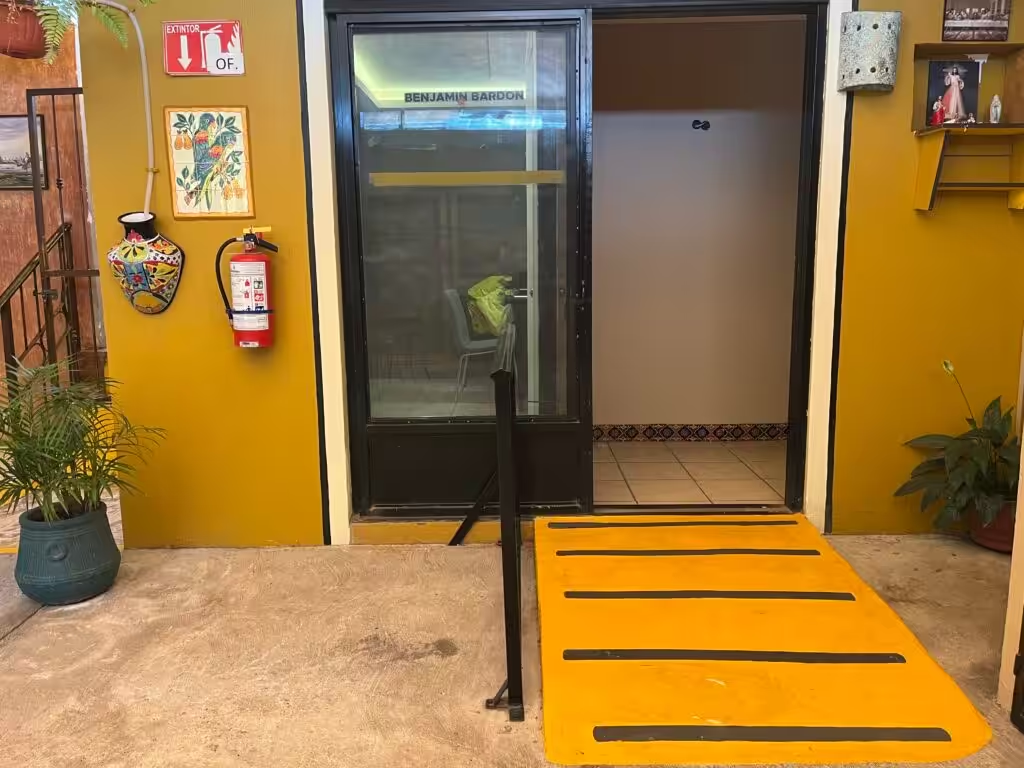
You won’t get to audit a home’s paperwork, but a lot of compliance is visible if you know what to look for. Match what you see to your own situation:
- If mobility is a concern (now or later): look for ramps at entrances and level changes, handrails in hallways and grab bars in the bathrooms, an elevator if the home has more than one floor, roll-in showers, and comfortable, higher toilet seats. Confirm these exist where the resident would actually need them, not just in one show bathroom.
- If the resident needs nursing or medical care: ask to see the home’s COFEPRIS Aviso de Funcionamiento. Homes that keep it current usually hang it framed near reception. A home not displaying it isn’t automatically a red flag, but having it is at least a baseline guarantee that it’s registered and meets minimum safety and sanitation standards.
- Civil protection (Protección Civil): look for fire extinguishers, marked evacuation routes, and signage explaining what to do in an earthquake or fire. Their presence is a good sign the home has an approved civil protection program and trained staff.
- NOM-031-SSA3-2012 in practice: beyond the ramps and grab bars above, watch the human side. Do residents look relaxed and comfortable around the staff? Is the home clean and well-kept, with real, planned meals rather than improvised ones? Those everyday details are exactly what the standard is meant to protect.
And the warning signs
Some red flags are obvious during a tour. Others take a little more digging. Pay attention if:
- A nursing home deflects or becomes evasive when you ask about its licenses
- Staff-to-resident ratios feel thin, particularly in the evenings or on weekends
- Contract terms are vague about exit clauses, deposit refunds, or fee increases
- Management discourages unannounced visits or second tours at different times of day
- Residents look neglected or rooms are kept dirty
Choosing Senior Care in Mexico
For many Americans, senior care in Mexico is often a better arrangement than anything available back home, at a fraction of the cost. The families who navigate it well are the ones who visit in person, ask direct questions, and don’t let a nice brochure substitute for real due diligence. This guide gives you the framework. The next step is seeing what’s actually available.
Work with a Senior Living Advisor
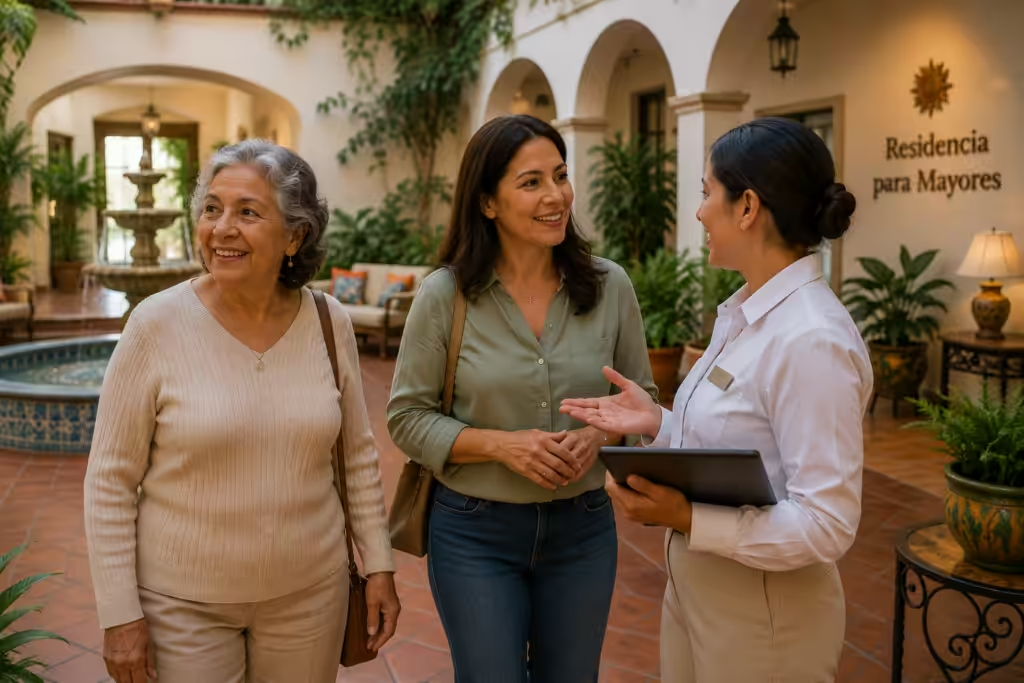
The Mexican senior care market is different to what you’re used to and largely undocumented in English. A placement advisor who knows the landscape can save you months of research, several wasted trips, and potentially a very costly mistake.
A placement advisor assesses your specific situation, which includes care needs, budget, location preferences, and language requirements, and then matches you with facilities that genuinely fit.
The good ones have visited these facilities in person, know the staff, and have a clear picture of which ones perform well and which ones look better on paper than they do in practice. They also help with logistics that families often underestimate: translating contracts, flagging problematic clauses, coordinating tours, and acting as a bilingual go-between during the admissions process.
The value of a placement advisor increases significantly when care needs are complex, when a family is coordinating from outside Mexico, when memory care or nursing-level care is involved, or when time is short.
That’s exactly the work we do at Retire Mexico. We personally visit and verify homes across Lake Chapala, Puerto Vallarta, and San Miguel de Allende, and we know them beyond the brochure.
Reach out and tell us your situation, and we’ll match you with the homes that fit, free for families. Or explore on your own: our directory lets you filter by location, budget, care type, healthcare services, amenities, dining, pet-friendly policies, room types, residence size, and more.