Why Retire in San Miguel de Allende
San Miguel de Allende offers a structured, walkable environment with a strong sense of community, which many seniors find appealing as they age. The city is renowned for its rich cultural heritage, vibrant arts scene, and historic center, a UNESCO World Heritage site featuring beautiful colonial architecture and colorful facades.
While San Miguel has private hospitals and clinics that handle routine and moderate medical needs, many residents rely on Querétaro for more complex procedures and specialized care. This proximity allows seniors to enjoy the charm of a smaller city while having access to advanced healthcare when needed.
The city hosts one of the largest and longest-established expat communities in Mexico, providing a welcoming expat community with English-speaking caregivers, support staff, and senior-focused services that are easier to find than in many towns of similar size.
Who It’s For
- Seniors seeking calm but structured small-city living with easy access to cultural activities and outdoor recreational opportunities
- Those interested in independent living, assisted living, or light to moderate senior care
- Americans and Canadians who value a strong, welcoming expat community and meaningful relationships
- Individuals who prefer a cooler, drier climate than coastal areas with pleasant year-round weather and cool nights
- Retirees who want to live within driving distance of a major Mexican city with quality healthcare facilities
Healthcare and Hospitals
San Miguel de Allende offers good healthcare facilities, including private hospitals and clinics providing general care, diagnostics, emergency services, and quality healthcare with many English-speaking doctors and staff.
For advanced treatments, specialized surgeries, or complex diagnostics, many seniors travel to modern private hospitals in nearby Querétaro. This referral pattern is common and important to consider when planning for long-term or higher-acuity care.
Here are some of the options:
1. Hospital MAC San Miguel de Allende
Located at Camino a Alcocer No. 12, Saltito de Guadalupe, Hospital MAC opened in 2017 and operates a two-floor complex with 53 specialist offices, 2 operating rooms, 17 hospital beds, ICU, CT scan, MRI, ultrasound, mammography, and an on-site ambulance service. Doctors are generally bilingual. Phone: 415 150 3900.
2. Hospital Joya San Miguel de Allende
Located at Libramiento José Manuel Zavala 12, Centro, Hospital Joya opened in March 2021 as a second-level private hospital with a clinical laboratory, full imaging services, emergency and intensive care units, and a specialized respiratory disease center. Specializations include pediatrics, cardiology, general surgery, internal medicine, and otorhinolaryngology, among others. Doctors are generally bilingual. Phone: (415) 152 5900.
3. La Clínica SMA
Located at Libramiento José Manuel Zavala 96, Col. San Antonio, La Clínica SMA is a well-regarded private clinic among the expat community, offering general medicine, emergency care, advanced diagnostics, physical therapy, an in-house laboratory, and an on-site pharmacy. Known for shorter wait times and personalized attention. Phone: (415) 152 2255. Pharmacy: (415) 103 4169.
4. Hospital de la Fé
Located at Libramiento a Dolores Hidalgo No. 43, Hospital de la Fé is one of San Miguel’s established private hospitals in the Zona Centro area, with a range of specialist offices on site. English-speaking surgeons and staff have been confirmed by multiple expat residents. Verify current services and hours directly before visiting.
5. Hospital H+ San Miguel de Allende
Hospital H+ San Miguel de Allende is a private hospital offering ethical and professional medical care with specializations including gynecology, cardiology, geriatrics, hematology, dermatology, and critical medicine. Part of the Grupo H+ network. Verify current operational status directly, as this facility has gone through multiple ownership changes. Address: Libramiento José Manuel Zavala 12.
6. General Hospital Dr. Felipe G. Dobarganes
The city’s public general hospital, located at Av. 1o. de Mayo No. 7, Ignacio Ramírez, San Miguel de Allende. Handles general emergencies and basic care. Most expat retirees use it as a last resort given typical public facility wait times. Phone: 415 110 3262. Emergency line: 066.
Neighborhoods and Living Options
San Miguel de Allende features charming neighborhoods such as the historic Centro Histórico with its cobblestone streets and colonial architecture, as well as tranquil residential areas like Colonia San Antonio and artistic hubs like Colonia Guadalupe.
Gated communities like Los Frailes offer modern conveniences, swimming pools, fitness centers, and security, ideal for retirees seeking comfort and safety.
Here’s the list of the communities:
1. Centro Histórico
The historic center is walkable to restaurants, galleries, local markets, and cultural events, with iconic landmarks within a short stroll.
Properties here are the most expensive in the city, with one-bedroom rentals starting around $1,500 USD per month and going considerably higher for colonial-style homes. Cobblestone streets and some steep grades present real mobility challenges. Best suited for retirees in good physical condition who prioritize proximity to everything.
2. Colonia San Antonio
A residential neighborhood west of Centro, a flat five-to-ten minute walk from the main plaza. Streets are quieter and rents are more accessible than Centro, with one-bedroom apartments available from around $1,000 USD per month.
It sits close to the Via Organica organic market and El Charco del Ingenio botanical garden. A practical choice for retirees who want walkable access to downtown without paying Centro prices.
3. Colonia Guadalupe
An artistic, laid-back neighborhood close to Centro, known for its murals, cottage-style homes, and relaxed community character.
Rents are among the more accessible in the city’s central areas. It attracts artists and expats who want to be near the cultural scene without Centro rates. Some cobblestone streets, but generally manageable terrain for most retirees.
4. Guadiana
One of the most consistently recommended neighborhoods among long-term expats. Guadiana has wide paved streets, underground utilities, several small parks, and a flat five-to-ten-minute walk to downtown.
It’s quieter than Centro but close to restaurants and shops along Ancha de San Antonio. One-bedroom rentals run approximately $1,000 to $1,500 USD per month. A practical, comfortable base for retirees who value walkability and a calmer pace.
5. Los Frailes
A suburban gated community on the northern edge of the city, offering a mix of villas, townhouses, and modern apartments. Security, swimming pools, and fitness facilities are standard.
It’s more spread out than central neighborhoods and requires a car for most errands, but rents tend to be lower than Guadiana or Centro. A good fit for retirees who prioritize security and modern amenities over walkability.
6. Atascadero
A hillside neighborhood to the east of Centro with larger properties, private gardens, and panoramic views of the city and surrounding countryside.
The walk downhill to Centro takes about ten minutes, though the return uphill is demanding for most. Residents generally rely on cars or taxis. Not practical for seniors with mobility limitations, but appealing for those who prioritize privacy, green space, and views.
7. Ventanas de San Miguel
A premier residential and golf community on the outskirts of the city, with a Nick Faldo-designed course, private security, and luxury homes with views of the surrounding countryside.
It suits retirees who want modern amenities, expansive properties, and a quieter lifestyle away from the city center. A car is essential here. One of the higher-priced living options in the San Miguel area.
Lifestyle and Activities
San Miguel de Allende’s calendar is one of the most active of any small city in Mexico. The pleasant climate keeps outdoor events running year-round, and the large expat population sustains a level of English-language programming that most cities of this size cannot match.
- Cultural Events: The San Miguel Writers’ Conference and Literary Festival takes place every February and draws international authors and speakers. The International Jazz and Blues Festival runs each November, and the Chamber Music Festival is held every August. The city is also a short drive from Guanajuato, where the Festival Internacional Cervantino brings world-class performing arts every October.
- Art Galleries: The city has an active gallery circuit, with Fábrica La Aurora serving as the main hub. Located at Calzada de la Aurora s/n, it is a converted 19th-century textile factory housing over 20 studios, galleries, and design showrooms, open Monday through Saturday 10:00 a.m. to 6:00 p.m. and Sundays 10:00 a.m. to 5:00 p.m. Admission is free.
- Outdoor Activities: El Charco del Ingenio botanical garden and nature reserve sits just above the center and offers walking trails through native cacti and canyon terrain with views of the surrounding countryside. English-language guided tours depart every Tuesday and Thursday at 10:00 a.m. Hot air balloon rides at sunrise are one of the city’s signature experiences, with flights over the colonial rooftops and the Guanajuato highlands. Horseback riding through the surrounding countryside is also widely available. Golf courses at Ventanas de San Miguel and Malanquin Golf Club are within a short drive.
- Biblioteca Pública: Located on Insurgentes in the historic center, the Biblioteca Pública holds the second-largest English-language collection in Mexico and functions as a genuine community hub, with a café, bulletin boards, and regular events for residents and newcomers.
- Local Markets: The Tuesday tianguis at El Nigromante is the city’s main weekly market, with fresh produce, artisan goods, and household items. The Mercado Ignacio Ramírez near the center handles daily groceries and is a practical resource for retirees who cook at home.
Getting Around
San Miguel de Allende offers several transportation options for daily life, though the city’s terrain and cobblestone streets are important to factor in, depending on your neighborhood and mobility.
Taxis: Green taxis are the most reliable and practical option for most retirees. Fares within and around the centro average around 50 MXN (approximately $2.50 USD), with costs increasing roughly 20 MXN per kilometer beyond the center. Always agree on the fare before getting in, as meters are not standard.
Uber: Uber operates in San Miguel, but with limitations. Driver availability is inconsistent, and cancellations are common. It works better as a backup than a primary option, though the app’s upfront pricing and tracking are useful when a driver is available.
Public Buses: City buses cover most neighborhoods and cost around 10 MXN (under $0.50 USD) per trip. They are affordable but not always practical for seniors, given limited seating and cobblestone stops. Most long-term expat retirees use taxis rather than buses for in-town travel.
Driving: A personal vehicle is most useful for trips outside the city, including medical appointments in Querétaro, day trips to the surrounding countryside, and airport runs. Driving within Centro is not practical, given the narrow streets and limited parking.
Airport Transfers: Querétaro International Airport (QRO) is approximately 80 minutes by car and the most commonly used airport for San Miguel residents. León/Guanajuato International Airport (BJX) is roughly 90 minutes. Bajio Go is the most recommended shuttle service for transfers to both airports. They can be reached at 415.185.8665, or from the US at 202.609.9905. Shared shuttle fares from Querétaro run approximately 500 to 600 MXN per person ($25 to $30 USD).
Cost of Living
For a senior living in a San Miguel de Allende care facility, plan on roughly $2,950 to $3,750 USD a month for assisted living and nursing care, with independent living options running considerably lower, from around $1,100 to $1,650 USD a month.
The facility fee covers most of the day-to-day costs: the room, meals, housekeeping, laundry, personal care, activities, and utilities. What you spend on top of that tends to be modest, mainly health insurance, a phone plan, medications, and personal money for outings, markets, and the occasional restaurant.
Where you land in that range depends mostly on care level and room type. Independent living is the most affordable, assisted living is higher, and full nursing care is at the top. A shared room costs less than a private room, and some facilities offer only private rooms, which pushes the price up.
The priciest path is renting your own place independently and arranging private caregivers to come to you, since you give up the efficiency a care residence folds into a single monthly fee. San Miguel has solid rental options across neighborhoods, with one-bedroom apartments running from around $800 USD a month in outer areas to $1,500 USD and above near the historic center.
San Miguel de Allende sits in the mid-to-upper range of Mexican retirement cities, more expensive than Lake Chapala but still significantly more affordable than comparable care in the United States or Canada. The pleasant climate keeps utility costs low, which offsets some of the premium on central housing. Treat these as planning figures, confirm the current exchange rate, and ask each residence directly what its fee includes and what it bills separately.
Senior Care Facilities in San Miguel de Allende
San Miguel de Allende has six senior care facilities, ranging from independent living communities to full nursing home care. Options vary significantly in size, price, and care level.
Casa Cieneguita: Located in the rural Cieneguita area, about 5 to 15 minutes from the nearest hospital. This 12-resident facility offers assisted living and nursing home care. All rooms are private with private bathrooms. Health services include an on-site physician, 24/7 nursing, physical therapy, and dementia care. Staff is fully bilingual. A pool, gym, garden, and organized outings are available. Price starts from $3,750 USD per month.
Cielito Lindo Assisted Living: Located in Rancho Los Labradores, outside the city. The only facility in San Miguel covering independent living, assisted living, and nursing home care under one roof. Monthly fees run $2,950 to $3,900 USD, plus a $4,000 USD registration fee. Full health staffing including on-site physician, 24/7 nursing, physical therapy, and dementia care. Bilingual staff, pool, gym, scenic views, and organized outings confirmed. Online reviews are mixed.
Casa de Reposo Santa Sofia: An assisted living residence in the residential Villa de los Frailes neighborhood. Private rooms with private bathrooms only. Full health services confirmed: physician, 24/7 nursing, physical therapy, dementia care, and preventive checkups. Bilingual staff. Pricing not available — verify directly. Note: a Santa Sofia location in San Luis Potosí was shut down. Worth raising directly when visiting.
Mesa Verde: Independent living only, also in Villa de los Frailes. Monthly fees run 22,500 to 24,500 MXN (approximately $1,100 to $1,225 USD), depending on contract length and whether paid in advance. No health services on site. Private rooms with private bathrooms. Garden, scenic views, and social activities available. Pet-friendly. Hospital is 12 to 20 minutes away — the longest distance on this list.
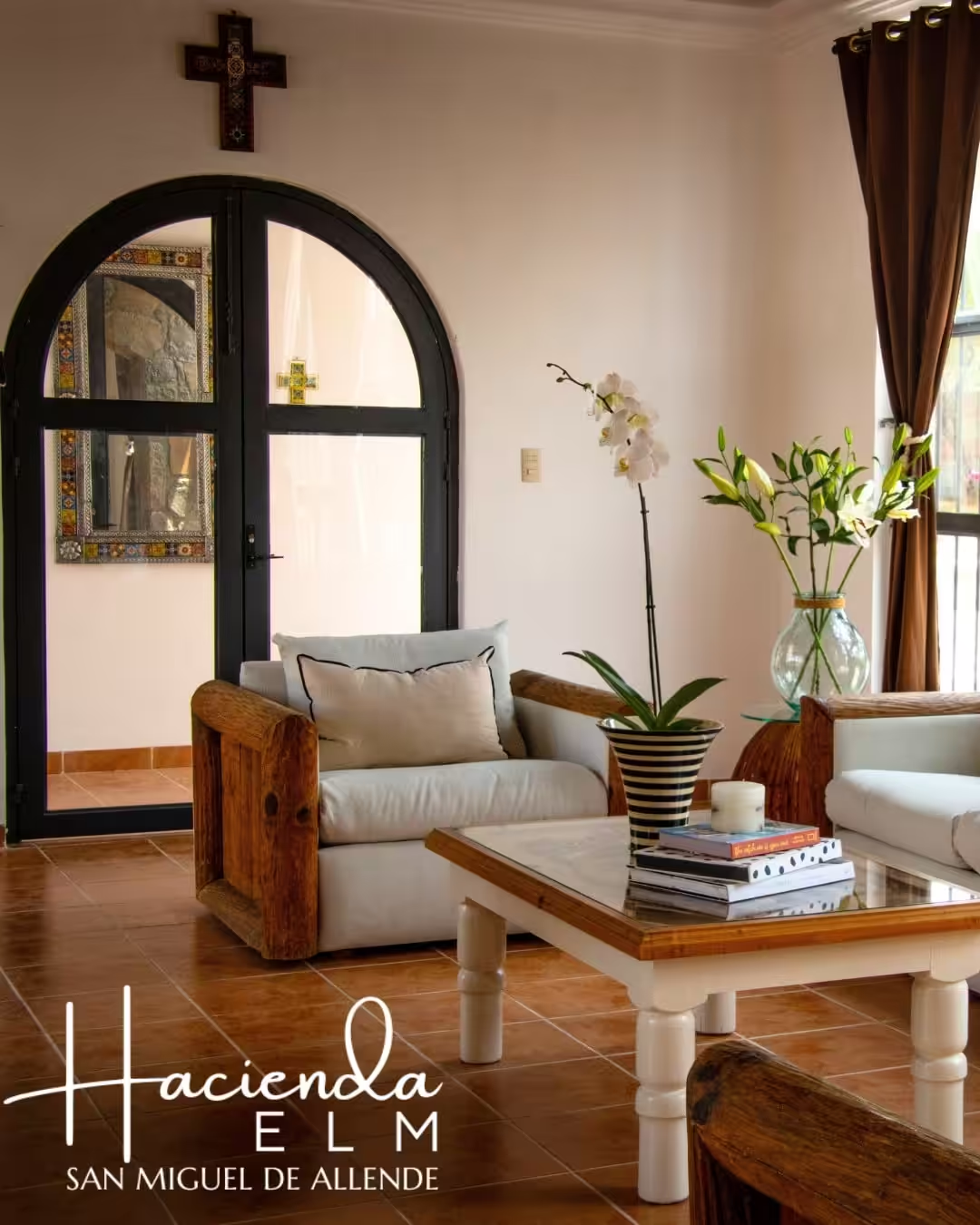
Hacienda ELM: A small independent living community of 6 residents in the rural Cieneguita area, 5 to 15 minutes from the nearest hospital. Monthly fees run $1,550 to $1,650 USD, with a $500 deposit at move-in. Meals provided for breakfast and Sunday dinners only. No health services on site. Pool, garden, lounge, and organized activities available. Best suited to active, fully independent retirees.
La Casa de Las Lunas: The only facility in the historic center of San Miguel, less than five minutes from the nearest hospital. Offers assisted living and nursing home care. Full health services confirmed: on-site physician, 24/7 nursing, physical therapy, and dementia care. Pool, garden, lounge, and ramp accessibility confirmed. Pricing not available — contact the facility directly.
Expat Community and Social Life
San Miguel de Allende has one of the most established expat communities in Mexico. American artists began arriving in the 1930s, and the community has grown steadily ever since. Around 7,200 foreign residents live in a city of approximately 72,000, a concentration that sustains a strong network of English-language social infrastructure for a city of its size. English is widely spoken in restaurants, shops, and medical facilities in the main expat areas.
International Service Organizations
The Midday Rotary Club of San Miguel de Allende is a multicultural English-speaking club with over 40 members, founded in 2005. It meets every Tuesday at 9:30 a.m. at Los Arcos, 27 Stirling Dickenson. Doors open at 9:00 a.m. For retirees who were involved in Rotary back home, this is a natural and immediate entry point into the community.
The city also has a range of expat-oriented social groups, hobby clubs, volunteer organizations, and English-language religious congregations.
Faith and Churches for Expats in San Miguel de Allende
St. Paul’s Anglican (Episcopal) Church: English Eucharist Sundays at 9:00 a.m. and 10:15 a.m. Spanish Mass at noon. Founded in 1959, it’s the oldest English-language congregation in the city.
Community Church of San Miguel de Allende: An interdenominational English-speaking congregation. Sundays at 11:00 a.m., Prolongacion Callejon de Alcocer #24. No membership required.
San Juan de Dios: English Catholic Mass Sundays at 10:30 a.m., corner of San Antonio Abad and San Rafael.
Facebook Groups and Online Communities
San Miguel Expats, Newcomers & Friends
Expat’s Guide San Miguel de Allende
San Miguel de Allende Expat Community Resource Center
Things to Consider Before Moving
The altitude. At 1,900 meters (6,200 feet), San Miguel sits significantly higher than most retirement cities in Mexico. Most healthy retirees adapt within a few days, but anyone with existing cardiac or respiratory conditions should speak with a doctor before committing. Shortness of breath, fatigue, and headaches are common in the first week.
Cobblestones and terrain. The historic center and many surrounding neighborhoods have uneven cobblestone streets that are genuinely difficult for anyone with balance issues, bad knees, or mobility limitations. Some neighborhoods are more manageable than others, but there’s no escaping cobblestones entirely in central San Miguel.
Distance to complex medical care. For surgeries, specialist procedures, or extended hospitalization, most residents rely on Querétaro, 75 to 90 minutes away. Long-term residents plan around this and most find it manageable. It’s worth thinking through clearly before committing, particularly for anyone with a condition that may require urgent specialist access.
Seasonal crowds and pricing. High season from January through April draws significant tourist traffic. Rental prices increase, restaurants fill up, and the city feels more congested. Monthly rentals during this window are harder to find and more expensive.
Cost relative to other Mexican cities. San Miguel costs more than Lake Chapala, Mérida, or Oaxaca. The combination of a strong expat market and sustained tourism keeps prices higher than most interior cities of similar size.
Visas and Legal Residency
Most American and Canadian retirees enter Mexico on a temporary resident visa, which allows stays of more than six months and can be renewed for up to four years. After four years, permanent residency is available. The process begins at a Mexican consulate in your home country.
For a full breakdown of the residency process, income requirements, and what to expect, see our Visas and Legal Residency guide.
If you’re already in San Miguel and need to manage your residency paperwork in person, the local INM (Instituto Nacional de Migración) office is at: Carretera a la Cieneguita Km. 2.4, Comunidad Los López, San Miguel de Allende, Guanajuato, C.P. 37896. Hours: Monday to Friday, 9:00 AM to 3:00 PM. The main INM portal is gob.mx/inm.
Banks for Expats in San Miguel de Allende
San Miguel has a solid range of banking options for expats and retirees. Major institutions with branches in or near the city center include BBVA, Santander, Banamex, HSBC, Scotiabank, and Banorte. ATMs are available throughout the city, including near the Jardín and at the City Market complex on Carretera a Celaya. One important update: Intercam Banco, long the recommended bank for expats due to its no-residency account opening and English-speaking staff, was designated by the US Treasury as a money laundering concern in June 2025 and is no longer a reliable option. Most retirees keep their US or Canadian accounts and use Wise for regular monthly transfers at competitive rates.
Shopping and Stores in San Miguel de Allende
San Miguel doesn’t have a Walmart — the city rejected the chain’s application in 2013. The main supermarket options are La Comer (formerly Mega, on Carretera a Celaya), City Market (upscale, with a pharmacy, restaurants, and strong imported goods selection, in the La Lejona shopping center), Soriana, and Bodega Aurrera. Costco and Walmart are in Querétaro, about 40 minutes away. Many long-term residents use a weekly Costco run service rather than making the trip themselves. The Tuesday tianguis on Calzada de la Luz is the city’s main weekly market, running from 9:30 a.m. to around 3:30 p.m., with fresh produce, fish, meat, clothing, and household goods. Farmacias Guadalajara carries most common medications, with in-store doctors available for minor consultations at around 40 to 60 MXN.
Conclusion
San Miguel de Allende rewards retirees who arrive with clear expectations. The cultural life, the community, and the climate are genuine strengths that hold up well over time. So do the cobblestones, the drive to Querétaro, and the higher price tag compared to other Mexican cities. Most people who choose San Miguel do so knowing all of that, and most don’t regret it.
If San Miguel sounds like the right fit, the next step is looking at what’s specifically available in terms of care options and housing.