Few decisions weigh on a family more than how to care for a parent or spouse who is seriously ill. If you are reading this from the United States, Canada, or the UK while thinking about Mexico, you are likely asking two questions at once. Is good end-of-life care actually available here, and would moving someone you love be a kindness or a risk? This guide answers both honestly, with real numbers and no soft-pedaling of the tradeoffs.
Retire Mexico spends its days inside the senior care world, so we will tell you plainly where Mexico shines and where it falls short. The short version: comfort-focused care exists and can be loving, affordable, and dignified, but it works differently than the hospice system you may know from home. Understanding that difference up front will save you a great deal of stress later.
The Difference Between Hospice and Palliative Care
People use these two terms as if they mean the same thing, but they do not, and the distinction matters when you are planning care in Mexico.
Palliative care is comfort care. It focuses on relieving pain, breathlessness, nausea, anxiety, and other symptoms of a serious illness. The important point is that palliative care can begin at any stage of a disease, and it can run alongside treatments that are still trying to cure or slow the illness. A person receiving chemotherapy can also receive palliative care for the side effects. It is about quality of life, not giving up.
Hospice is a specific kind of palliative care for the final phase of life. It begins when curative treatment has stopped, either because it is no longer working or because the patient has chosen comfort over cure. In most systems, hospice is offered when a doctor estimates a life expectancy of roughly six months or less. The goal shifts entirely to comfort, dignity, and emotional and spiritual support for both the patient and the family.
Put simply, all hospice care is palliative, but not all palliative care is hospice. In Mexico, you will hear the umbrella term cuidados paliativos far more often than a direct translation of hospice, and that reflects how care is actually organized here.
Is Hospice Available in Mexico, and How Does It Work?
Yes, but it looks different from the structured hospice benefit you may expect. There is no nationwide hospice program for foreigners that mirrors the US Medicare hospice benefit or the UK’s hospice network. Instead, end-of-life care in Mexico is delivered in a more decentralized, often private and home-based way.
The legal foundation is actually quite strong. In January 2009, Mexico amended its General Health Law to recognize palliative care as a right for terminally ill patients, defined as those with a prognosis of six months or less. The law guarantees the right to receive that care both in health institutions and at home, to be informed about the diagnosis, and to decline life-prolonging treatment. On paper, dying with dignity is protected.
In practice, access is uneven. Public institutions such as IMSS and the national cancer institute provide palliative services, but capacity is limited, and waitlists are real. For most expat families, end-of-life care ends up being arranged privately. That usually takes one of two forms: in-home care, where private nurses and a visiting doctor manage comfort around the clock in the person’s own home, or residential care, where a senior nursing home with high-acuity capability becomes the setting for the final months.
Here is an honest gap worth naming, and the reason is largely cultural. Dedicated, standalone hospice facilities of the kind common in the US and UK are scarce in Mexico, especially in the expat hubs, because caring for an aging or dying parent at home is simply what many Mexican families do, supported by visiting doctors and hired nurses.
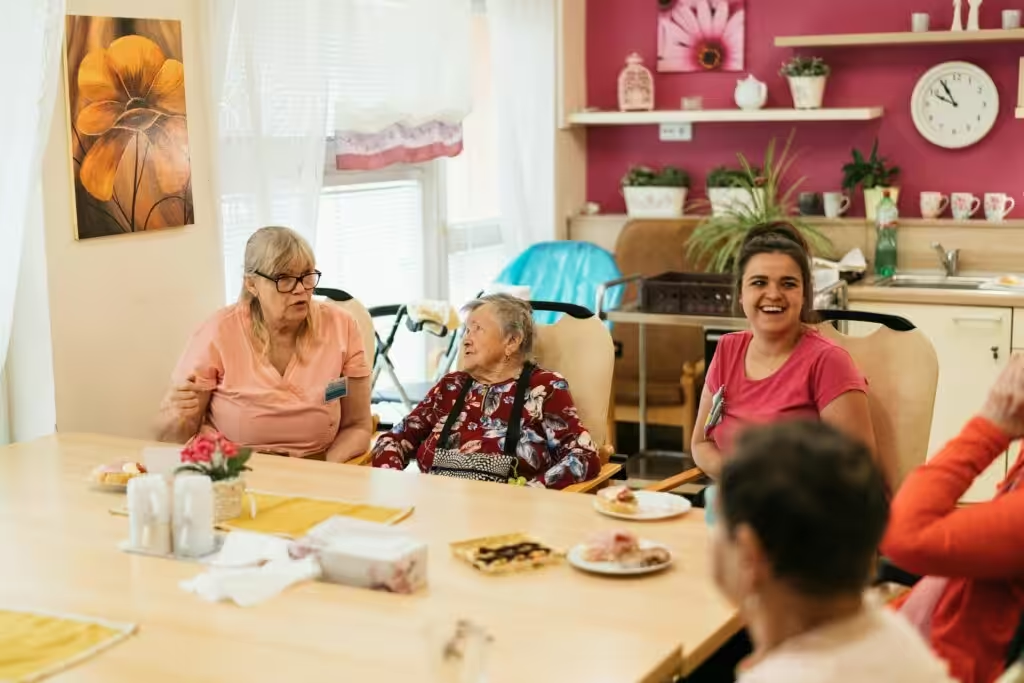
What you will find instead are nursing residences staffed for serious medical needs, a handful of homes that explicitly offer palliative care, and a strong tradition of in-home support. It is not a lesser model, just a different one to plan around.
Signs It May Be Time for Hospice or Palliative Care
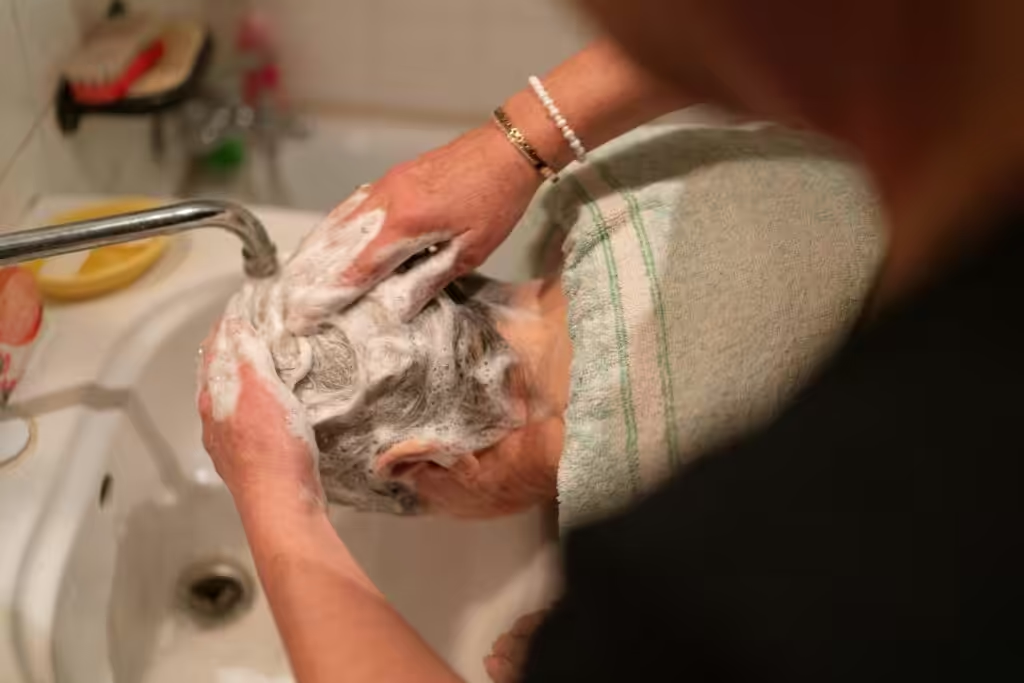
Families often wait longer than they should, partly because starting hospice can feel like surrender. It is not. Bringing in comfort care earlier almost always means more good days, not fewer. If you are wondering when to start hospice for a parent, these are the signals worth watching for:
Frequent hospital visits or emergency trips for the same underlying condition, where each crisis leaves them weaker than before. Significant, ongoing weight loss and a steady decline in appetite. Spending most of the day in bed or a chair, and needing help with basic daily tasks like bathing, dressing, and eating. Pain or breathlessness that is no longer well controlled by their current medication. Repeated infections, such as pneumonia or urinary tract infections. Increasing confusion, withdrawal, or sleeping far more than usual. And often the clearest sign of all, a doctor gently raising the question of whether further aggressive treatment is doing more harm than good.
None of these alone means the end is near, but a cluster of them is a reason to have an open conversation with the treating physician about shifting toward comfort. If your loved one is already in Mexico or you are considering the move, that conversation should include what comfort care can realistically be arranged locally.
Pain Management and Morphine Availability in Mexico
This is the part of the conversation we encourage families to take seriously, because effective comfort care depends on access to strong pain medication, and Mexico has a complicated history here.
For years, Mexico consumed only a fraction of the opioid pain medication its patients needed, and morphine in particular was difficult to obtain. The barriers were largely bureaucratic. In 2015 the government introduced an electronic prescription system meant to make it easier for doctors to prescribe opioids, replacing an old paper process that required physicians to travel to state capitals for barcoded prescription pads. The reform helped, but studies since then show that access improved only modestly and remains very unequal across the country.
Geography is the key variable. Opioid pain relief is far more available in and around major cities and certain states, including Jalisco, Mexico City, Nuevo Leon, Baja California, and Sonora, than it is in rural areas, where it can be nearly impossible to obtain outside a state capital. The practical takeaway for an expat family is reassuring in the popular retirement hubs and cautionary elsewhere. Before committing to a location or a facility, confirm directly that the doctor overseeing care can prescribe and reliably source the pain medication your loved one may need. It is a fair and important question to ask, and any good palliative provider will expect it.
What Hospice and Palliative Care Cost in Mexico
Cost is one of the strongest reasons families look south, and the savings are real. Because there is rarely a separate hospice line item, the practical cost of end-of-life care in Mexico is usually the cost of either private in-home nursing or a nursing residence equipped for high-acuity and comfort care.
In-home care is the more variable of the two. A few hours of help a day from a caregiver can run just a few hundred dollars a month, but covering someone around the clock means paying for several shifts of nurses, which often costs as much as a residence or more. That is why a nursing home tends to be the more sensible choice once care needs to be constant. Residential care is also more predictable, and the monthly figures below give a realistic picture for facilities that handle dementia, terminal illness, and intensive medical needs.
The figures are approximate, converted from Mexican pesos at roughly 18 pesos to the US dollar where the facility quotes in pesos, and rounded. Prices change and vary with the level of care, so treat these as a planning range and confirm directly with each provider.
| Facility | Area | End-of-life relevant care | Approx. monthly cost (USD) |
| Alicia’s Convalescent | La Floresta, Ajijic, Lake Chapala | 24/7 nursing with memory care for dementia and Alzheimer’s | ~$1,200 to $1,600 |
| Casa Cieneguita | San Miguel de Allende | 24-hour geriatric care, including cancer and terminal or degenerative conditions, on-site physician | ~$3,750 |
| Cielito Lindo | San Miguel de Allende | 24/7 nursing with a dedicated memory care neighborhood for Alzheimer’s and Parkinson’s | ~$2,950 to $3,900 (plus registration) |
| Pacific Home | Puerto Vallarta | On-site doctor, 24/7 nursing, dementia care and physical therapy, backed by a local medical clinic | ~$1,400 to $2,200 (25,000 to 40,000 MXN) |
| Vida Serena | Puerto Vallarta | 24/7 nursing for chronic, neurodegenerative, and post-surgical needs | ~$1,400 to $2,800 (25,000 to 50,000 MXN) |
| Mi Casita | San Antonio Tlayacapan, Lake Chapala | On-site doctor, 24/7 nursing, dementia and Alzheimer’s care, medical transport | ~$1,900 to $2,200 |
| Nursing Home Lake Chapala | Riberas del Pilar, Lake Chapala | On-site doctor, 24/7 nursing, physical therapy, dementia care, included medical transport | From ~$1,900 (34,000 MXN) |
For comparison, a single month of inpatient hospice or a private nursing residence in the US can easily exceed those figures several times over, which is why the math draws so many families across the border. Just remember that the lower price buys a different system, not a cheaper copy of the one back home.
Does Medicare Cover Hospice in Mexico?
No. This is one of the most common and most painful surprises, so it is worth stating clearly. Original Medicare does not cover hospice, nursing, or medical care received outside the United States, with only a few narrow exceptions involving emergencies near a US border or aboard a ship close to a US port. Living in Mexico full-time means Medicare will not pay for the care your loved one receives here.
That leaves a few realistic options. Many foreign residents enroll in Mexico’s public health system through IMSS, which charges an age-based annual premium that is modest by US standards, though it comes with waitlists and is not designed around expat expectations. Some families carry private Mexican or international health insurance, and others simply pay out of pocket, which is feasible precisely because the underlying costs are so much lower. We always suggest confirming the specifics of any plan in writing before relying on it for end-of-life care, since coverage details change and palliative services are not always included.
Finding Care in Ajijic, Lake Chapala, Puerto Vallarta, and San Miguel de Allende
Where you look matters as much as what you look for, because the depth of medical and comfort care is concentrated in the established expat communities. These are also the places where bilingual staff and opioid access are most dependable.
The Lake Chapala area, including Ajijic, San Antonio Tlayacapan, and the lakeside villages, has the densest cluster of senior care options in the country. It sits in Jalisco, one of the better states for pain medication access, and several homes here are run or overseen by physicians. Homes like Alicia’s Convalescent and Mi Casita are well regarded for round-the-clock nursing and strong memory care for dementia and Alzheimer’s, though neither is a dedicated hospice. For end-of-life care specifically, families in this area most often arrange private in-home palliative nursing, either in a residence like these or in the person’s own home.
Puerto Vallarta offers strong options as well. Pacific Home keeps a doctor on site with around-the-clock nursing and is backed by a local medical clinic, and Vida Serena is equipped for chronic, neurodegenerative, and post-surgical care. San Miguel de Allende leans toward the higher end, where Casa Cieneguita openly cares for cancer and other terminal and degenerative conditions under a geriatrician medical director, and Cielito Lindo runs a dedicated memory care neighborhood and describes its care as spanning the full spectrum through end of life.
One caveat worth stressing: quality varies between individual homes, so visiting in person, meeting the nursing staff, and asking pointed questions about medical coverage and pain management is not optional. It is the single best thing you can do.
Bringing a Parent to Mexico for End-of-Life Care
Moving a dying parent to Mexico is sometimes the right and loving choice, and sometimes it is not. The decision deserves clear eyes.
It can work beautifully when the move happens early enough, while your parent is still well enough to travel comfortably and to settle in, build a relationship with caregivers, and enjoy the warmth, the slower pace, and the affordability that lets a family afford full-time care they could never manage back home. Many families find that the money saved buys not just nursing but presence, the ability for a spouse or adult child to be there every day instead of working extra hours to pay a US facility.
It can go wrong when the move is left too late. Long flights are hard on a frail body, continuity of medical records and specialists is disrupted, and a person in their final weeks may find an unfamiliar country disorienting rather than comforting. Language barriers, the practicalities of repatriating remains if that is the family’s wish, and the absence of a familiar support network all deserve honest thought. There is also the simple matter of access to the right pain medication, which circles back to choosing a location and provider who can reliably deliver it.
If you take one thing from this section, let it be this: decide early, visit in person, and put the medical questions in plain terms before you commit. Done thoughtfully, end-of-life care in Mexico can offer something genuinely precious, a dignified, affordable, and human goodbye.

Frequently Asked Questions
Is hospice available in Mexico?
Yes, but mostly in the form of private in-home palliative nursing or care within a senior residence equipped for serious medical needs, rather than dedicated standalone hospice facilities like those common in the US and UK. Palliative care is a legal right for terminally ill patients under Mexican law, though access is best in the established expat hubs.
What is the difference between hospice and palliative care?
Palliative care relieves the symptoms of a serious illness and can begin at any stage, even alongside curative treatment. Hospice is palliative care for the final phase of life, usually when a doctor estimates six months or less, and the focus has shifted fully to comfort. All hospice is palliative, but not all palliative care is hospice.
Is there dementia or memory care for end-of-life patients?
Yes. Several homes specialize in dementia and Alzheimer’s care through the late stages, including dedicated memory care settings such as Cielito Lindo in San Miguel de Allende and physician-led homes around Lake Chapala. These can provide comfort-focused care as the disease progresses.
Can someone with terminal cancer get comfort care in Mexico?
Yes. Some residences openly accept cancer and other terminal conditions, such as Casa Cieneguita in San Miguel de Allende, and in-home palliative arrangements are common. The most important thing to confirm is reliable access to strong pain medication, which is best in larger cities and states like Jalisco.
Can I arrange hospice care at home in Mexico?
Yes, and home-based care is one of the most common models here. Private nurses working in shifts, supported by a visiting doctor, can manage comfort around the clock in your loved one’s own home, often at a cost well below a US facility.
How is dying with dignity protected in Mexico?
Since a 2009 reform to the General Health Law, terminally ill patients have the legal right to palliative care, to be informed about their condition, and to decline life-prolonging treatment. Mexico does not permit active euthanasia, but the law protects comfort-focused care and a natural death in dignified conditions.
Sources
- Retire Mexico internal senior care facility database (pricing and services current as of 2026; confirm directly with each provider).
- Care When There Is No Cure: Ensuring the Right to Palliative Care in Mexico | Human Rights Watch
- Mexico: Breakthrough for Pain Treatment | Human Rights Watch
- Geographical and Socioeconomic Disparities in Opioid Access in Mexico (2015 to 2019) | The Lancet Public Health
- Medicare Coverage Outside the United States | Medicare.gov
Last updated: May 2026