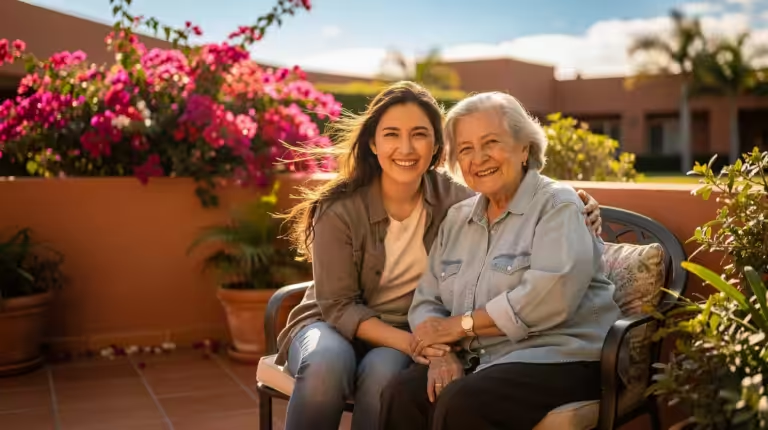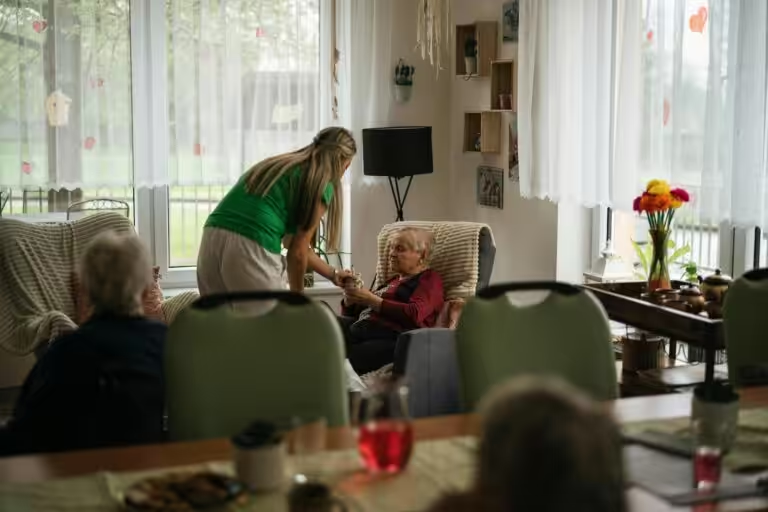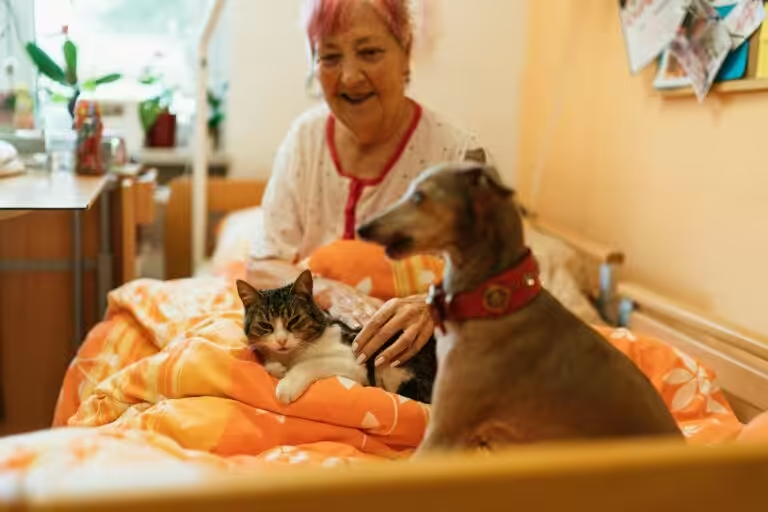
Mexico is one of the world’s top retirement destinations due to its low cost of living, high-quality healthcare, established expat networks, and proximity to the U.S. and Canada.
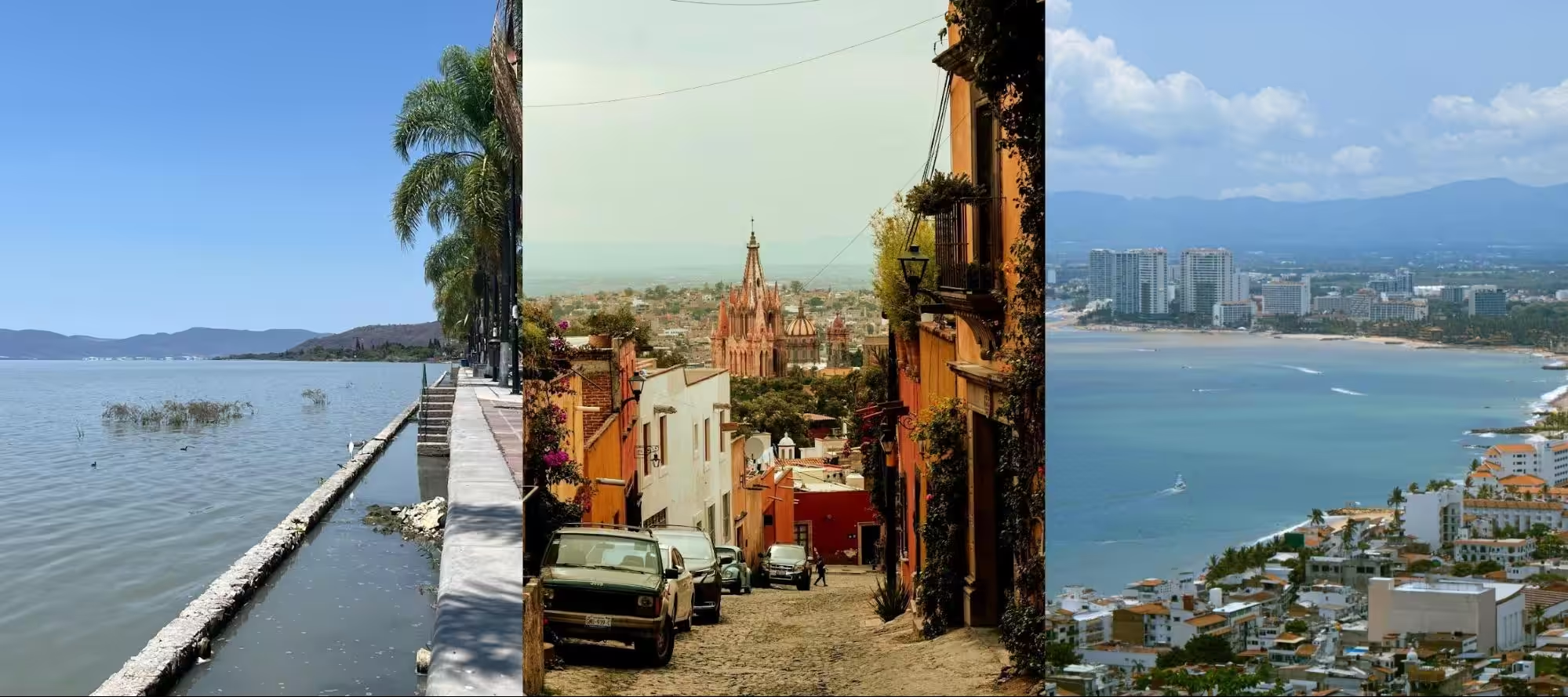
Most North Americans researching the best places to retire in Mexico end up looking at the same three destinations: the Lake Chapala area (centered on Ajijic), Puerto Vallarta, and San Miguel de Allende. Each one has built a reputation over decades as a welcoming, established place to age abroad. They are also very different from each other, in ways that matter more once you start thinking about senior living and senior care specifically.
At a Glance
| Ajijic (Lake Chapala) | San Miguel de Allende | Puerto Vallarta | |
| State | Jalisco | Guanajuato | Jalisco |
| Altitude | 1,500 m (4,900 ft) | 1,900 m (6,200 ft) | Sea level |
| Climate | Spring-like year round | Mild and dry, cool nights | Tropical, hot and humid in summer |
| Population | Approx. 21,500 (Ajijic) | Approx. 80,000 | Approx. 290,000 |
| Nearest major airport | Guadalajara (GDL), 45–60 min | Querétaro (QRO), 90 min | Puerto Vallarta (PVR), in city |
| Senior care facilities | 28+ verified options | 6+ verified options | 8+ verified options |
| Monthly cost range | $800 to $3,100 USD | $1,550 to $3,900 USD | $1,400 to $3,000 USD |
Ajijic and the Lake Chapala Area for Senior Living
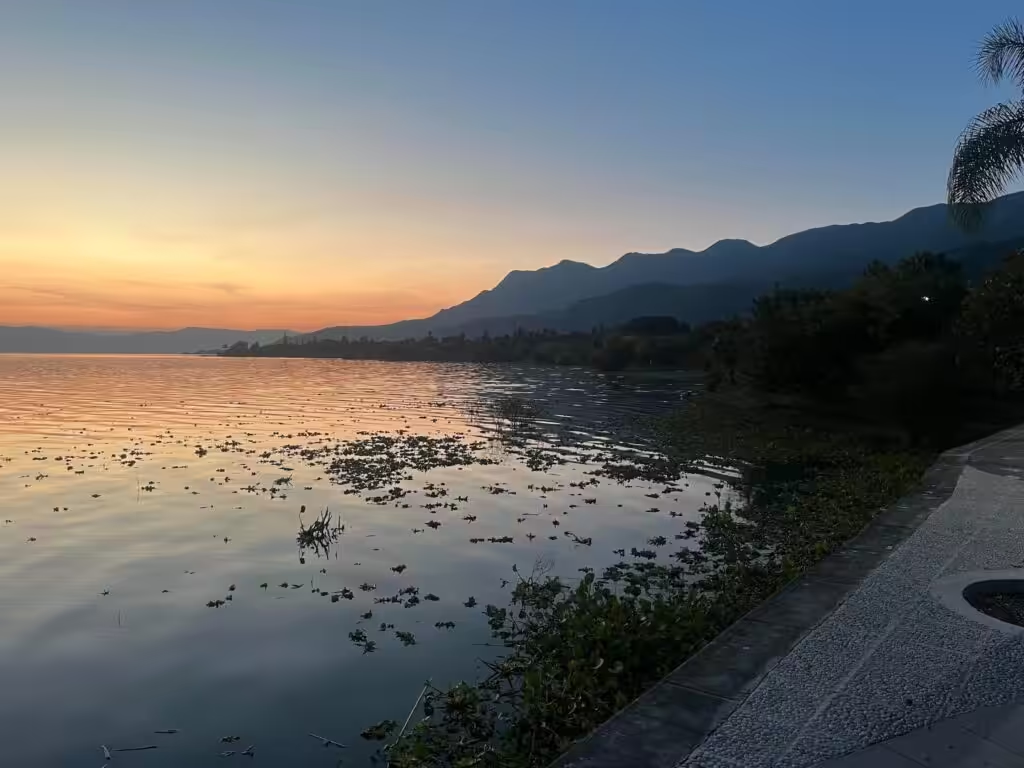
The Lake Chapala area, anchored by the village of Ajijic, hosts what is widely cited as the largest North American expat retirement community in Latin America. Estimates put the foreign retiree population around 20,000 across the Ribera (the chain of small towns along the lake’s north shore). That density is the most important fact about this area. It shapes everything from the senior care infrastructure to the social calendar.
Climate and altitude
At 1,500 meters (4,900 feet), Lake Chapala has one of the most consistently pleasant climates in the world for seniors. Daytime highs sit around 75°F in winter and rise to the mid-80s in late spring before the rainy season cools things down. Humidity stays low, nights are cool, and the air is dry. For retirees with arthritis, respiratory conditions, or low tolerance for heat, this is a meaningful upgrade over coastal climates.
The altitude is worth a conversation with your doctor if you have serious cardiac or pulmonary issues, but most arrivals adjust within a day or two.
Senior care infrastructure
This is where Lake Chapala stands apart. The area has more senior living options per capita than any other expat retirement community in Mexico, which makes sense given how many North American retirees have aged in place here over the last 30 years. Our directory currently lists 28+ verified facilities, ranging from very affordable independent living communities in small homes, through assisted living homes with personal care services, to full-service skilled nursing facilities with bilingual staff and on-site doctors.
The diversity matters. You can find an $800-a-month independent living spot with cooking and laundry included, a mid-range assisted living home for around $1,500, or a skilled nursing facility with 24/7 medical care for $1,900 to $3,100. The English-speaking caregiver pool is larger here than almost anywhere else in Mexico at this scale.
Healthcare access
Lake Chapala has its own local hospitals (Ribera Medical Center, Hospital San Antonio del Lago, Lakeside Medical Group) which handle routine and urgent care competently. For anything more complex, including specialist care, surgery, or advanced diagnostics, Guadalajara is 45 to 60 minutes away by car and home to several internationally accredited private hospitals (Hospital San Javier, Hospital Puerta de Hierro, Hospital Joya). Most senior care facilities in the area include transport to medical appointments as part of their base service.
Things to know before choosing Lake Chapala
- Cobblestone streets are everywhere. Almost all streets in Ajijic and the surrounding lake towns are cobblestone outside of the main carretera. This affects everyone from walker users to wheelchair users to anyone with balance concerns. The malecón is paved and walkable, but daily neighborhood movement involves cobblestone.
- You are not on a beach. Lake Chapala has a beautiful waterfront but it is a lake, not the ocean, and it is too polluted to swim in. Boat rides are fine. If a beach lifestyle is non-negotiable, this is not your city.
- It is car-dependent outside the centro. Taxis are reliable and inexpensive within town, but Uber and Didi have inconsistent coverage. Many residents drive or use a regular taxi service.
- The expat community is the lifestyle. Lake Chapala Society offers nearly 60 classes and activities. If a deep English-speaking community is what you want, this is the strongest match in Mexico. If you want full Mexican cultural immersion, San Miguel or a smaller town fits better.
San Miguel de Allende for Senior Living
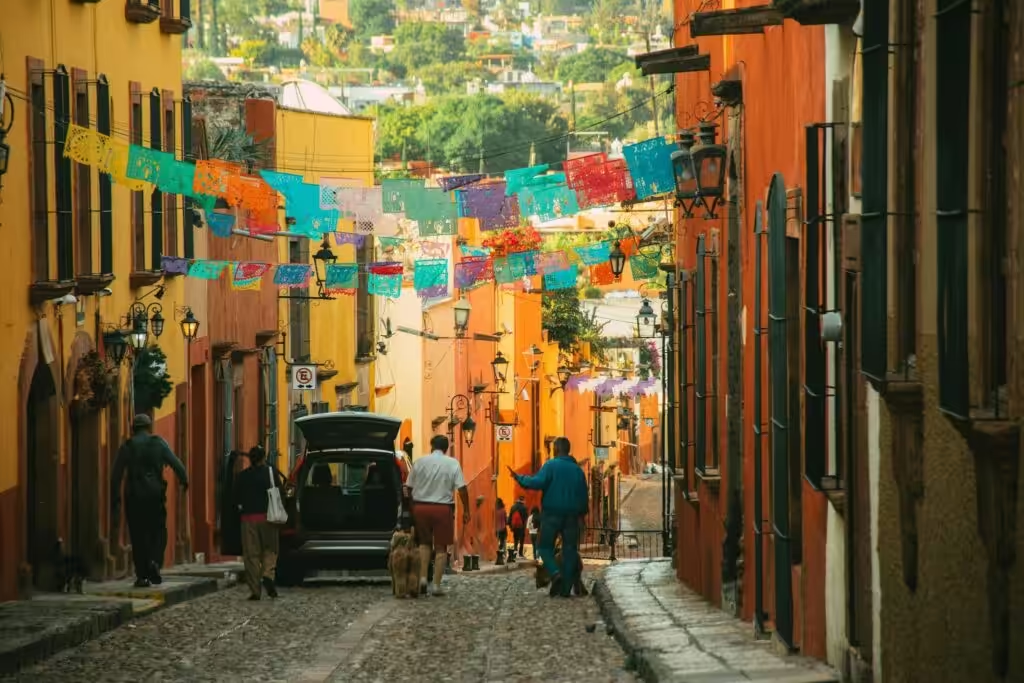
San Miguel de Allende is the premium tier of Mexican retirement destinations. A UNESCO World Heritage colonial city with a long-established expat population (Americans, Canadians, and Europeans), a thriving arts scene, mild dry climate, and the highest concentration of cultural amenities of the three options. It also has the smallest senior care market and the highest entry prices, both of which are worth understanding before committing.
Climate and altitude
At 1,900 meters (6,200 feet), San Miguel is the highest of the three. Days are mild year round (typically 70s to low 80s), nights are noticeably cooler than Lake Chapala or PV, and the air is dry. Many retirees find this the most comfortable climate of the three, especially those sensitive to humidity. The altitude is more of an adjustment than Lake Chapala’s, particularly for retirees with cardiac or pulmonary concerns.
Senior care infrastructure
SMA’s senior care market is smaller and more concentrated at the high end. We list 6+ verified facilities, and prices generally start higher than in Lake Chapala. Cost range runs from about $1,550 for boutique independent living up to $3,900 USD per month for premium memory care, with a $4,000 USD registration fee at the top option (Cielito Lindo, Mexico’s first continuing care retirement community).
Healthcare access
San Miguel has reasonable local clinics, but the nearest major hospital infrastructure is in Querétaro (about 90 minutes away) or León. This is the biggest practical tradeoff of choosing SMA over the other two cities. The local medical capacity handles routine care competently, but anything serious or specialized requires traveling outside the city. For retirees with significant ongoing medical needs, this is worth weighing carefully.
Things to know before choosing San Miguel de Allende
- The cobblestone is the most extreme of the three cities. San Miguel’s historic center is almost entirely cobblestone with steep hills. It is part of what makes the city beautiful but it is genuinely challenging for anyone with mobility limitations. Newer residential areas outside the centro are more accessible.
- Hospitals are 90 minutes away. Plan accordingly if you or your parent has ongoing specialist needs.
- It is the most expensive of the three. Both general cost of living and senior care entry points run higher. The premium often reflects the quality of facility and the lifestyle, but it is a real budget consideration.
- It is the most culturally rich. Arts, music, food, festivals, classes. If cultural depth is a priority, no other option in Mexico matches San Miguel.
Puerto Vallarta for Senior Living
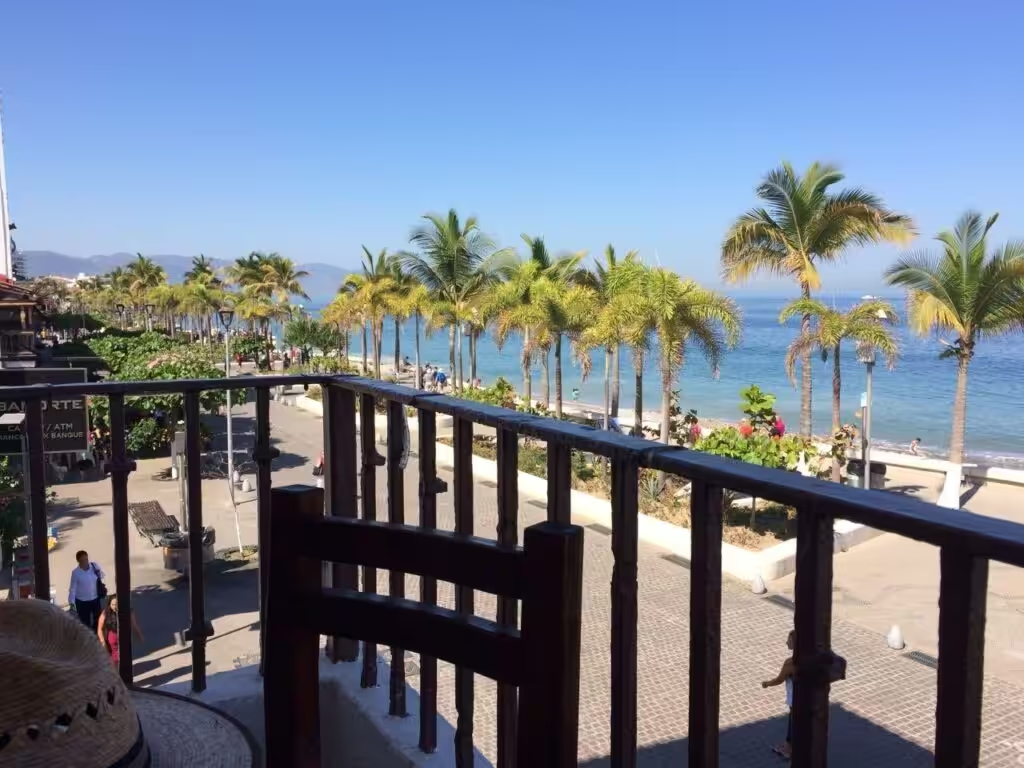
Puerto Vallarta is the option for retirees who want a coastal, tropical, urban-adjacent lifestyle. It is significantly larger than Ajijic or San Miguel (population around 290,000), has its own international airport with direct flights to dozens of US and Canadian cities, and is the most “city-like” of the three options. The expat community is well established, particularly in neighborhoods like Marina Vallarta, Zona Romántica, and the Bahía de Banderas area extending into Nayarit.
Climate and lifestyle
This is the warm-water tropical option. Winter daytime temperatures sit in the high 70s to low 80s, with low humidity and almost no rainfall. Summer is hotter and humid, with afternoon thunderstorms from June through October. Some retirees split the year, spending winters in PV and summers back in Canada or higher-altitude Mexico to avoid the peak heat. For seniors who genuinely love the beach, the ocean, and warm year-round temperatures, no other major retirement hub in Mexico matches it.
Senior care infrastructure
Puerto Vallarta has fewer dedicated senior care facilities than Lake Chapala (8+ verified in our directory versus 28+) but the ones that exist are well-run, and PV has something the others do not: deep urban healthcare infrastructure within the same city. Cost ranges in PV split into two clear tiers: facilities pricing in pesos (typically MXN 25,000 to 50,000, or roughly $1,400 to $2,800 USD) and facilities pricing in USD (typically $2,500 to $3,000 for premium options).
Healthcare access
This is a strong area for PV. Puerto Vallarta has multiple well-equipped private hospitals within the city limits including Hospital San Javier and CMQ Premiere, used regularly by both expats and medical tourists from the US. Bilingual staff is standard at the major private hospitals. For most medical needs, PV residents do not need to travel out of city, which is a real practical advantage over Lake Chapala for anyone with frequent specialist appointments.
Things to know before choosing Puerto Vallarta
- Heat and humidity in summer are real. June through October is genuinely hot, often above 90°F with high humidity. Not everyone tolerates this. Many residents leave for the summer or stay heavily air-conditioned.
- It is the most expensive of the three for general living costs. Rent, dining out, and tourism-zone services run higher than Ajijic or San Miguel. Senior care facility costs are roughly comparable, but everyday expenses lean up.
- It is a tourist city. Most of the year is fine, but high season (December through April) brings crowds, traffic, and noise in tourist zones. Residential neighborhoods like Versalles or Marina Vallarta stay calmer.
- Hurricane season runs June through November. Recent storms have caused damage in the region. Senior care facilities generally have protocols, but it is worth asking specifically how each handles storm season.
Side-by-Side Comparison: Cost, Healthcare, and Lifestyle
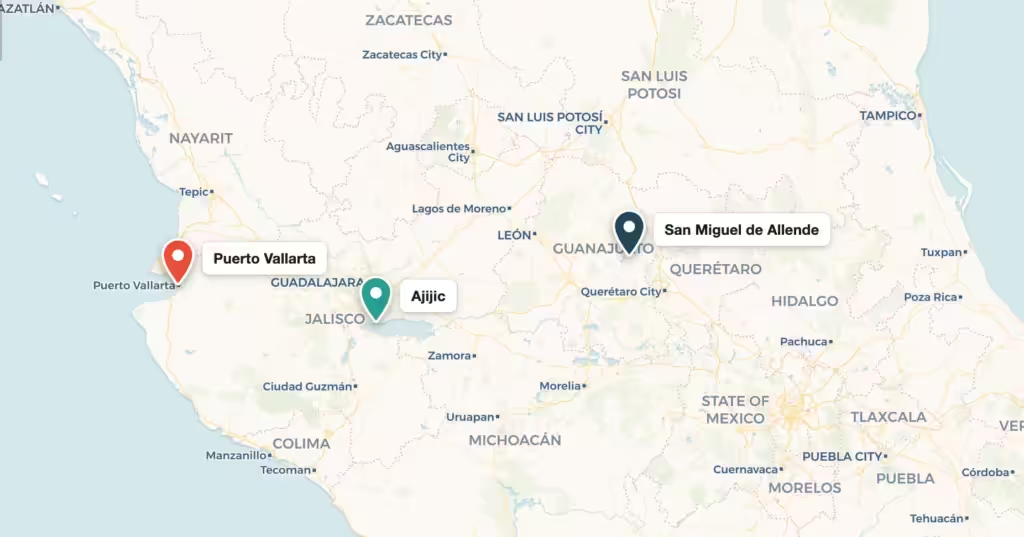
The three cities cover meaningfully different price ranges, climate, healthcare access, and lifestyle. Lake Chapala starts the lowest. San Miguel starts the highest. PV sits in the middle but skews up. Premium facilities in all three cities converge around $3,000 to $3,900 USD per month. Mexico’s geography creates drastically different environments, with coastal areas offering beach access but intense seasonal humidity and hurricane risks, while central highland cities offer mild temperatures but feature higher elevations.
| Ajijic (Lake Chapala) | San Miguel de Allende | Puerto Vallarta | |
| Monthly Fee by Care Type | |||
| Independent living, entry | From $800 USD | From $1,550 USD | From $1,400 USD |
| Assisted living, mid-range | $1,200 to $2,000 USD | $2,000 to $3,000 USD | $1,500 to $2,500 USD |
| Nursing care, full service | $1,900 to $3,100 USD | $2,950 to $3,900 USD | $2,500 to $3,000 USD |
| Memory care | $2,000 to $2,500 USD | $2,950 to $3,900 USD | $2,500 to $3,000 USD |
| Healthcare | |||
| Major hospitals in city | No | No | Yes |
| Distance to specialist hospital | 45–60 min (Guadalajara) | 90 min (Querétaro) | Within city |
| Bilingual care availability | Strong | Moderate | Strong |
| Best for frequent specialist needs | Acceptable | Hardest of three | Best of three |
| Lifestyle | |||
| Setting | Lakeside small-town cluster | Colonial inland small city | Coastal city |
| Pace | Quiet, community-driven | Cultural, walkable centro | Active, urban, social |
| Accessibility (mobility) | Cobblestone, some flat areas | Most cobblestone, steepest | Mixed, paved main areas |
If you or your parent already has a chronic condition requiring regular specialist care, Puerto Vallarta is the most practical option. If specialist needs are likely but not constant, Ajijic works well thanks to the short drive to Guadalajara. San Miguel de Allende is the toughest call for medically complex residents.
What’s usually included in the monthly fee
Across all three cities, base monthly fees at most assisted living and nursing facilities cover meals, housekeeping, laundry, personal care assistance, and access to common areas and activities. Unlike the US model, where costs spiral upward with care needs, most Mexican facilities charge a flat monthly fee regardless of care level, and only a small number charge by care intensity.
Who Each City Is Best For
Lake Chapala / Ajijic fits you if:
- You want the broadest range of senior care options at the most accessible price points
- You value a deep, English-speaking expat community as your primary social infrastructure
- A mild, dry, spring-like climate matters to you (especially for arthritis or respiratory comfort)
- You are willing to drive or be driven for major medical needs (Guadalajara is an hour away)
- You prefer a small-town village pace over a city or beach lifestyle
San Miguel de Allende fits you if:
- Cultural richness (arts, architecture, food, festivals) is a high priority
- You want a mild, dry, cooler climate
- You have the budget for the higher entry price
- You are mobile enough to handle steep cobblestone streets, or you live in newer residential areas
- You are not managing a condition that requires frequent specialist hospital visits
Puerto Vallarta fits you if:
- You genuinely love the beach, ocean, and warm year-round temperatures
- You want a city-like infrastructure with major hospitals in town
- You have frequent or ongoing specialist medical needs
- You want the easiest direct flight access back to the US or Canada
- You can tolerate hot, humid summers
Frequently Asked Questions
Which of the three cities is the cheapest for senior living?
Lake Chapala, by a noticeable margin, at the entry level for independent living and assisted living, starting at around $1,000 USD per month. The mid-range assisted living and skilled nursing options across all three cities converge between $2,000 and $3,000 USD monthly.
Which city has the best in-city hospital access?
Puerto Vallarta, clearly. It is the only one of the three with major private hospitals inside the city limits. Lake Chapala is 45 to 60 minutes from Guadalajara’s full hospital infrastructure. San Miguel de Allende is 90 minutes from Querétaro. If you anticipate frequent specialist visits or have complex medical needs, this matters a lot.
Is bilingual medical care easy to find in all three cities?
Easiest in Puerto Vallarta and Lake Chapala, as they have decades of established expat infrastructure. San Miguel is more variable. Within senior care facilities that specifically target North American residents in any of the three cities, bilingual staff is essentially standard.
How to Get Started
Picking among Lake Chapala, Puerto Vallarta, and San Miguel de Allende is not a single decision. It is a sequence of smaller ones, each one narrowing the field: climate preference, care level needed, budget range, proximity to hospitals, lifestyle pace, language comfort. Once you start ordering those by priority, the right city usually surfaces fairly quickly.
If you already know which of the three regions fits, our directory of verified senior living communities has every option we’ve vetted in Ajijic, San Miguel de Allende, and Puerto Vallarta, with pricing, services, and contact info. If you’re still weighing the three, that’s what we’re here for. Reach out and we’ll help you compare based on budget, care level, and what matters most to your loved one and your family.
Last updated: May 2026. Costs, availability, and facility details change frequently. We verify and update our listings regularly. Confirm specific details directly with the facility before making any decisions.