Most families touring senior living facilities in Mexico ask about the right things, just not all of them. They ask about meals, room size, monthly fees, English-speaking staff, the doctor on site.
Yeah, those questions matter, but the questions almost nobody asks are the harder ones. Which hospital does the facility take you to in an emergency, and is it the one your insurance actually covers? Who decides whether you’re hospitalized or treated in-house? What happens when you pass away, and who’s responsible for the funeral arrangements? Where are your end-of-life wishes written down, and does the facility have a copy?
These conversations are uncomfortable, which is why most people put them off. The problem is that the right time to have them is before signing the contract, not after a medical emergency or in the days following a death. Decisions made in those moments rarely match what the resident would have chosen, and they almost always cost more in money, time, and family stress.
This guide walks through what to plan, specify in writing, and lock in before move-in day. It covers emergency hospital protocols, prepaid funerary plans (planes funerarios pre-pagados), voluntad anticipada (Mexico’s advance directive), medical decision authority, and the questions to ask facility administrators before you sign anything.
Why These Conversations Happen Now, Not Later
Mexican senior living facilities operate with a lot less standardization than US or Canadian ones, as we covered in our guide to senior care in Mexico. There’s no federal classification system, no central regulator setting uniform admission protocols, and no required checklist of end-of-life clauses in admission contracts.
That sounds like a problem, and in some ways it is. But it also means facilities are flexible. If you bring these topics up before signing, most reputable facilities will work with you to write your preferences into the contract or care plan. If you wait, the facility’s default protocols apply, and those defaults were not designed around your insurance, your family situation, or your wishes.
A few realities to keep in mind:
- Your US or Canadian advance directive isn’t legally valid in Mexico. Neither is your power of attorney from back home, in most cases. The documents that govern your medical care here are Mexican documents, executed in Mexico, in Spanish, before a Mexican notary public.
- Facility staff cannot make medical decisions for you. They can call an ambulance, notify your named representative, and follow the protocols you’ve put in writing. They can’t authorize a treatment, refuse one, or decide where you’re hospitalized. That authority has to be assigned to someone, in writing, before you need it.
- Funeral and burial arrangements in Mexico move quickly. Mexican law generally requires burial or cremation within 48 hours of death, with some regional variation. That window leaves almost no time for family in another country to fly down and make decisions. Either those decisions are made in advance, or they’re made by whoever is physically present.
None of this is meant to alarm. It’s meant to make the case that the pre-admission window is the right window for this work.
Choosing Your Emergency Hospital and How Insurance Plays In
This is the first conversation most families skip, and it’s the one with the most immediate practical consequences.
Why the Facility’s Default Hospital May Not Be Your Hospital
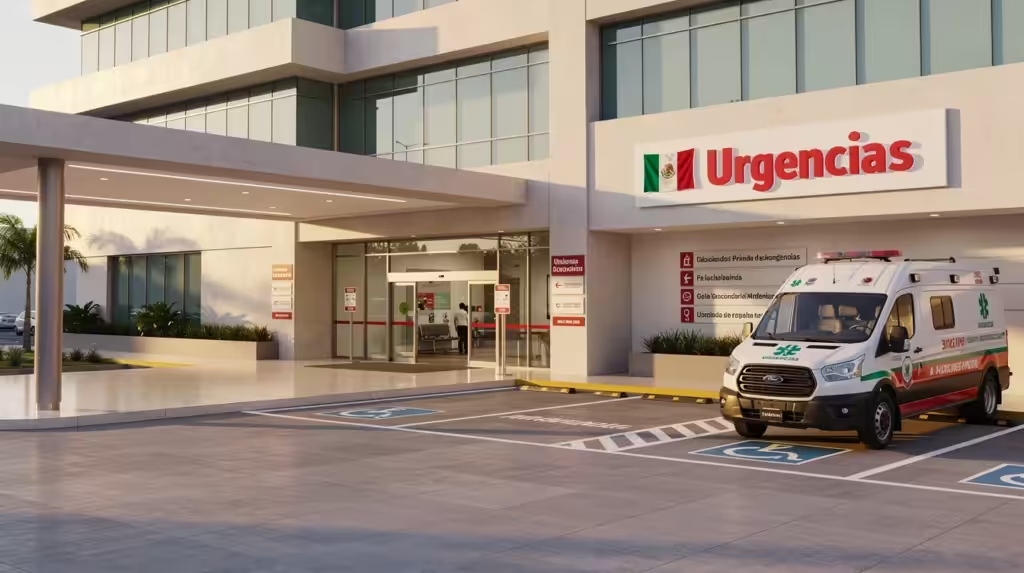
Every senior living facility in Mexico has a default emergency protocol. They call a specific ambulance service and direct it to a specific hospital, usually the closest private hospital they have a working relationship with.
That hospital may not be the one your private insurance covers. It may not be the one your travel insurance designates. It may not have the specialists for the conditions you actually have. And if you require repatriation later, the receiving hospital matters.
If you have Mexican private health insurance like AXA, GNP, or MetLife, your policy almost certainly designates specific in-network hospitals. Going to an out-of-network hospital still gets you treated, but the bill is a different conversation. The same applies if you carry US travel insurance designed for expats (IMG Global, GeoBlue, Cigna Global). The hospital network is built into your premium.
What to Specify Before Signing
Ask the facility administrator three direct questions:
- What’s the default hospital for medical emergencies, and what’s the secondary option if the first isn’t available?
- Will the facility honor a resident’s request to be transported to a different hospital, and how is that request documented?
- Who at the facility is authorized to make the hospital decision in the moment, and what overrides that?
A good administrator will answer all three without hesitation and will offer to add your designated hospital and insurance details to your care plan or admission contract. If the answer is vague or the request to add it in writing is treated as unusual, that tells you something.
What to Put in Writing
Your admission contract or attached care plan should specify:
- Your designated primary and secondary hospitals for emergencies.
- Your insurance carrier and policy number, with a copy of the card on file.
- Whether you want to be transported to a hospital in Guadalajara, Mexico City, or another major city for serious conditions, even if it’s further away.
- The contact information for the family member or representative that the facility should call before transport, when time allows.
- Any conditions where you’ve already pre-authorized transport to a specific facility (like dialysis, oncology, or cardiology requiring continuity of care).
Funerary Pre-Plans: What They Cover and What They Don’t
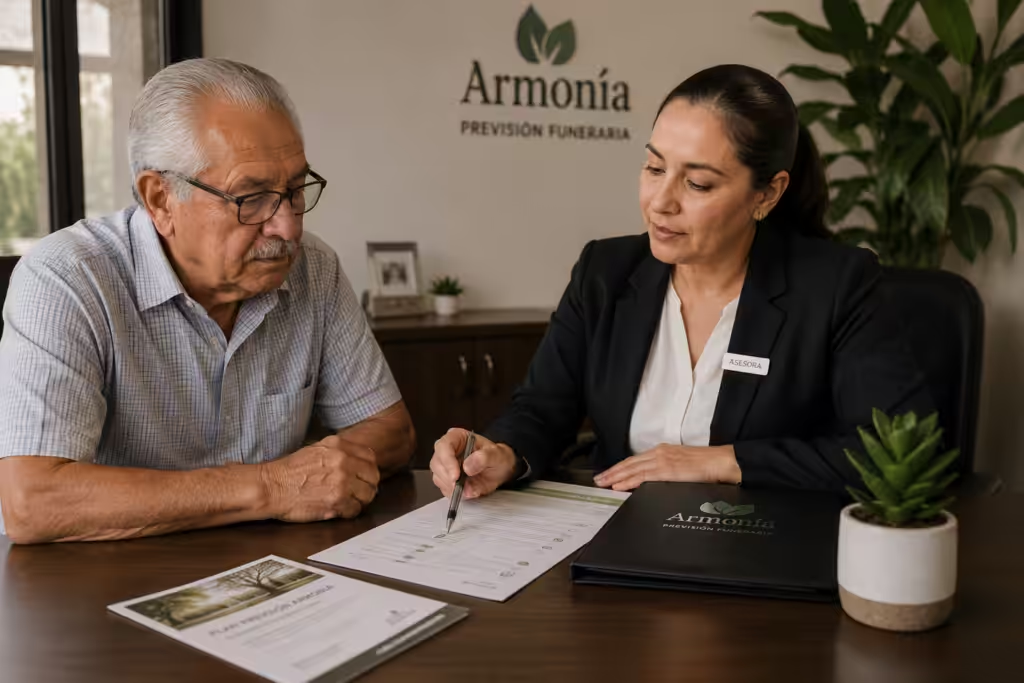
A plan funerario pre-pagado is the Mexican equivalent of a US pre-need funeral plan. You pay now, in installments or in full, for funeral services to be delivered later. The price is locked at today’s rates, which matters in a country with regular medical and service inflation.
This is more established in Mexico than most expats realize. Mexican families have been purchasing prepaid funeral plans for decades, partly because Mexican law generally requires burial or cremation within 48 hours of death, which is a small window for grieving families to negotiate prices or make logistical arrangements.
The market is established and reasonably easy to navigate. Several national providers operate across Mexico, and a few insurance companies like MAPFRE offer funeral plans bundled into life insurance products. Most major expat hubs also have well-regarded local providers. The right choice depends on your location and the services you actually want covered, so the practical move is to ask your facility administrator or a Mexican attorney for two or three names to compare rather than picking the first one you find online.
What These Plans Typically Cover
A standard prepaid funeral plan in Mexico covers transport of the body, embalming or preparation, casket or cremation container, the service itself, and either cremation or burial. Premium plans add memorial services, urn options, and longer chapel use.
What they generally don’t cover is repatriation of remains to the US or Canada. That’s a separate decision, and it’s an expensive one, often running $5,000 to $10,000 USD or more depending on origin, destination, and casket requirements for international transport. If repatriation is what you or your family wants, you need to either purchase a separate repatriation insurance product, add a repatriation rider to your existing plan, or set funds aside specifically for this.
If cremation in Mexico is acceptable to the family, the logistics are dramatically simpler. Cremated remains can be transported by family members on commercial flights with the proper documentation, which avoids the entire repatriation logistics process.
What to Share With the Facility
Once you’ve purchased a plan, the facility should have:
- The name and phone number of the funeral provider.
- A copy of the plan documentation showing what services are covered.
- The name and contact information of your primary funeral decision-maker (typically a family member or named representative).
- Your preferences for cremation vs. burial, and whether you want repatriation of remains.
This way, when the moment comes, the facility isn’t trying to find your paperwork while your family is trying to fly down from another country.
Voluntad Anticipada, Step by Step
The voluntad anticipada is the Mexican legal document that lets you specify, in advance, what medical treatments you do and don’t want at the end of life. It’s the document that tells hospitals and doctors to follow your wishes if you’re no longer able to communicate them yourself.
The US Advance Directive, Living Will, and Power of Attorney for Healthcare are not legally binding in Mexico. Hospitals here will not enforce them. If you want your end-of-life wishes followed, you need the Mexican version. Here’s how to get one.
Step 1: Confirm the law in your state. About 20 of Mexico’s 32 states have enacted voluntad anticipada laws or equivalent regulations, including CDMX, Jalisco (Ajijic, Puerto Vallarta), Guanajuato (San Miguel de Allende), and Yucatán (Mérida). The process and specific requirements vary by state, and the state where you actually live is the one whose process you follow.
Step 2: Choose your medical representative. This is the person authorized to make medical decisions on your behalf if you can’t. It should be someone who lives in Mexico, or who can fly down quickly, and who clearly understands your wishes. Naming someone in the US or Canada who can’t physically be present is almost as bad as naming no one at all. Talk to them in advance and make sure they’re willing to take this on.
Tip: avoid naming someone employed by the facility itself, like an in-house doctor. Some Mexican states prohibit it outright, and even where it’s legal, your representative should be independent enough to advocate for you if a decision involves the facility’s own interests.
Step 3: Write down your wishes. Before the notary appointment, decide what you want documented. The standard elements are your wishes regarding resuscitation (DNR), intubation, mechanical ventilation, artificial nutrition and hydration, whether you want to be hospitalized for serious conditions or kept in palliative care at the facility, and whether you’ve consented to organ donation. If you want help thinking through the wording, Sara-Mai Conway at Dying in Mexico has detailed guides on what to specify and why.
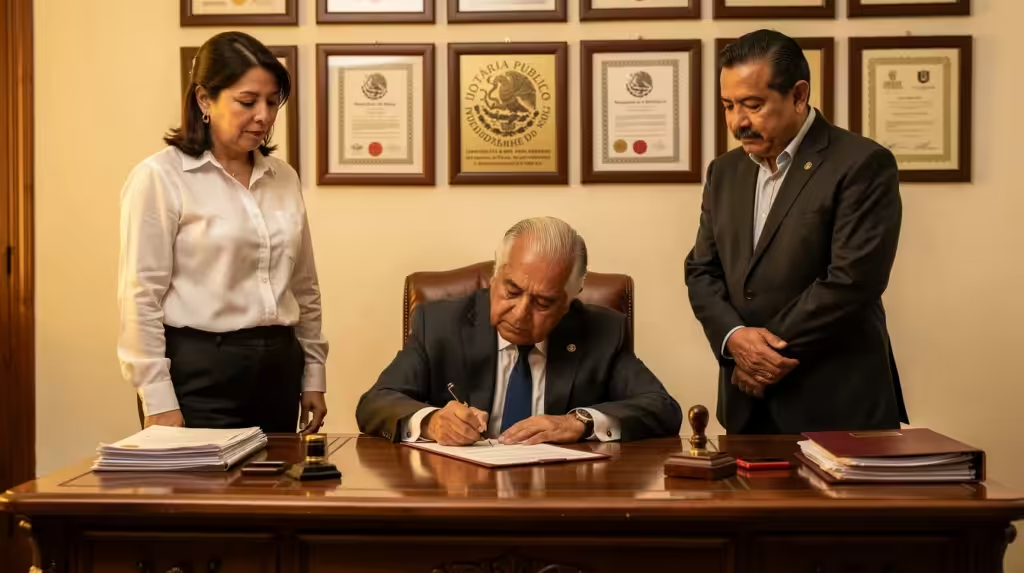
Step 4: Schedule a notary appointment. The voluntad anticipada must be signed before a Mexican notary public (notario) with two witnesses present. You must be in full possession of your mental faculties. Fees vary by state and are generally modest. Some states periodically offer reduced or waived rates for older adults, so it’s worth asking the notary’s office what applies where you live.
Step 5: Sign, with witnesses, and get certified copies. The signing is a short formal appointment. Bring valid official ID for yourself and your two witnesses. Once signed, request multiple certified copies. You’ll need them for distribution.
Step 6: Distribute copies to the people who’ll need them. A signed voluntad anticipada that nobody knows about is functionally useless. The facility should have a copy in your file. Your designated representative should have a copy and know they’re named. Any hospital you’re likely to be transported to should ideally have it on record as well. A copy at home where family can find it is also worth doing.
There’s a separate path worth knowing about: a voluntad anticipada can be registered free of charge at the public or private healthcare institution where you receive care, if you’ve been diagnosed with an advanced, incurable illness or are in terminal phase. This is meant for people who need it imminently, not for advance planning, but it’s a useful fallback to know exists.
Power of Attorney and Decision Authority
The voluntad anticipada names a representative, but its scope is specifically medical and end-of-life. It doesn’t cover financial decisions, property, or general legal authority.
A poder notarial (Mexican power of attorney) is a separate document, also notarized, that grants someone authority to act on your behalf in financial, legal, or administrative matters. Poderes can be broad (poder general) or limited (poder especial) to specific tasks. If you want someone to manage your bank account, sign contracts, or handle facility payments on your behalf, they need a poder, not just authority under your voluntad anticipada.
For most senior living residents, the practical setup is:
- A voluntad anticipada that names a medical representative (often a spouse, adult child, or trusted friend) and specifies end-of-life wishes.
- A poder notarial granting financial and administrative authority to the same person, or to a different person if that’s more appropriate.
- A clear, written communication to the facility about which person to call for which type of decision.
Facility staff cannot make medical or financial decisions on your behalf. They can act on the documents you’ve put in place. If you haven’t put any in place, you’re functionally relying on whoever happens to be present in the moment, which is rarely the outcome anyone would have chosen.
What to Insist On in the Contract
Beyond hospital designation and end-of-life documents, a thorough admission contract or care plan should specify:
- Emergency response protocols: which staff member responds to what, and within what time frame. A 24-hour facility should have clear answers about overnight and weekend coverage.
- Family notification procedure: in what order family members are called, and how quickly, in the event of a hospitalization or death.
- Any Do Not Resuscitate (DNR) or Do Not Intubate (DNI) instructions, if applicable, with the supporting voluntad anticipada attached.
- Decision-making protocol: who the facility calls first for medical decisions, and in what circumstances they’re authorized to act without contact (typically only true emergencies).
- Post-incident communication: how the facility will keep the family informed during and after a medical event.
A facility that pushes back on writing any of this into the contract is not necessarily disqualifying, but the conversation about why is worth having.
The Questions to Ask Administrators Before Signing
Before committing to a facility, ask the administrator the following directly:
- What hospital do you transport residents to in a medical emergency, and what’s the secondary option?
- Will you honor a resident’s documented preference for a different hospital, and how is that documented in our records?
- Who at the facility is authorized to call an ambulance or make hospital transfer decisions, and what’s the overnight or weekend coverage?
- Do you keep copies of residents’ voluntad anticipada, poder notarial, and insurance documentation on file?
- What’s your protocol if a resident passes away in the night? Who’s contacted, in what order, and how quickly?
- Do you require or recommend a prepaid funeral plan as a condition of admission?
- What’s the protocol for notifying family members during a medical emergency, and how is that timing documented?
- If a resident’s family is outside Mexico, how do you handle decisions when they can’t be reached quickly?
- Has the facility had to manage a resident’s death before, and what was the family’s experience?
The last question is the one that gives you the most signal. A facility that has handled this with care will tell you about it. A facility that hasn’t, or that handled it poorly, will deflect.
Documents to Have Ready Before Move-In Day
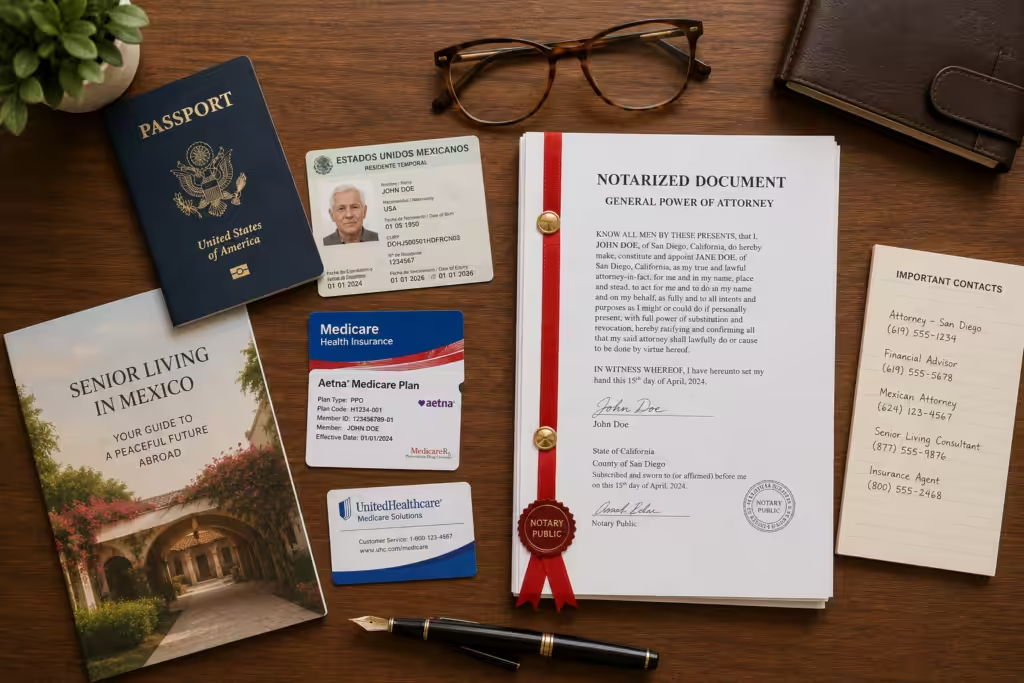
The day a resident moves in is not the day to start gathering paperwork. Have these ready:
- Mexican ID (residency card, passport).
- Notarized voluntad anticipada with copies for the facility, your representative, and your primary hospital.
- Notarized poder notarial if you’ve assigned financial or legal authority.
- Mexican will (testamento), if you have one, with the notary office and folio number on record.
- US or Canadian will, with location of original and contact information for your estate executor at home.
- Mexican private health insurance card and policy details.
- US or Canadian insurance documentation (Medicare/Medicaid typically do not cover care in Mexico, but supplemental travel or expat plans may, and the facility should have those details).
- Prepaid funerary plan documentation, with provider contact information.
- Complete list of current medications, conditions, allergies, and treating physicians (both in Mexico and abroad).
- US embassy STEP enrollment confirmation, or Canadian Registration of Canadians Abroad (ROCA), so your consulate has your information on file.
- A simple, written one-page summary of your wishes that anyone can read in two minutes: who to call, what hospital, what to do in an emergency, what to do at end of life, where the full documents are stored.
That one-page summary is the most underrated document in this entire process. It’s what gets read in a crisis, not the 30-page notarized originals.
Frequently Asked Questions
Do I need a separate Mexican will if I already have one in the US or Canada?
If you own property, hold bank accounts, or have other assets in Mexico, the standard advice is yes. A Mexican will (testamento) handles Mexican assets through the Mexican probate process and is significantly faster and less expensive than trying to apply a foreign will to Mexican property. For assets outside Mexico, your home-country will still applies. The two documents should be coordinated by an attorney familiar with cross-border estate planning so they don’t contradict each other.
Is my US Advance Directive valid in Mexico?
No. Mexican hospitals are not legally required to honor a US Advance Directive, Living Will, or Healthcare Power of Attorney. To have your end-of-life wishes followed in Mexico, you need a Mexican voluntad anticipada, signed before a Mexican notary public with two witnesses.
How much does a prepaid funeral plan cost in Mexico?
Costs vary by provider and level of service, but basic prepaid funeral plans in Mexico typically range from a few hundred to a few thousand US dollars, depending on whether the plan includes cremation or burial, casket level, transport, and memorial services. Plans paid in installments lock in today’s prices against future inflation. Repatriation of remains to the US or Canada is generally a separate cost that runs $5,000 to $10,000 USD or more.
What happens if I die in Mexico without a Mexican will?
You die intestate under Mexican law, and your Mexican assets are distributed according to Mexican intestate succession rules. The process is slower, more expensive for your heirs, and rarely produces the outcome you would have chosen. This is one of the most common, and most preventable, end-of-life planning gaps among expats in Mexico.
Can the facility make medical decisions for me if my family can’t be reached?
No. Facility staff are not legally authorized to make medical decisions on a resident’s behalf in Mexico. They can call your designated representative under your voluntad anticipada, transport you to a hospital, and follow any documented protocols you’ve put in place. If no representative is reachable and no documentation exists, the receiving hospital makes treatment decisions based on standard medical protocols.
How quickly does burial or cremation need to happen in Mexico?
Mexican law generally requires burial or cremation within 48 hours of death, with some regional variation. This is a short window for family abroad to fly in and make decisions, which is why prepaid funeral plans and clear written wishes matter so much for expats. If the resident has a prepaid plan, the funeral home executes it. If not, whoever is present in the moment makes decisions.
How to Get Started
None of this is meant to make moving into a senior living facility in Mexico sound complicated. It’s meant to make it less so, by doing the planning work upfront rather than under pressure.
The reality is that most families moving a loved one into care in Mexico are doing it for the first time. They’re navigating an unfamiliar healthcare system, a different legal framework, and a language barrier in the most stressful moments. The planning described here doesn’t eliminate any of that, but it reduces the number of decisions that have to be made under duress.
The facilities that handle these conversations well are the ones worth working with. The ones that resist, deflect, or treat these questions as unusual are telling you something about what life inside that facility will look like when something actually goes wrong.
If you’re researching senior living options in Mexico and want help identifying facilities that are willing to put these protocols in writing, request personalized guidance to find one that fits.
Last updated: May 2026. Costs, regulations, and provider availability change frequently. Verify current details directly with notaries, funeral providers, and facility administrators before making decisions.
Sources
- Why Creating an End-of-Life Plan for Expats in Mexico is a Good Idea –Wellness Shepherd
- Servicios funerarios –Procuraduría Federal del Consumidor (Profeco)