If you’re reading this, you’re considering a move to Mexico. Maybe you’re exploring retirement, evaluating senior care options, or planning recovery after a medical procedure.
You’ve heard many positives, but also quite some negatives. That’s not even mentioning the fear of unknown or unexpected surprises that could turn everything upside down.
If that rings any bells with you, then you’re in the right place.
This one guide isn’t biased, sponsored, or affiliated with anything. We’ve done actual research and gathered realistic information to give you the whole picture, including what you will like and what you may not like.
In other words, we’ll show you everything you need to know about living and care in Mexico, and it’ll be up to you to decide whether it’s for you. That being said, let’s start with the most obvious question.
How Is Life In Mexico?
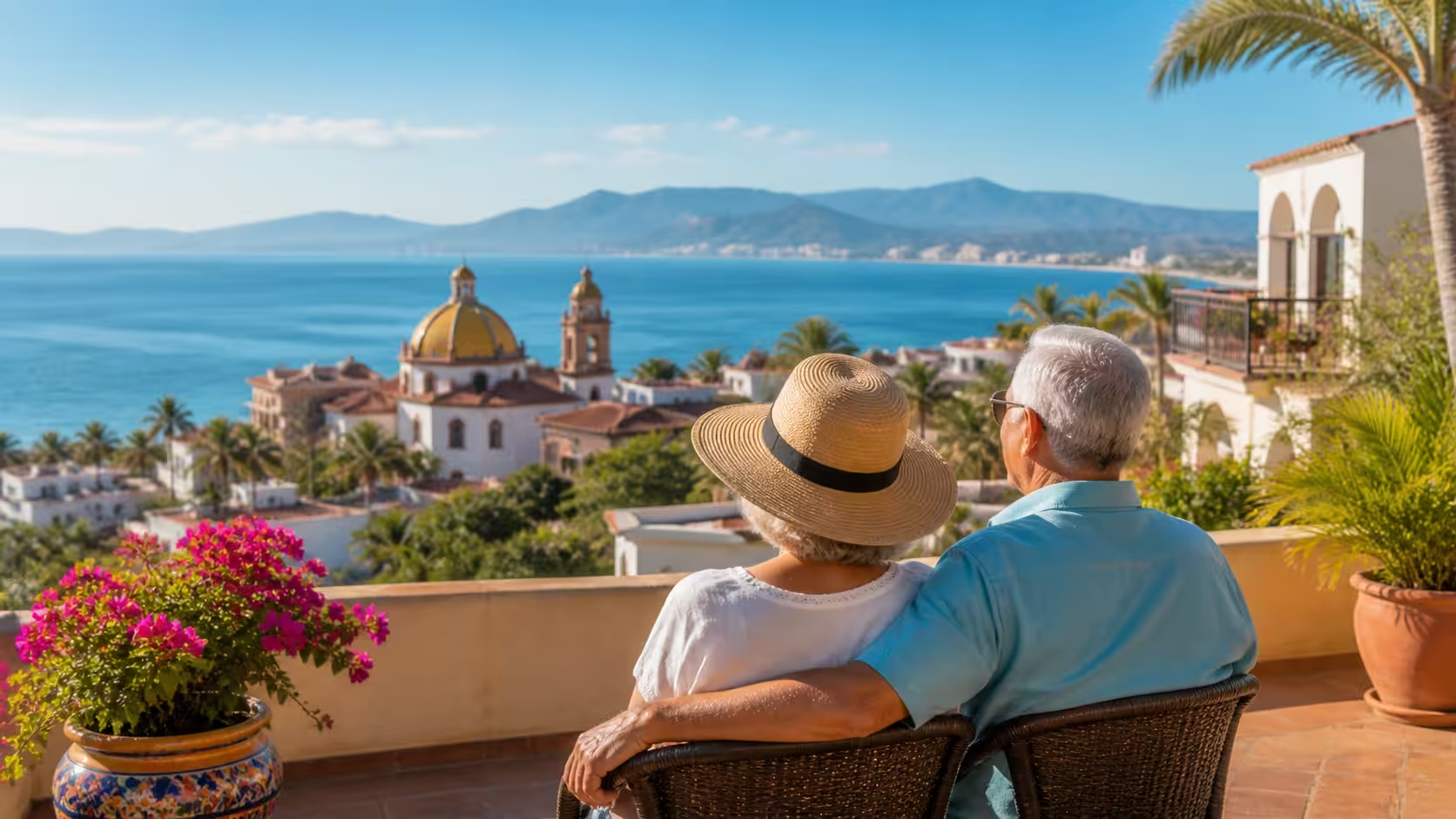
Most retirees who move to Mexico say the same thing after their first few months: life slows down, and that turns out to be exactly what they needed.
The pace is unhurried. Mornings often start with a walk to a local market or a coffee at a neighborhood cafe. Afternoons are quiet. Evenings are social. There’s no rush, and nobody expects one.
However, we have to be honest here; Mexico isn’t a resort. It’s a real country with real infrastructure quirks. Power outages happen occasionally in some areas. Traffic in larger cities like Guadalajara can be frustrating. Bureaucracy moves slowly.
The retirees who settle in well are the ones who arrive expecting those realities, not discovering them. A big part of that preparation starts with a question almost every newcomer asks before packing a single box.
How Much Spanish Do You Actually Need?
The honest answer? Less than you think, but still more than zero. In the main expat hubs like Ajijic, Puerto Vallarta, and San Miguel de Allende, you can get through daily life comfortably in English.
Doctors, facility staff, and most service providers in these areas speak English at a conversational level or above. So you won’t struggle with basic care if you don’t speak Spanish well enough.
Still, retirees who learn even basic Spanish report that it changes their experience significantly. Locals appreciate the effort, and it opens up a much richer day-to-day life outside the expat bubble.
That shift in daily experience goes deeper than just language, though. There’s a cultural adjustment that most guides never mention.
What Catches People Off Guard?
The warmth of the culture is the most common positive surprise. Mexican communities tend to treat older adults with visible respect, and retirees frequently comment on how welcome they feel from day one.
On the other hand, the adjustment that takes longer is accepting a different relationship with time. Appointments run late.
Services take longer than expected. Retirees who fight that tend to stay frustrated. Those who lean into it tend to settle in quickly, and most of them eventually wonder why they waited so long to make the move.
In other words, if you’re good with going with the flow, Mexico might just be the place for you.
Expat Communities and Social Life
One of the biggest fears retirees have before moving abroad is loneliness, and to be honest? It’s a valid concern. Leaving behind decades of friendships, family routines, and familiar neighborhoods is no small thing.
The good news is that whether you’re in a senior living facility or living independently, Mexico has built the kind of social infrastructure that makes connection easier than most people expect.
So, What Does That Look Like Day to Day?
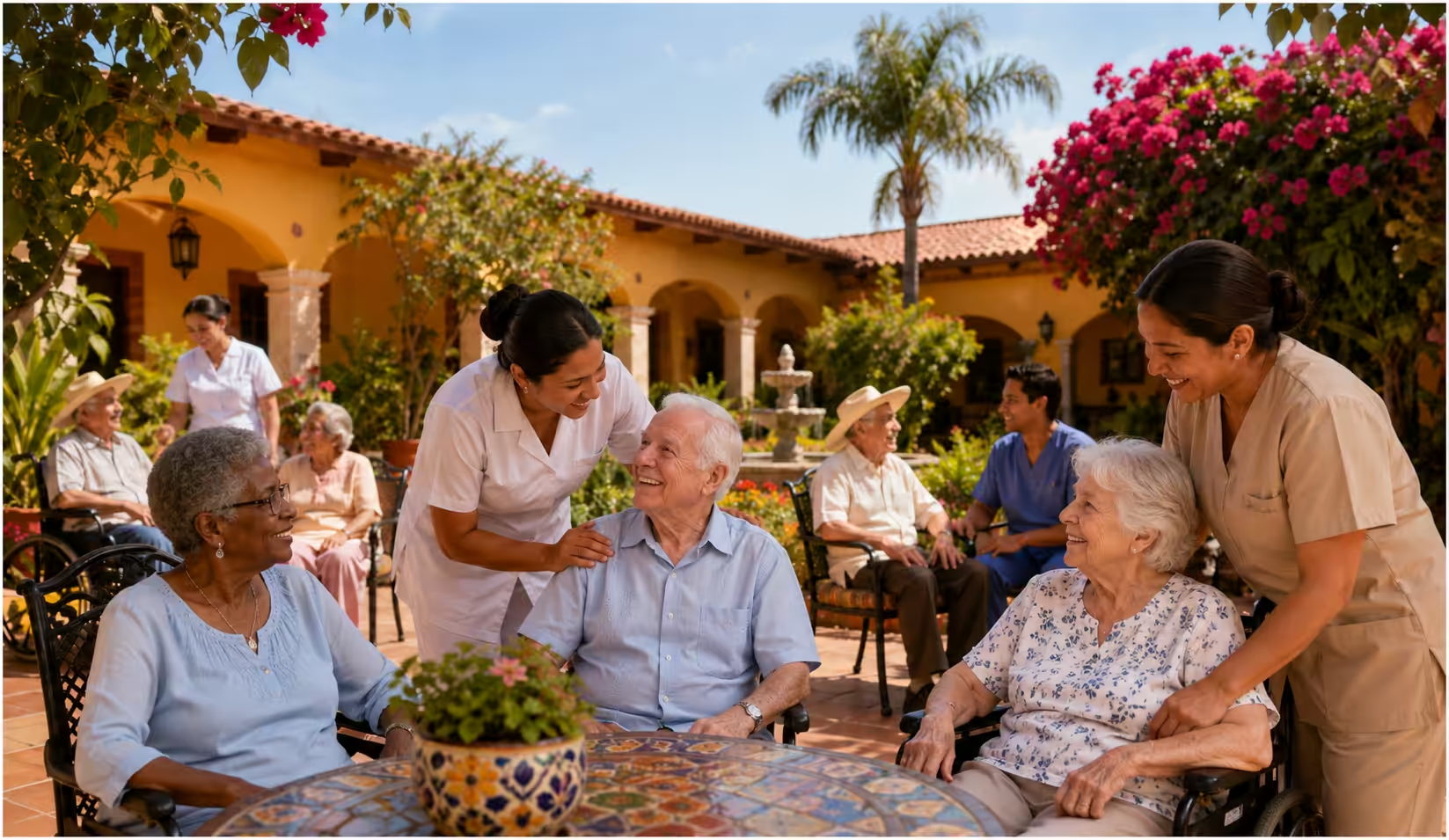
If you’re in a care residency, your social life forms around you. You’re coexisting with other residents through shared meals, common areas, and scheduled activities, plus regular contact with staff who become familiar faces you see daily.
Many facilities organize entertainment like live musicians, movie nights, birthday celebrations, or holiday parties. Some arrange outings to local markets, restaurants, or cultural sites. The structure varies, but the pattern is consistent: residents who engage with what’s offered tend to build connections naturally.
If you’re living independently (whether renting your own place or in an independent living community where residents manage daily life without medical staff), Mexico’s expat communities have spent decades building serious social infrastructure.
Lake Chapala has over 80 registered organizations offering everything from cooking clubs and bridge games to yoga classes, theater, book clubs, painting workshops, and dance groups. Puerto Vallarta’s networks span neighborhoods like Zona Romántica, Marina Vallarta, Versalles, and Centro, with beach clubs, art walks, and year-round cultural events. San Miguel de Allende’s arts scene and 100+ nonprofit organizations create natural entry points through language classes, volunteer work, and cultural activities.
You can tell how buzzing with life this can sound, but you might have another concern there.
What If You’re Not the Social Type?
Whether you’re naturally social or not, living in a foreign country without a support network is risky. If you have a medical emergency, need help translating at a hospital or government office, navigate residency paperwork, find a trustworthy plumber, or just need someone to check on you when you’re sick, you need people you can call. When you’re far from family and don’t have anyone to check on you, small problems can escalate fast.
That said, facilities understand this. Some let you take meals in your room instead of the common dining area if you prefer. Some are more luxurious and have fewer residents spread across larger properties. But even the most introverted expats tend to build at least a few key relationships, because you need people you can call when things go sideways.
The mix usually includes both locals and other foreigners, depending on what you need. Facebook groups and Reddit communities connect people across the community, so you can ask questions and get help without having to be the social butterfly at every event.
One cultural difference worth noting: Mexicans tend to be warmer and more personal than people from other cultures are used to. They’ll often approach you first, ask personal questions, and treat you like family faster than you might expect. For some people this feels intrusive. For others, it’s exactly what makes Mexico feel like home.
Cost of Living by Lifestyle
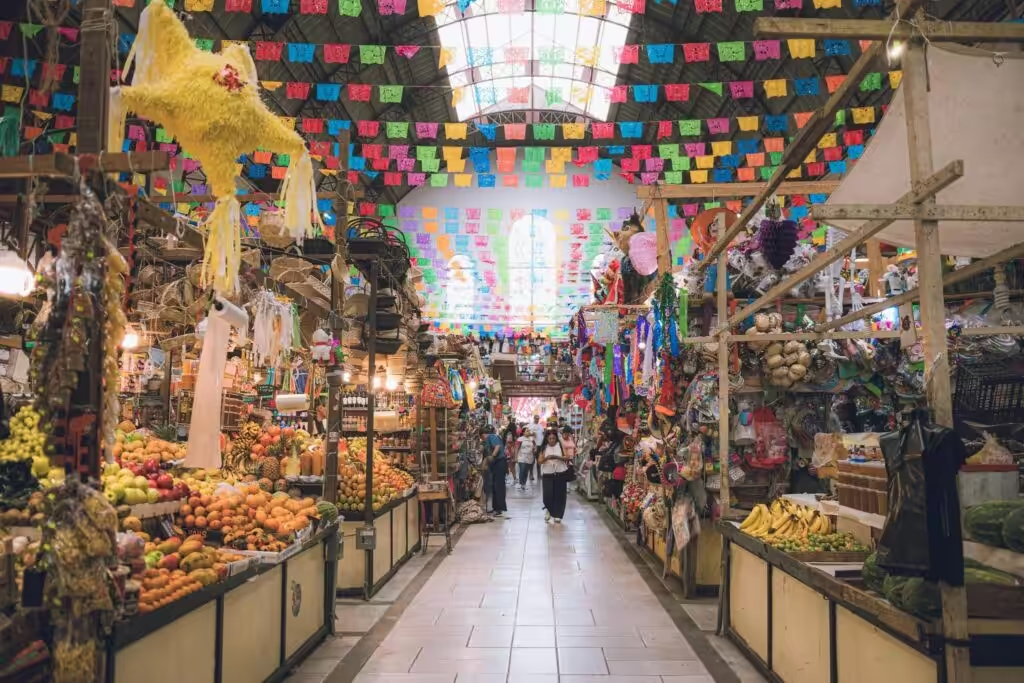
“Mexico is so cheap” is one of the most repeated and most misleading things you’ll hear before making the move.
It’s not wrong, exactly. It’s just incomplete. What you actually spend in Mexico depends almost entirely on how you choose to live, and the range is wider than most people realize.
A retiree who shops at local markets, takes taxis, cooks at home most nights, and keeps things simple can live comfortably on $1,500 USD a month or less in most parts of Mexico.
On the other hand, you can expect a retiree who dines at expat restaurants regularly, travels frequently, and maintains a lifestyle closer to what they had back home to spend considerably more.
Neither approach is wrong. You just need to know which one you’re planning for.
So What Are the Actual Numbers?
On the more affordable end, regions like Lake Chapala, Oaxaca, Mazatlán, Mérida, and Querétaro tend to offer lower overall costs of living, with rental and care facility prices that regularly come in at the lower end of the ranges above.
On the pricier end, cities like Los Cabos, Puerto Vallarta, Cancún, and Playa del Carmen command higher prices due to their coastal tourism infrastructure and demand from foreign buyers.
Mexico City, Monterrey, and Guadalajara sit somewhere in the middle, offering big-city amenities at costs that are still a fraction of comparable US cities.
Here’s a quick overview:
| Lifestyle | Who this is for | Monthly Cost (USD) | What’s Typically Included |
| Simple independent living | Fully independent retirees | $1,500 or less | Rent, utilities, groceries, cooking at home, and taxis |
| Couple, renting independently | Two independent retirees living together | $2,000 to $3,000 | Rent, utilities, groceries, and dining out occasionally |
| Independent living community | Seniors wanting community without medical care | $800 to $1,600 | Studio or room, some meals, activities, and social spaces |
| Assisted living facility | Seniors needing help with daily tasks | $1,200 to $2,500 | Room, meals, daily personal care, and medication management |
| Nursing home, private room | Seniors requiring 24/7 medical care | $1,200 to $3,750 | Full nursing care, meals, 24/7 medical supervision |
Note: These are realistic ranges, not best-case scenarios. Costs vary by city, facility, and care level, so treat them as a starting point rather than a guarantee.
If you’re renting independently but need help: Hiring a caregiver for one shift (cooking, cleaning, bathing assistance, grocery management) adds roughly $800 monthly to your housing costs. Licensed nurses for medication management or medical procedures cost more. Multiple daily shifts can push total costs to $2,500-$3,500 monthly, which is why many families eventually find assisted living or nursing homes more cost-effective.
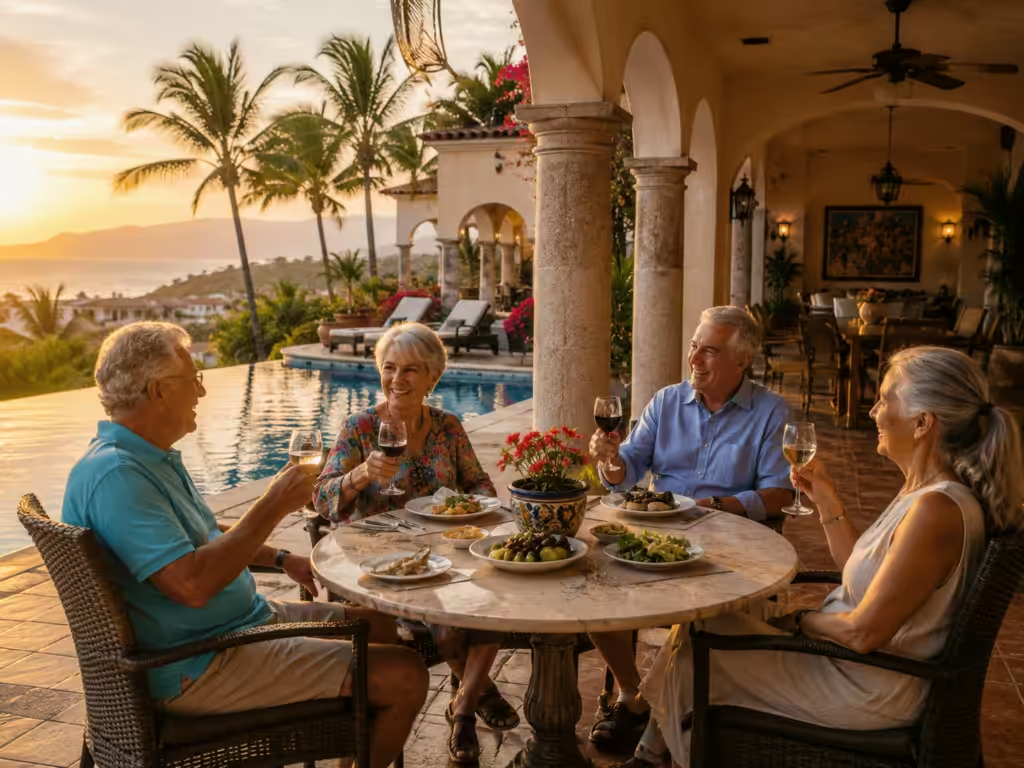
Hidden Expenses Beyond the Base Cost
The monthly rent or facility fee is the easy part. What catches retirees off guard are the costs that don’t show up in estimates.
Health insurance premiums. Private health insurance for seniors in their 60s (without pre-existing conditions) typically runs $1,200 to $3,600 annually. IMSS, Mexico’s public healthcare system, costs around $90 to $95 monthly for seniors aged 60 to 79 (roughly $1,100 per year), though it comes with longer wait times and Spanish-only staff. Premiums increased 20 to 40 percent in 2026 due to medical inflation, so budget accordingly.
Immigration fees. Mexico doubled residency fees in 2026. First-time temporary residency setup costs around $776 USD (consulate fee, change of status, and initial card). Annual renewals run $620 to $1,175 depending on the renewal period. The full four-year journey from temporary to permanent residency totals roughly $2,700 per person.
Setup costs. Furniture, household deposits, and initial expenses add up quickly if you’re not bringing everything from home.
Family visits. If you’re in a care facility or less mobile, budget for family flying down to visit you two or three times a year rather than you flying back.
Those add up quickly and rarely make it into the rosy budget breakdowns you’ll find on expat blogs, so you need to keep things realistic.
Moreover, prices in Mexico aren’t always in USD. Many facilities quote in pesos, which means your monthly cost shifts with the exchange rate. So, it’s worth asking upfront whether pricing is fixed in USD or fluctuates with the peso before signing anything.
Safety: What Residents Actually Say
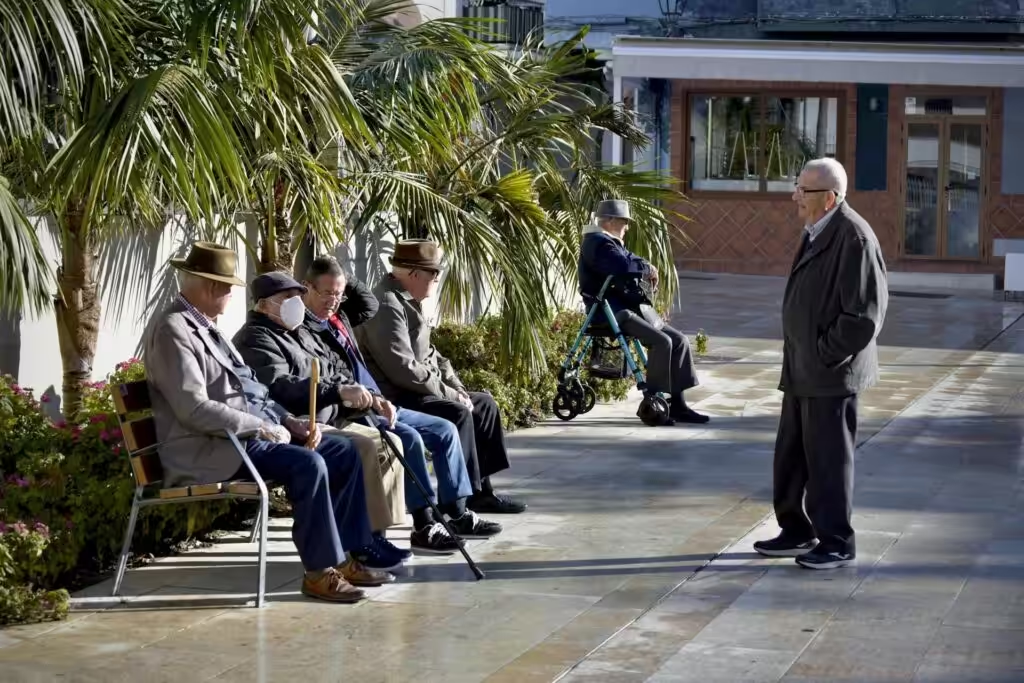
Safety is the question almost every family asks first, and it deserves a straight answer rather than a dismissive “it’s perfectly safe” or a dramatic “it’s dangerous everywhere.”
The reality sits somewhere in the middle, and it depends heavily on where you’re going and how you’re living.
Mexico’s security situation varies dramatically by region, and official travel advisories often lump entire states together without distinguishing between safe retirement towns and dangerous areas 200 miles away. A peaceful city like San Miguel de Allende can carry the same state-level warning as violent cities in Guanajuato simply because they share a border. That’s where on-the-ground knowledge matters more than government documents.
Which Cities Are Actually Safe?
The cities where most American and Canadian retirees settle have consistently low rates of violent crime and function as economic hubs that depend on expat residents feeling safe.
Lake Chapala, San Miguel de Allende, and Mérida are among the safest options. Day-to-day life in these areas feels remarkably normal. Retirees walk to the market, go out for dinner, and move around their neighborhoods without feeling watched or threatened. Petty opportunistic crime exists, as it does in any city, but violent crime against residents is rare.
Puerto Vallarta sits in a different category. It’s a major tourist destination, which means it has both the security infrastructure that comes with tourism and the opportunistic crime that targets tourists. Popular zones have visible police presence and feel secure. Areas outside the main tourist corridors can be less predictable. Most retirees stick to established neighborhoods and avoid unfamiliar areas after dark.
Larger cities like Guadalajara, Mexico City, Monterrey, and Querétaro offer more amenities but require more awareness. Street crime, like robbery and assaults, can happen, particularly at night in certain neighborhoods. Retirees who live in these cities tend to stay in well-established residential areas, avoid walking alone after dark, and use taxis or ride services rather than public transit in the evenings.
Which Areas Should You Avoid?
Some regions in Mexico have real security issues and are not retirement destinations. These are cities with active cartel presence, ongoing territorial disputes, or consistently high violent crime rates.
Cities to avoid include Tijuana, Ciudad Juárez, Culiacán, Colima, Celaya, Irapuato, Uruapan, Zamora, Acapulco, Manzanillo, Ciudad Obregón, and Coatzacoalcos. These cities have homicide rates ranging from 48 to over 100 per 100,000 residents and are affected by cartel violence, drug trafficking routes, and organized crime.
The states of Sinaloa, Colima, Michoacán, Tamaulipas, Guerrero, and Guanajuato have the highest levels of violence in the country. Even cities you might recognize like Tijuana and Acapulco fall into this category despite their tourism history.
That said, security conditions vary not just by state but by specific city and neighborhood. San Miguel de Allende, for example, sits in Guanajuato but functions very differently than Celaya or Irapuato
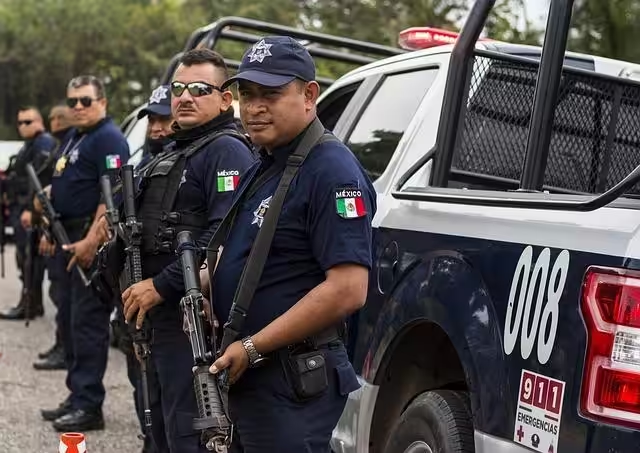
What Do Retirees Actually Report?
The most consistent thing retirees say is that local authorities in expat-heavy areas tend to be more responsive to foreign residents. Police presence is visible in tourist and retirement zones.
Retirees who keep a low profile, avoid displaying expensive jewelry or electronics in public, and stay aware of their surroundings generally move through daily life without incident. In some small towns and gated communities, security concerns are minimal. In larger cities or tourist areas, basic street awareness matters more.
One factor that often gets overlooked is that if you’re living in a senior care facility, most outings happen during daylight hours or are organized group activities. Facilities in areas with higher crime tend to keep evening activities on-site. You’re also inside a secure building most of the time, which adds another layer of safety.
What About Natural Disasters?
Mexico’s coastal areas face hurricane season from June to November, with peak activity August through October. Recent storms like Hurricane Otis (Acapulco, 2023) and Hurricane Priscilla (Puerto Vallarta, 2025) caused significant damage, but weather tracking systems provide advance warning. Most coastal facilities have protocols for securing residents during storm season.
Mexico also experiences frequent earthquakes due to its location on the Pacific Ring of Fire. Mexico City is particularly vulnerable, but the country has SASMEX, an early warning system that provides up to 60 seconds notice before strong shaking arrives through sirens and cell phone alerts.
Heavy rainfall during hurricane season can cause flooding, especially in coastal and mountainous regions. Facilities in at-risk areas have evacuation protocols tailored to the specific threat. Beachfront properties evacuate inland for hurricanes and facilities near rivers move residents to higher floors during flood warnings.
Staying Connected with Family

One of the quieter anxieties people carry into retirement abroad is the fear of feeling cut off,’ not just from friends, but from children, grandchildren, and the daily rhythm of family life.
We have to address this directly, because the practical reality is much better than most people anticipate.
Mexico’s most popular retirement destinations have reliable enough infrastructure that staying connected doesn’t require any significant lifestyle adjustment.
Video calls, streaming, and messaging apps all work just as well as they do back home in the main expat hubs.
Plus, most apartments, facilities, and homes in areas such as San Carlos, Queretaro, and Ensenada come with Wi-Fi already set up. Additionally, local SIM cards with solid data plans are inexpensive and easy to get.
All in all, getting online is the easy part. The question that matters more to most families is how hard it is to actually get on a plane and visit.
So, How Far Are You Really From Home?
The answer depends on where in Mexico you settle, but it’s almost always closer than people expect. A useful way to think about it is by grouping retirement cities around the international airports that serve them.
Major International Airport Hubs
- Mexico City (Benito Juárez International Airport): The country’s largest hub, with direct flights to over 100 global destinations. Retirees in Mexico City, Querétaro, and surrounding areas use this as their primary connection to home.
- Cancún International Airport: Serves the entire Riviera Maya corridor, including Playa del Carmen, with direct connections to over 100 cities across the US, Canada, and Europe. One of the most connected airports in Latin America.
- Guadalajara (Don Miguel Hidalgo Airport): Connects directly to Los Angeles, Chicago, Houston, and several Canadian cities. The go-to airport for retirees in Lake Chapala and the surrounding towns.
- Puerto Vallarta International Airport: Direct flights to dozens of US and Canadian cities, making it a single nonstop flight away for most families.
- Los Cabos International Airport: Serves Cabo San Lucas and San José del Cabo, with strong direct connections to the US West Coast.
- Monterrey International Airport: A major hub with strong connections to Texas and the broader US, also serving nearby cities.
Border Cities: Even Closer to Home
For retirees in northern cities like Tijuana, Ensenada, and Ciudad Juárez, the calculus is different altogether. Many simply drive across the border when they need to travel north, making the connection home faster and simpler than booking a flight.
In practice, most retirees fly home two or three times a year and find the logistics no more complicated than a domestic connection used to be.
What About the Time Difference?
We have good news for this one.
Most of Mexico runs on Central Time, which puts it one to two hours behind the US East Coast and roughly the same time ahead of the West Coast.
For the vast majority of families, that gap is barely noticeable. A Sunday afternoon call works just as well from Ajijic as it does from Arizona.
Pets
Spoiler: Even more good news ahead.
For a lot of retirees, the question of whether they can bring their dog or cat isn’t an afterthought. It actually can be a deciding factor. The good news is that Mexico is genuinely pet-friendly, and bringing an animal across the border is far simpler than most people expect.
Mexico no longer requires a health certificate for dogs and cats entering from the US or Canada.
Your pet will be inspected by SENASICA, Mexico’s animal health authority, upon arrival.
The inspection is brief and mostly visual. They check that the animal looks healthy and is free of parasites. As long as your pet is up to date on its rabies vaccination and has been treated for parasites within the last six months, the process is straightforward.
You’re allowed two pets per person entering duty-free. Additional pets may require a modest SENASICA fee of approximately 1,620 pesos (or roughly 94 USD). For couples, that means up to four animals without any extra paperwork.
What About Vet Care Once You’re There?
This is where Mexico genuinely surprises people. Vet surgeries are plentiful across Mexico, and there is at least one vet even in smaller rural towns.
Vet fees are a fraction of those charged in the US, and pet medications are less expensive, too. Major chains like Petco operate in larger cities, and independent clinics are easy to find in all the main expat hubs.
One thing worth knowing before you go is that coastal areas like Puerto Vallarta, Cancun, or Mazatlán carry a higher risk of heartworm. It’s preventable with a monthly medication your vet back home can prescribe before you leave, but it’s worth factoring in from day one rather than after the fact.
Mexico vs. US and Canada, An Honest Comparison
At some point in the research process, almost every retiree asks the same question: Is this actually worth it? Not in a dreamy, lifestyle sense, but in a practical one. What am I giving up, what am I gaining, and does the math actually work in my favor?
The honest answer is that it depends on what matters most to you. Still, the numbers tell a clear enough story that it’s worth laying them out directly.
What the Numbers Actually Look Like
The national median cost of assisted living in the US is around $5,419 per month as of 2026. Nursing home care runs even higher, with median costs around $9,277 to $10,646 per month depending on room type.
In Mexico, the picture looks very different. As of 2026, assisted living in Mexico costs approximately $1,000 to $2,500 per month, with memory care averaging around $2,500 monthly.
Unlike the American model, where costs spiral upward as care needs increase, most Mexican facilities charge a flat monthly fee regardless of care requirements.
Here’s a bird ’s-eye view:
| Care Type | United States | Mexico |
| Independent living | $2,500 to $4,000/month | $800 to $1,600/month |
| Assisted living | $4,000 to $6,000/month | $1,200 to $2,500/month |
| Memory care | $5,900 to $8,000/month | $1,500 to $2,750/month |
| Nursing home, private room | $7,000 to $10,000/month | $1,500 to $3,000/month |
These are realistic ranges, not best-case scenarios. Actual costs vary by city, facility, and care level in both countries. Some premium facilities in Mexico can exceed these ranges, reaching up to $3,750 monthly. Keep in mind these costs don’t include insurance and relocation, so budget accordingly.
What About the Quality of Care?
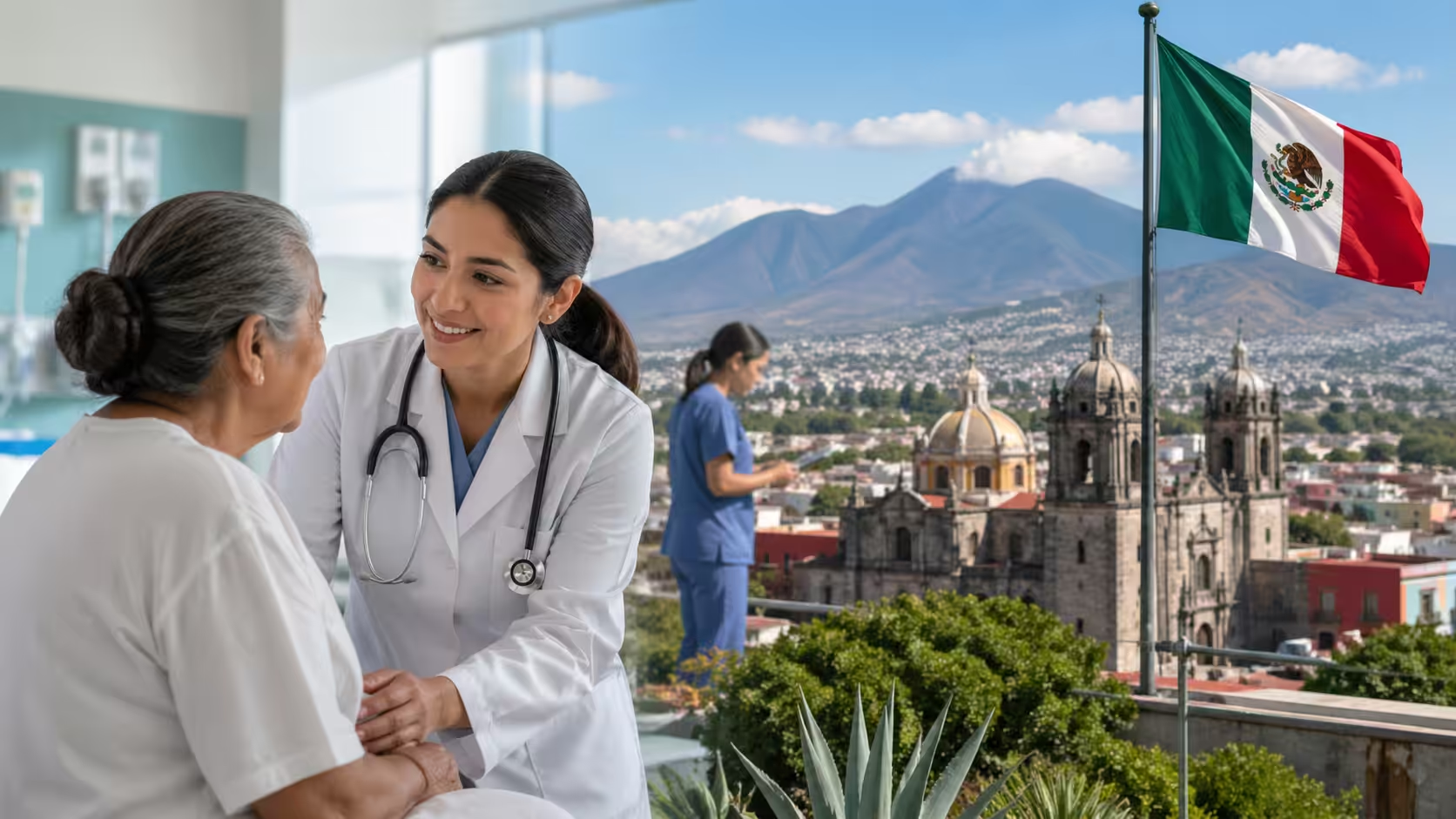
Cost savings only matter if the care is actually good. Because monthly income is significantly lower in Mexico, facilities are often staffed with higher-qualified medical professionals, including in-house doctors and nurses.
In comparison, most memory care facilities in the United States cannot afford to have in-house doctors providing day-to-day hands-on care.
That said, Mexico’s regulatory environment is less standardized than the US or Canada, and quality varies more widely between facilities.
Accordingly, visiting in person, checking staff credentials, and asking specific questions about licensing and staffing ratios matter more here than they would back home.
What You Gain and What You Give Up
The obvious question is: if care costs one-third the price, what are you giving up?
The short answer is: less than you’d expect. Because monthly salaries are significantly lower in Mexico, facilities can afford to staff with registered nurses and on-site doctors providing hands-on daily care. In the US, most assisted living facilities rely on aides with minimal medical training because they can’t afford to keep nurses on staff full-time.
What you do give up is regulatory standardization. Mexico doesn’t have a federal nursing home oversight system like the US Centers for Medicare and Medicaid Services. Quality varies more widely between facilities, which is why vetting matters. The infrastructure also differs: smaller resident-to-room ratios (good), but sometimes older buildings or less modern equipment (varies by facility).
The facilities targeting American and Canadian expats are bilingual, have English-speaking staff, and often match or exceed US care standards. The ones serving primarily Mexican nationals operate on a different model and price point entirely
Final Words
Mexico won’t be the right fit for everyone, and this guide wasn’t written to convince you otherwise. What it was written to do is give you an honest picture of what life actually looks like, so that whatever decision you make, you make it with clear eyes.
What most retirees find, once they get past the noise, is that Mexico offers something increasingly rare: a real quality of life at a cost that doesn’t require spending down everything you’ve saved. The tradeoffs are real, but so are the rewards.
The next step isn’t a big one. Now that you have a sense of what daily life looks like, the natural question becomes what’s actually available in the specific city you’re considering, at your budget, and at the level of care you need.